IT teams often manage devices, tools, and systems across multiple platforms. This creates fragmented visibility and makes it harder to track assets or enforce consistent policies.
As organizations grow, this fragmentation leads to gaps in infrastructure governance, limited asset visibility, and inefficient IT stack management. Managing devices across regions becomes more complex without a unified system.
Centralized IT solutions address this challenge by providing a single pane of glass to manage devices, enforce policies, and enable unified hardware management across global teams.
What are centralized IT solutions
Centralized IT solutions refer to systems that allow organizations to manage devices, users, and infrastructure from a single platform. By integrating AI solutions, businesses can further enhance how these systems operate and respond in real time. Instead of operating multiple tools independently, IT teams use one system to monitor, control, and maintain their environment.
This approach improves visibility and simplifies operations. IT teams can manage hardware, enforce policies, and monitor systems without switching between platforms.
Single pane of glass for IT operations
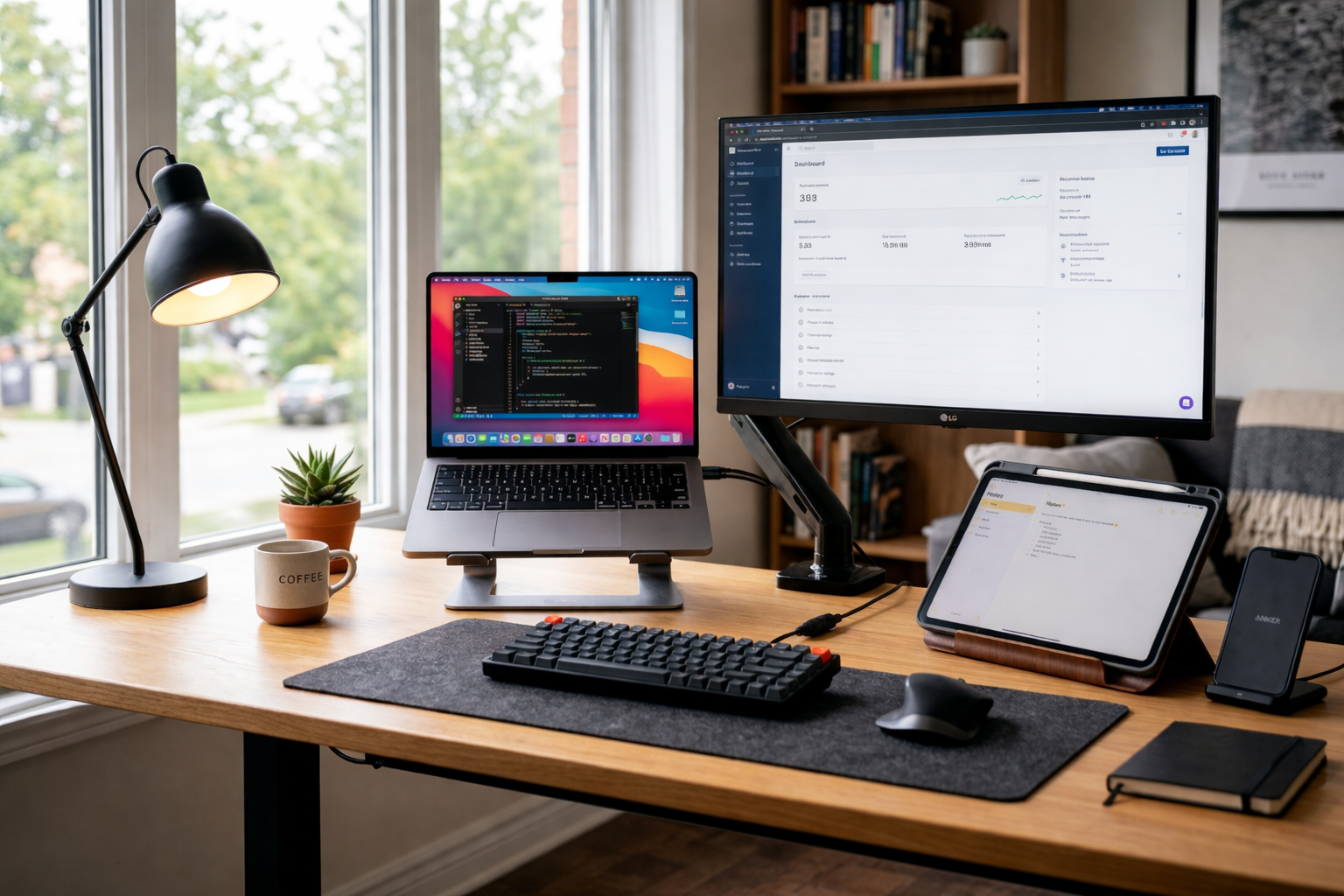
A single pane of glass provides a unified dashboard for IT teams. This dashboard shows device status, user activity, and system health in one place.
With this visibility, IT teams can:
- Monitor devices across locations
- Identify issues quickly
- Manage operations without fragmented tools
This reduces operational complexity and improves response time.
Centralized control across devices and systems
Centralized IT solutions allow IT teams to apply policies across all devices and systems. Instead of configuring each device separately, administrators define rules that apply organization wide.
This ensures consistency in:
- Device configuration
- Security settings
- Access controls
Centralized control supports scalable IT operations.
Why unified hardware management matters
Managing hardware across multiple systems creates operational gaps. Devices may be tracked in different tools, which leads to inconsistent records and reduced visibility.
Unified hardware management brings all device data into a single system. This allows IT teams to maintain control over assets and ensure consistent operations.
Limited asset visibility across systems
When asset data is spread across tools, IT teams cannot see the full device inventory. This makes it difficult to track ownership, usage, and lifecycle status.
Centralized systems improve asset visibility by consolidating all device information into one platform.
Challenges in infrastructure governance
Infrastructure governance requires consistent policy enforcement across devices. Without centralized control, policies may vary between systems and locations.
Unified hardware management allows IT teams to enforce governance standards across all devices.
Fragmented IT stack and operational inefficiencies
A fragmented IT stack increases operational workload. IT teams must manage multiple tools, duplicate tasks, and reconcile inconsistent data.
IT stack consolidation reduces this complexity by bringing systems together under one platform.
Key components of centralized IT solutions
Centralized IT solutions rely on several components that work together to provide visibility, control, and operational consistency.
Asset visibility and device tracking
Asset visibility ensures that IT teams can track devices throughout their lifecycle. Centralized tracking systems record device assignment, status, and location.
This allows organizations to maintain accurate inventory and support lifecycle management.
Remote monitoring across endpoints
Remote monitoring allows IT teams to observe device performance and system activity across locations. Administrators can identify issues, monitor compliance, and maintain operational awareness.
This capability supports distributed teams and remote environments.
Infrastructure governance and policy control
Governance systems define how devices should operate. IT teams apply policies that control security settings, access permissions, and device configurations.
Centralized policy control ensures consistency across all devices.
IT stack consolidation
IT stack consolidation reduces the number of tools used to manage infrastructure. By integrating systems, organizations simplify operations and improve efficiency.
This approach reduces manual work and improves data consistency.
How centralized IT solutions work in practice
Centralized IT solutions follow a structured process that connects device management, monitoring, and governance. This process ensures that IT teams maintain visibility and control across the organization.
Step 1: Consolidate device and asset data
IT teams begin by collecting device data from multiple sources. This includes asset inventory, device status, and user assignments.
Centralizing this data creates a single source of truth for hardware management.
Step 2: Establish centralized monitoring systems
Next, organizations implement monitoring systems that track device performance and activity. These systems provide real time visibility into endpoints.
Monitoring allows IT teams to identify issues and maintain system health.
Step 3: Apply governance and security policies
IT teams then define and apply policies across devices. These policies control configuration, access, and security standards.
Centralized enforcement ensures that all devices follow the same rules.
Step 4: Maintain real time visibility across devices
Once systems are in place, IT teams continuously monitor devices and update configurations as needed. This maintains visibility and ensures that infrastructure remains aligned with operational requirements.
Centralized IT for distributed teams
Organizations with distributed teams require consistent IT operations across multiple regions. Centralized systems allow IT teams to manage devices without relying on separate local processes.
Managing devices across Europe, the United States, and APAC
Global organizations operate across regions with different logistical and operational challenges. Centralized IT solutions allow IT teams to manage devices across Europe, the United States, APAC, and other regions from a single platform.
This ensures consistency in device management regardless of location.
Maintaining consistent policies across locations
Policy consistency is critical for security and compliance. Centralized systems allow IT teams to apply the same policies across all devices.
This reduces the risk of configuration gaps between regions.
Supporting remote monitoring at scale
Remote monitoring allows IT teams to manage large device fleets across distributed teams. Administrators can monitor device status and respond to issues without physical access.
Platforms such as Esevel support centralized IT operations by combining hardware lifecycle management, device tracking, and global logistics coordination. This allows organizations to maintain asset visibility and unified hardware management across distributed teams.
Centralized IT solutions at a glance
Centralized IT solutions bring together device management, monitoring, and governance into a single operational model. This helps IT teams maintain control as infrastructure grows across regions.
Below is a simplified view of how centralized IT supports unified hardware management:
Core functions
- Asset inventory: track all devices across locations
- Device tracking: monitor status, ownership, and usage
- Remote monitoring: observe performance and system health
- Policy enforcement: apply consistent configurations and access controls
- Lifecycle management: manage devices from provisioning to recovery
Operational outcomes
- Improved asset visibility across global teams
- Consistent infrastructure governance
- Reduced tool fragmentation
- Faster issue detection and response
- Scalable hardware management
This structure helps IT teams manage large device fleets without losing visibility or control. It also supports consistent operations across Europe, the United States, APAC, and other regions.
Common questions about centralized IT solutions
What are centralized IT solutions
Centralized IT solutions are systems that allow organizations to manage devices, users, and infrastructure from a single platform.
What is unified hardware management
Unified hardware management refers to managing all devices through one system to maintain visibility, control, and consistency.
What does single pane of glass mean in IT
A single pane of glass is a unified dashboard that displays all IT operations in one place.
How does centralized IT improve asset visibility
Centralized IT improves asset visibility by consolidating device data into a single system that tracks inventory and lifecycle status.
What is infrastructure governance
Infrastructure governance defines how devices and systems operate through policies that control configuration, access, and security.
Building a unified IT environment for global teams
Organizations that operate across regions must maintain control over devices, users, and infrastructure. Centralized IT solutions provide the foundation for unified hardware management, asset visibility, and consistent governance.
By consolidating systems and enabling remote monitoring, IT teams can manage operations more efficiently across global teams. This approach reduces complexity and improves operational control.
Esevel supports centralized IT operations by combining device lifecycle management, asset tracking, and global logistics coordination into a single platform. IT teams can manage hardware, maintain visibility, and support teams across Europe, the United States, APAC, and other regions. Schedule a demo with the Esevel team to see how centralized IT solutions can support your global operations.