Preventive maintenance sounds simple at first. Review devices, follow a maintenance schedule, and reduce equipment failure.
But for companies with 50 to 500 plus employees, endpoint volume grows quickly. Laptops, mobile devices, and distributed infrastructure expand across cities and countries. Manual tracking through spreadsheets and email stops working.
Without the right tools, preventive maintenance forms lose effectiveness. Inspections are missed. Documentation becomes inconsistent. Decisions about whether devices should be repaired or replaced are made without reliable lifecycle data.
The right tools do more than track tasks. They strengthen IT asset management, support Unified Endpoint Management policies, and provide structured visibility across the hardware lifecycle.
Why preventive maintenance fails without structured systems
Creating a maintenance schedule is only the first step. As endpoint volume increases, maintaining accuracy across spreadsheets, emails, and informal tracking methods becomes difficult.
Limited visibility creates operational friction. Maintenance managers may not have real time insight into overdue inspections, recurring device issues, or open maintenance works across regions. This often results in:
- Missed inspections
- Delayed maintenance tasks
- Duplicate remediation efforts
- Incomplete documentation
- Inconsistent asset management records
When asset data is incomplete, decisions about whether devices should be repaired or replaced rely on assumptions rather than historical evidence. In distributed organizations, these inconsistencies are amplified because devices are deployed across different cities and countries.
Preventive maintenance strategies depend on reliable systems. Without structured tools, even well designed maintenance programs struggle to scale.
CMMS and preventive maintenance software in IT environments
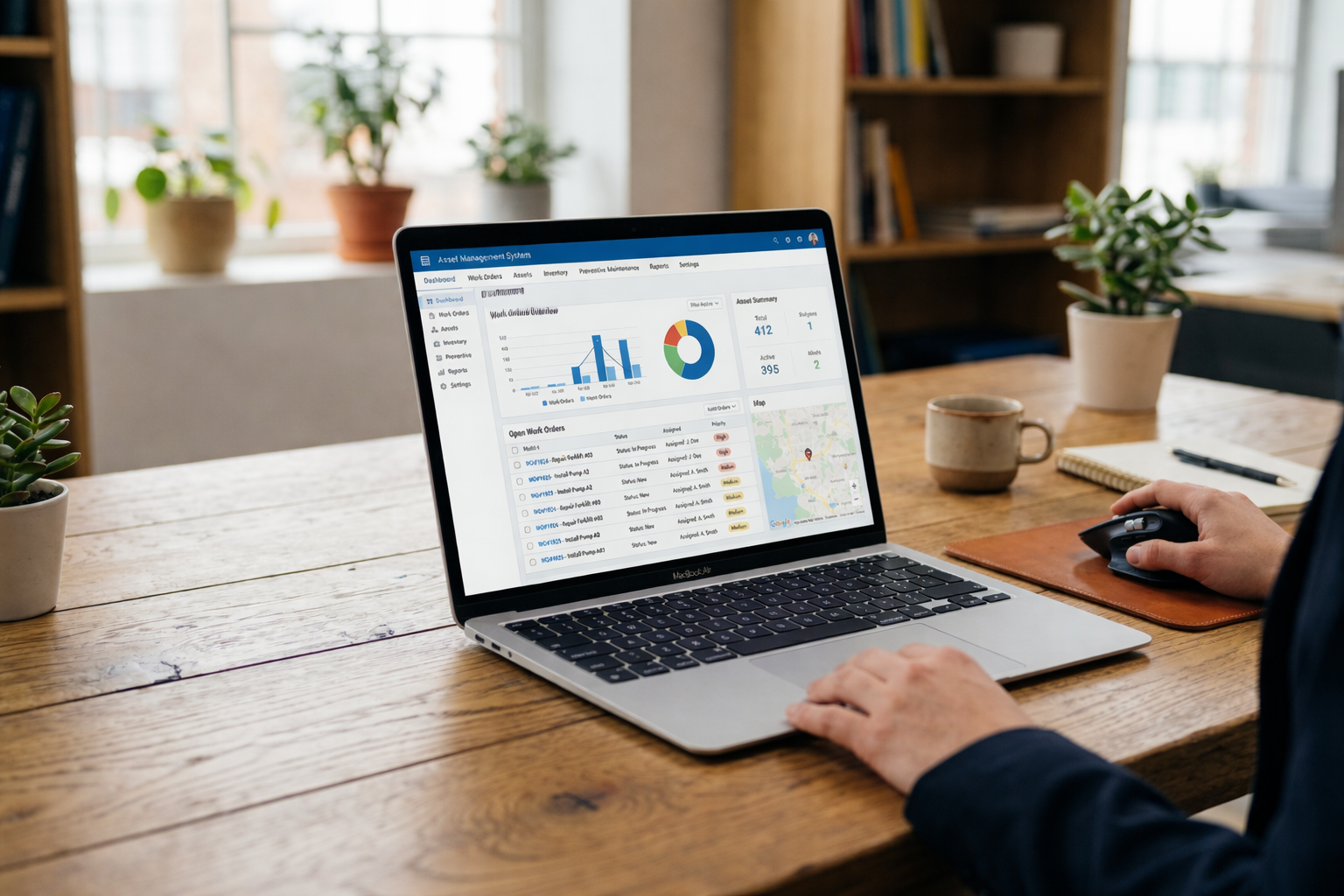
As IT environments expand, a computerized maintenance management system can provide structured coordination. In enterprise IT, CMMS software centralizes maintenance scheduling, asset tracking, and work order management in one platform.
What CMMS software supports in enterprise IT
A structured maintenance management platform enables teams to:
- Automate recurring inspections within the defined maintenance schedule
- Maintain consistent preventive maintenance checklists
- Document maintenance activities and asset history
- Track open and completed work orders
- Strengthen asset management records across locations
By consolidating maintenance data, CMMS software creates a reliable source of lifecycle information. This reduces administrative errors and improves inspection adherence.
Integration with IT asset and procurement systems
Preventive maintenance software should integrate with broader IT systems such as asset management platforms, procurement systems, ERP tools, and endpoint management solutions.
When maintenance tools integrate with other systems, lifecycle data supports budgeting, refresh planning, and long term equipment strategy. Without integration, maintenance operations remain isolated from financial and procurement decisions.
Predictive maintenance and endpoint condition monitoring
Preventive maintenance typically follows fixed inspection intervals. Predictive maintenance tools enhance this approach by incorporating real time device level data.
In enterprise IT, condition monitoring focuses on measurable indicators that signal performance degradation or hardware stress.
How predictive tools support device lifecycle management
Predictive maintenance tools monitor signals such as:
- Battery health and charge cycle data
- Disk condition and storage utilization
- Performance irregularities
- Thermal indicators
- Usage patterns
When abnormal trends are detected, IT teams can investigate and schedule maintenance works before equipment failure occurs. This approach refines preventive maintenance scheduling and reduces unnecessary interventions.
When predictive maintenance is appropriate
Organizations with high device volumes, distributed teams, or uptime sensitive roles benefit most from predictive monitoring. Real time insight supports informed decisions about whether hardware should be repaired or replaced and helps prevent repeated lifecycle disruptions.
Preventive maintenance establishes structured oversight. Predictive maintenance enhances that oversight with data driven timing.
Choosing preventive maintenance tools for scalable IT growth
Selecting the right tools depends on device volume, geographic distribution, and lifecycle complexity.
Assess your endpoint landscape
Before choosing a system, evaluate:
- Total number of active endpoints
- Projected growth over the next year
- Number of operating locations
- Compliance and security monitoring requirements
As complexity increases, manual coordination introduces risk to the maintenance schedule.
Prioritize visibility and structured reporting
Preventive maintenance tools should provide:
- Centralized dashboards for inspection adherence
- Clear work order management oversight
- Historical device performance data
- Structured documentation for repair or replace decisions
Visibility supports accountability across IT teams and ensures that preventive maintenance forms are executed consistently.
Ensure integration with lifecycle processes
Maintenance tools should align with onboarding, procurement, refresh planning, and device recovery workflows. When maintenance data integrates with procurement and asset management systems, lifecycle decisions become coordinated rather than reactive.
Disconnected systems create silos that weaken preventive maintenance programs.
Frequently asked questions
What are the best tools for preventive maintenance in enterprise IT?
The most effective tools range from CMMS software to predictive maintenance systems, depending on endpoint volume, geographic distribution, and lifecycle complexity.
What is a computerized maintenance management system?
A computerized maintenance management system centralizes asset management, work order management, and preventive maintenance scheduling within a structured platform.
How do predictive maintenance tools reduce equipment failure?
Predictive tools use measurable device signals and condition monitoring data to identify early warning signs before breakdowns occur.
Can preventive maintenance software integrate with other systems?
Yes, modern preventive maintenance software can integrate with ERP, procurement, asset management, and endpoint management systems to align maintenance with broader IT operations.
How do preventive maintenance tools support distributed teams?
They provide centralized visibility into maintenance schedules, device health, and lifecycle history across locations.
Preventive maintenance in distributed and global teams
For organizations operating across regions, preventive maintenance must extend beyond inspection tracking. Device procurement, deployment, monitoring, recovery, and refresh planning all influence hardware reliability.
Fragmented local vendors and inconsistent regional processes can disrupt maintenance schedules and increase equipment failure risk. Centralized lifecycle oversight helps IT leaders maintain consistency across distributed teams.
Esevel supports distributed organizations by centralizing device procurement, asset tracking, security validation, and hardware lifecycle logistics. By connecting maintenance data with procurement and refresh workflows, distributed teams can reduce downtime and maintain predictable lifecycle governance.