
Cyber threats don’t just target big corporations anymore. Startups, remote teams, and even small businesses are all in the crosshairs. And no matter how advanced your tech stack is, your employees are still your biggest vulnerability.
That’s why cybersecurity awareness training is essential. Not optional. One careless click on a phishing link can cost you thousands—or worse, your reputation.
But here’s the good news: human risk is manageable. You just need the right training.
In this guide, we’ll walk you through what makes a cybersecurity training program actually effective—and spotlight the top-rated options for 2025.
What makes a great cybersecurity awareness training program?
A great program doesn’t just check a compliance box. It changes behavior. It makes security second nature to your team—whether they’re working from a coworking space in Bali or a café in Berlin. Here’s what to look for:
1. Real-world relevance
The best training programs use real threats, not textbook scenarios. Think phishing emails, smishing attacks, and social engineering tactics employees actually face. Your team needs to recognize red flags in the wild—not just in a demo environment.
2. Engaging content
Let’s be honest—nobody remembers a boring slideshow. Great training is short, sharp, and maybe even funny. Whether it’s microlearning, gamified quizzes, or storytelling, the content has to stick. If employees enjoy it, they’ll remember it—and that’s the goal. Learning how to improve your speech writing style can also make training materials clearer and more engaging for employees.
3. Behavior-focused learning
This is where most programs fall short. Good training doesn’t just inform—it transforms. It helps build healthy habits and rewires risky ones. Whether it’s pausing before clicking a link or reporting suspicious messages, the goal is to turn awareness into action.
4. Customization and flexibility
Your team isn’t one-size-fits-all, and your training shouldn’t be either. Look for platforms that let you tailor content based on roles, regions, and risk levels. If you’re onboarding a new hire in Vietnam or running a refresher for a finance lead in Sydney, the program should flex with you.
5. Strong reporting and analytics
You can’t improve what you don’t measure. Top training platforms give you clear data: who’s completed what, who’s at risk, and how your organization is trending over time. That way, you can make data-driven decisions and strengthen weak spots fast.
6. Continuous updates
Cybersecurity isn’t static. New threats emerge every week. Your training needs to stay current, especially during initiatives like Cybersecurity Awareness Month when attacks spike. Choose a program that updates content regularly to reflect the latest threat landscape.
7. Integration with your IT ecosystem
The best solutions don’t live in a silo. Look for training tools that integrate with your identity provider, HRIS, or device management system. When your cybersecurity awareness training works hand in hand with onboarding and IT security policies, it’s easier to scale—and harder for things to fall through the cracks.
10 Best Cybersecurity Awareness Training Programs (2026 Edition)
Here are three standout programs leading the way in 2026:
KnowBe4
KnowBe4 is one of the most widely known cybersecurity awareness training platforms. It offers a large training library, phishing simulations, risk scoring, and reporting tools.
It is a strong option for companies that want structured training across many departments. Teams can test employee readiness through simulated attacks, then assign follow up training based on results.
What stands out:
- Largest platform in the space with 60k+ global customers
- AI-driven phishing simulations tailored to user behavior
- Compliance modules for GDPR, HIPAA, PCI, and more
- Easy-to-use admin dashboard with deep analytics and reporting
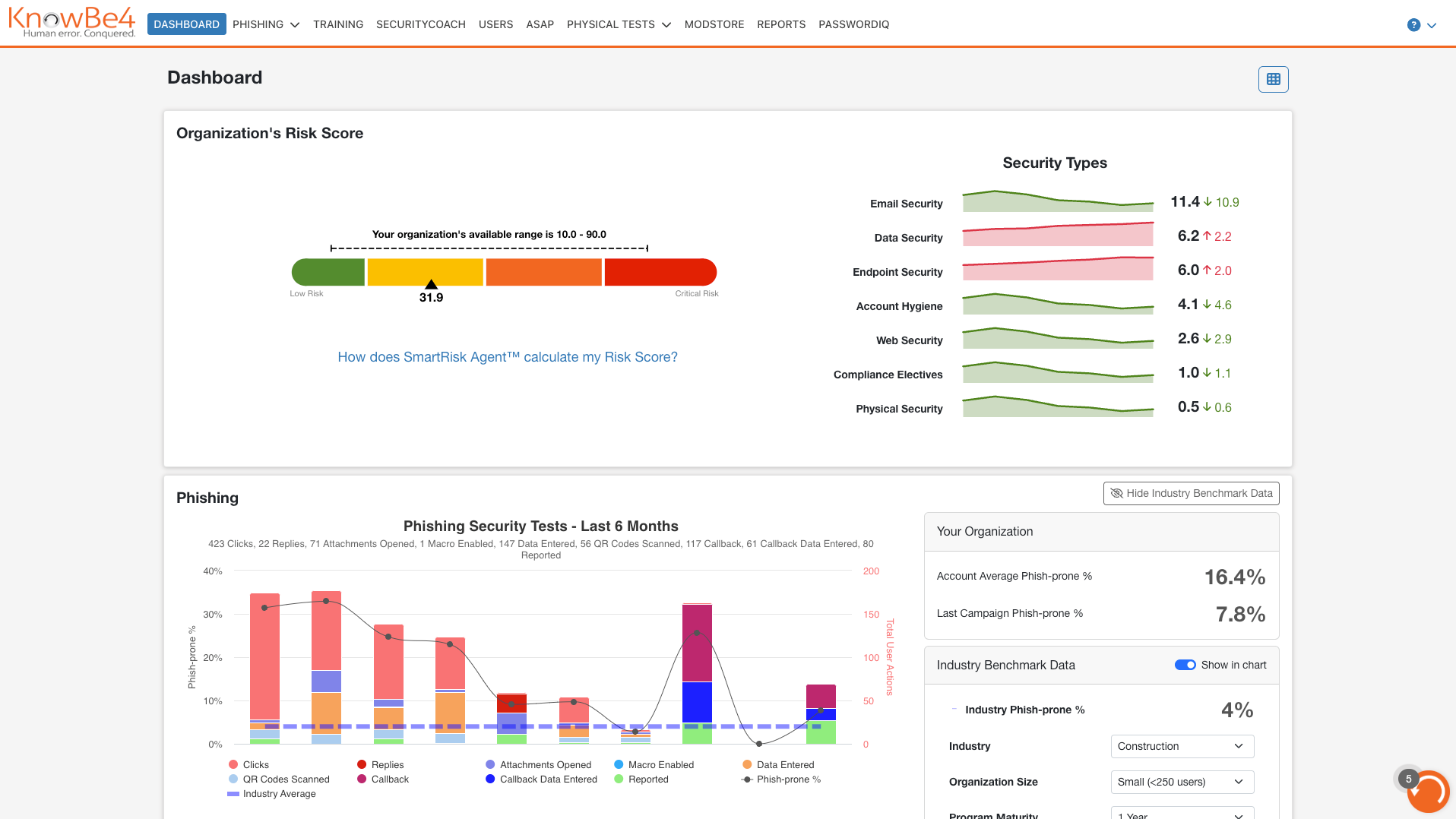
Best for: Companies that want a large training library and phishing simulations.
Hoxhunt
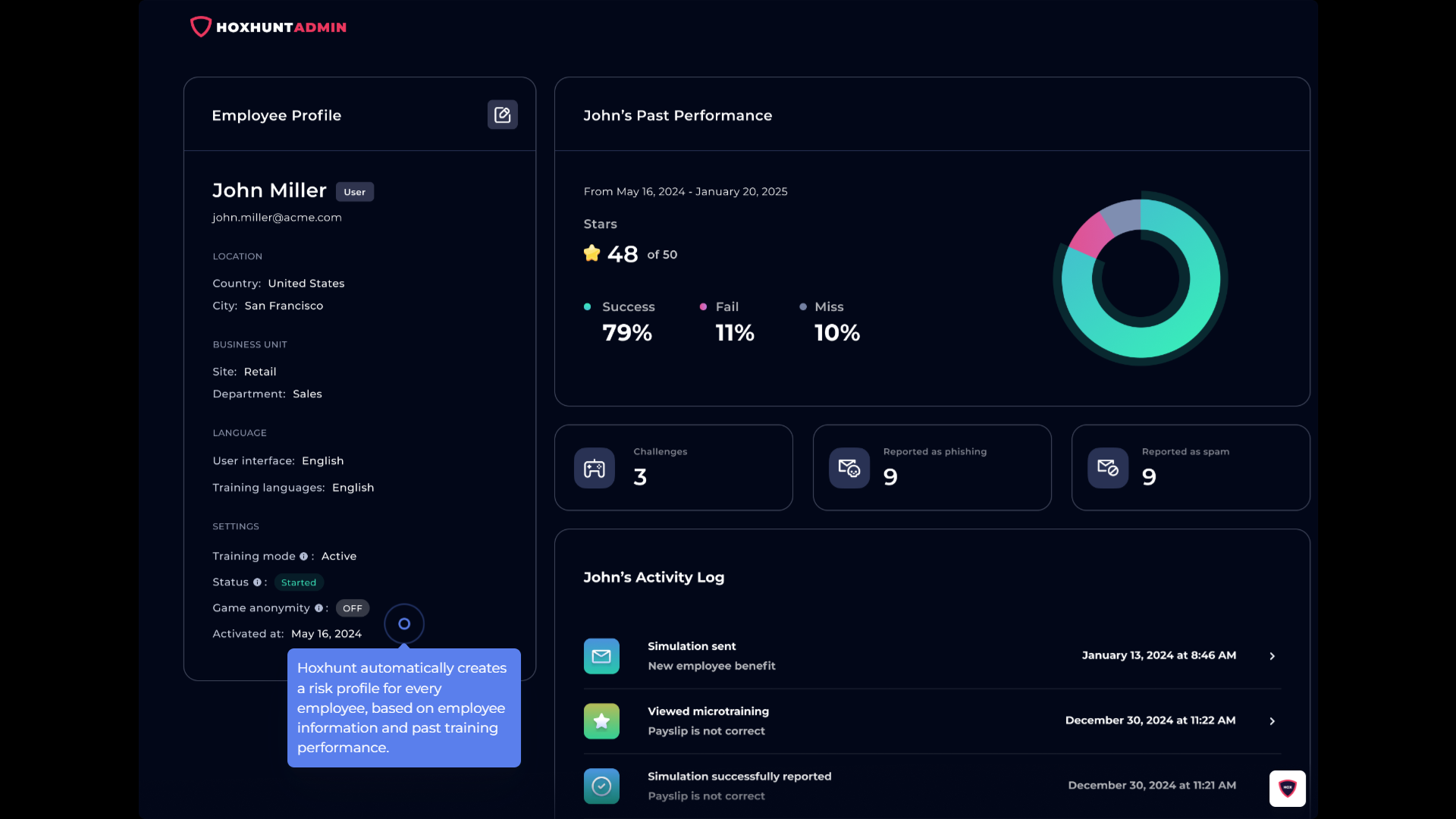
Hoxhunt focuses on phishing training, employee behavior, and human risk reduction. It uses personalized simulations to help employees recognize real world threats in their daily workflow.
This makes it useful for teams that want more than annual training. Instead of only checking completion rates, Hoxhunt helps companies build safer habits over time.
What stands out:
- Personalized phishing simulations based on employee behavior
- Focuses on long term behavior change instead of one time training
- Uses gamified learning to keep employees engaged
- Tracks risky actions and positive reporting habits over time
Best for: Companies that want behavior based phishing training.
Proofpoint
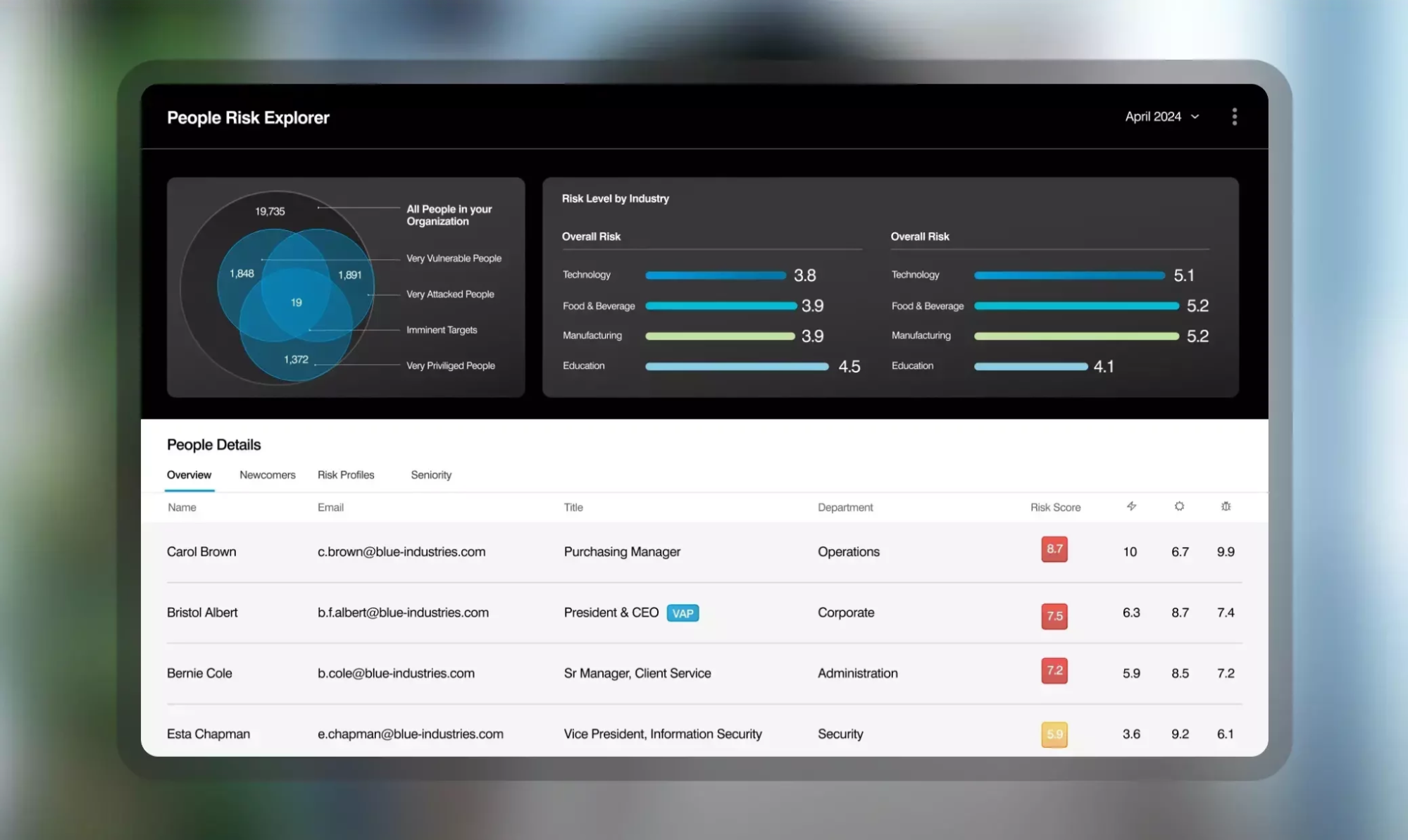
Proofpoint Security Awareness combines training with threat intelligence. It helps companies teach employees about phishing, social engineering, credential theft, and other user focused threats.
Proofpoint is often a good fit for larger companies that already treat security as a formal business function. It gives security teams more insight into risky behavior and training progress.
What stands out:
- Threat informed training based on real world attack patterns
- Role based learning for employees with different risk levels
- Phishing simulations connected to user risk data
- Strong fit for enterprises with mature security programs
Best for: Enterprise teams that need threat informed training.
Cofense PhishMe
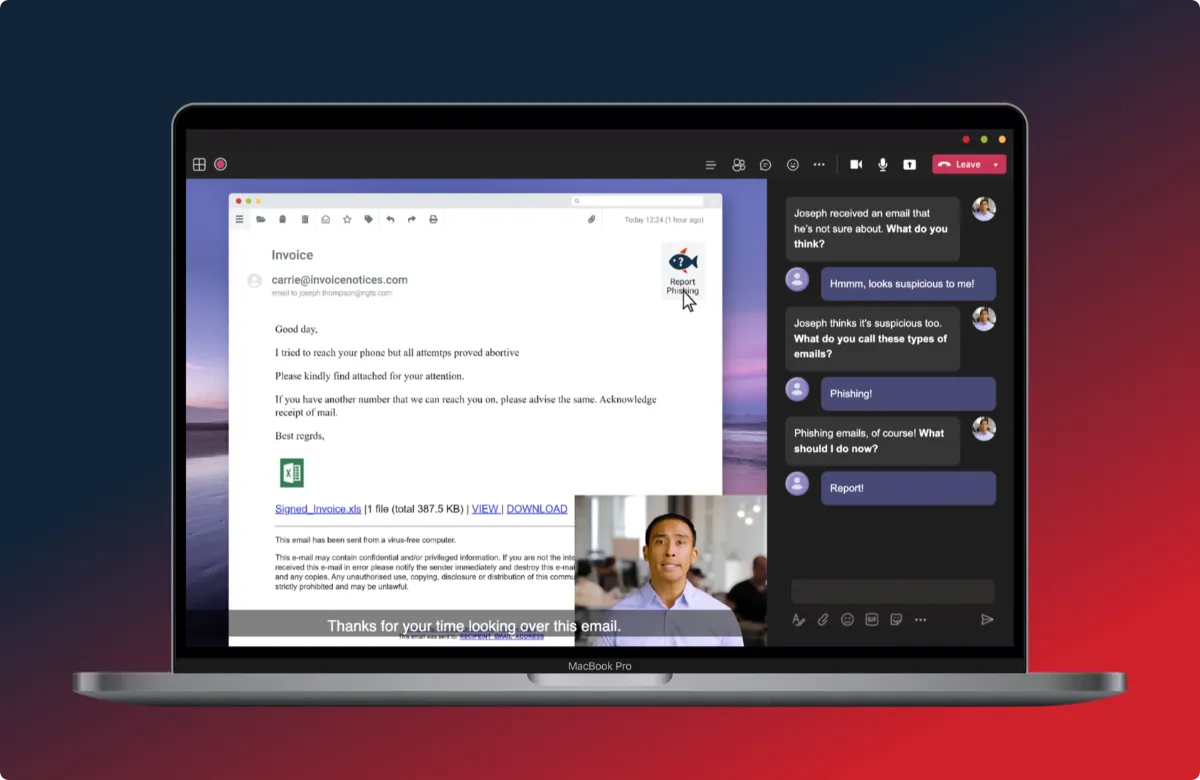
Cofense is laser-focused on one thing: phishing defense. Its flagship product, PhishMe, goes beyond traditional simulations by turning employees into active defenders through hands-on learning and user-generated threat reporting.
What stands out:
- Realistic phishing simulations based on evolving threat vectors
- Encourages employee reporting to create a human sensor network
- Tracks behavioral data to identify at-risk users and tailor future training
- Seamlessly integrates with SIEMs and email security platforms
Cofense is a great choice if phishing is your top concern—and let’s be honest, for many distributed teams, it is. The platform helps build a culture of alertness where employees don’t just avoid threats—they actively report them.
Best for: Companies that want human risk management features.
Huntress (formerly Curricula)
Huntress offers security awareness training with a focus on small and midsize businesses. It provides practical training content, phishing simulations, and reporting without making the program feel too complex.
This can work well for companies with lean IT teams. The platform helps businesses train employees without needing a large internal security department.
What stands out:
- Deployment takes just minutes and can be fully managed by security experts
- Story-based episodes from award-winning animators
- Regular updates to ensure content remains relevant with the latest cybersecurity threats
Huntress is ideal for small to mid-sized businesses seeking an effective, low-maintenance training solution.
Best for: Organizations needing a fully managed, engaging security awareness program with minimal administrative overhead.
SoSafe
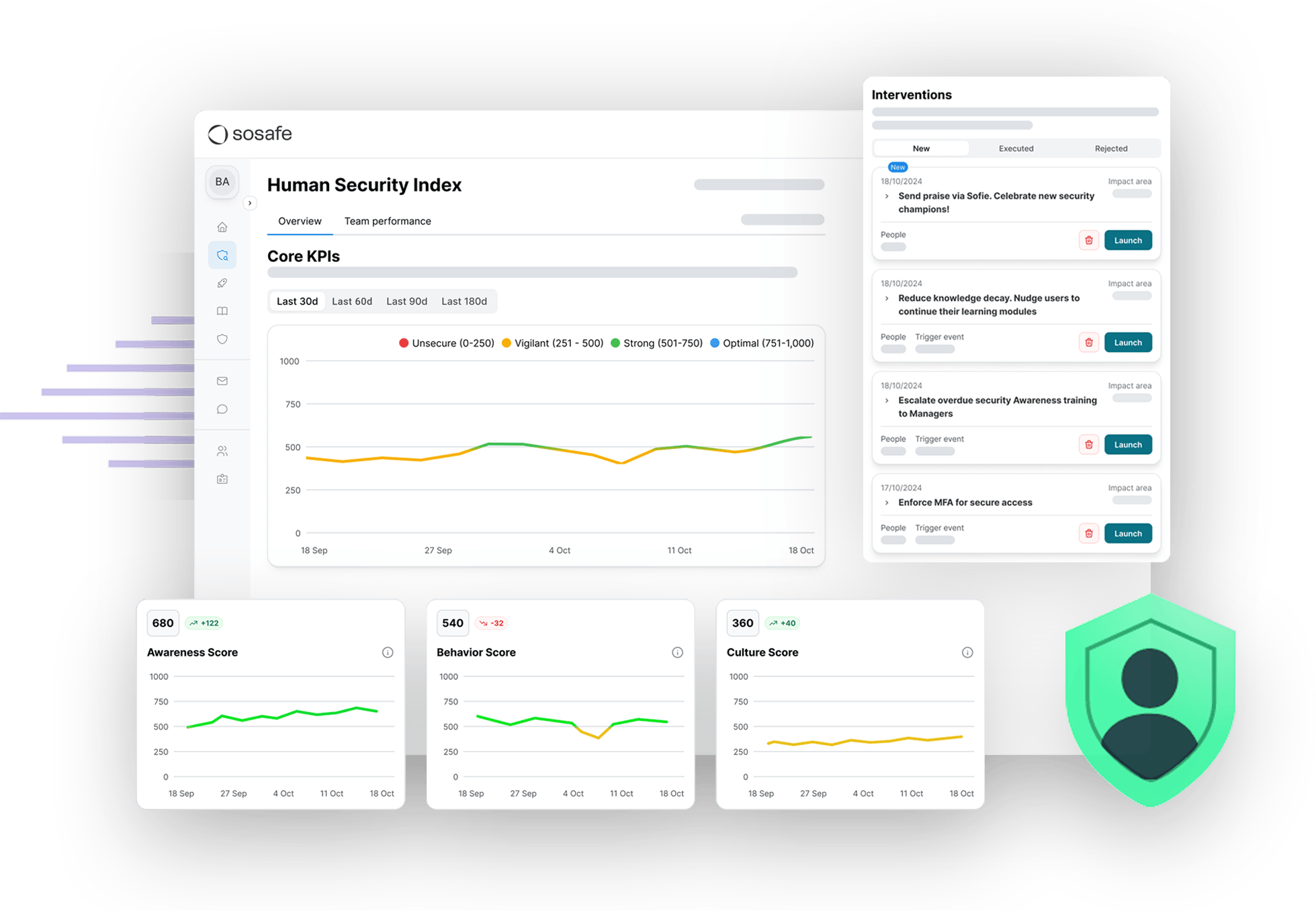
SoSafe focuses on human risk management and behavior change. It offers awareness training, phishing simulations, analytics, and risk based learning paths.
It is a strong option for companies that want to understand employee risk patterns across the organization. The platform is also relevant for companies with distributed or global teams.
What stands out:
- Personalized phishing simulations and risk scoring
- Culture automation to foster a strong security culture
- Quick implementation with a managed-service option
SoSafe is particularly effective for organizations aiming to build an agile security culture and reduce human risk efficiently.
Best for: Businesses looking for scalable, personalized training solutions that integrate seamlessly into existing systems.
NINJIO cybersecurity awareness training
NINJIO uses story based training to make cybersecurity topics easier to remember. Its content often uses short animated episodes that explain common threats in a more engaging format.
This can be useful for companies that struggle with boring or low engagement training. NINJIO may be a good fit when the goal is to make security awareness feel more relatable for employees.
What stands out:
- Each episode is based on an actual, recent security incident
- Story-driven, emotional content improves retention and engagement
- New content is released every month to stay ahead of evolving threats
- Highly memorable training that helps shift employee behavior
It’s perfect for remote-first startups trying to build a security-first mindset—especially among employees who might not have a technical background.
Best for: Teams who want engaging, story-based training that actually sticks
Infosec IQ security awareness training (by Cengage)
Infosec IQ offers security awareness training, phishing simulations, assessments, and role based learning. It covers common topics such as phishing, passwords, compliance, data protection, and safe remote work.
It is a flexible option for companies that need both general training and more specific modules for certain teams. For example, finance, HR, and IT teams can receive different training based on their risk exposure.
What stands out:
- Massive library of videos, quizzes, posters, and phishing simulations
- Content localized in multiple languages for global teams
- Role-based learning paths for IT, HR, finance, and more
- Compliance-ready with SCORM support for LMS integration
Infosec IQ also allows you to create training campaigns that align with cybersecurity awareness month or other internal security initiatives—making it easier to embed a security culture across your company.
Best for: Businesses seeking a customizable, scalable solution with deep content variety
ESET
ESET offers cybersecurity awareness training that helps employees understand common online threats. It covers practical topics such as phishing, password safety, safe browsing, malware, and social engineering.
This can be a good option for companies that want simple and clear employee training. It may work best for teams that need a straightforward awareness program rather than a complex human risk platform.
What stands out:
- Built by cybersecurity experts with a deep understanding of threat behavior
- Courses available in multiple languages, ideal for distributed teams
- Covers phishing, password hygiene, safe browsing, and remote work security
- Short, interactive modules that make it easy to integrate into a busy schedule
ESET’s training emphasizes real-life scenarios and microlearning, which works well for companies who want to reduce risk without overwhelming employees with long, technical lessons.
Best for: Businesses looking for simple, reliable training that scales across regions
SANS Security Awareness
SANS Security Awareness offers training content built around security education and best practices. It covers a wide range of security topics and can support companies with more mature security programs.
SANS can be useful for organizations that need credible training material, deeper topic coverage, and structured awareness campaigns. It is also a strong fit for teams that want security training to connect with compliance and internal policy goals.
What stands out:
- Deep security education from a well known cybersecurity training provider
- Structured awareness content for more mature security programs
- Strong coverage of policy, compliance, and employee behavior topics
- Useful for companies that need more than basic awareness training
Best for: Companies that want deeper security education and structured campaigns.
FAQs about cybersecurity awareness training programs
What is a cybersecurity awareness training program?
A cybersecurity awareness training program teaches employees how to spot, avoid, and report cyber threats such as phishing, malware, weak passwords, and social engineering.
Why are cybersecurity awareness training programs important?
Cybersecurity awareness training programs are important because many attacks target employees through email, fake login pages, urgent messages, and impersonation. Training helps employees make safer choices and report suspicious activity faster.
What should cybersecurity awareness training include in 2026?
Cybersecurity awareness training in 2026 should include phishing, AI generated scams, deepfake impersonation, MFA fatigue, QR code phishing, password safety, device security, remote work security, and incident reporting.
How often should companies run cybersecurity awareness training?
Companies should run cybersecurity awareness training during onboarding and repeat it with short monthly or quarterly refreshers. Regular phishing simulations can also help employees practice in realistic situations.
Is cybersecurity awareness training enough to protect a company?
No. Training reduces human risk, but companies also need device management, endpoint protection, access control, patching, secure onboarding, and secure offboarding. Platforms like Esevel help support these security controls across distributed teams.
Make cybersecurity awareness part of your culture
Investing in cybersecurity awareness training programs isn’t just a smart move—it’s a must. The tools you choose today will shape the habits and behaviors your team brings into every Slack message, email click, and file share tomorrow.
Here’s the truth: no matter how advanced your security tools are, human error remains the biggest risk. But it’s also the most fixable—if you have the right training in place.
So, where do you go from here?
- Start by picking a program that matches your team’s size, learning style, and risk exposure
- Roll it out as part of your onboarding and continuous learning strategy
- Reinforce it during key moments, like cybersecurity awareness month
- Pair training with strong IT practices to build a truly secure workplace
And if you need help with that last part—that’s where Esevel comes in. We make it easy to equip and support your distributed teams across Asia Pacific with secure devices, endpoint protection, and compliance-ready IT support. Our platform lets you manage devices, automate onboarding and offboarding, and ensure every team member is supported from day one.