Organizations must protect sensitive information while maintaining reliable IT infrastructure. As companies operate across global locations such as Europe, the United States, and APAC, protecting corporate systems and personal data becomes more complex.
Without structured security controls, IT teams may struggle to maintain data privacy, protect PII security, and support audit readiness across their operations.
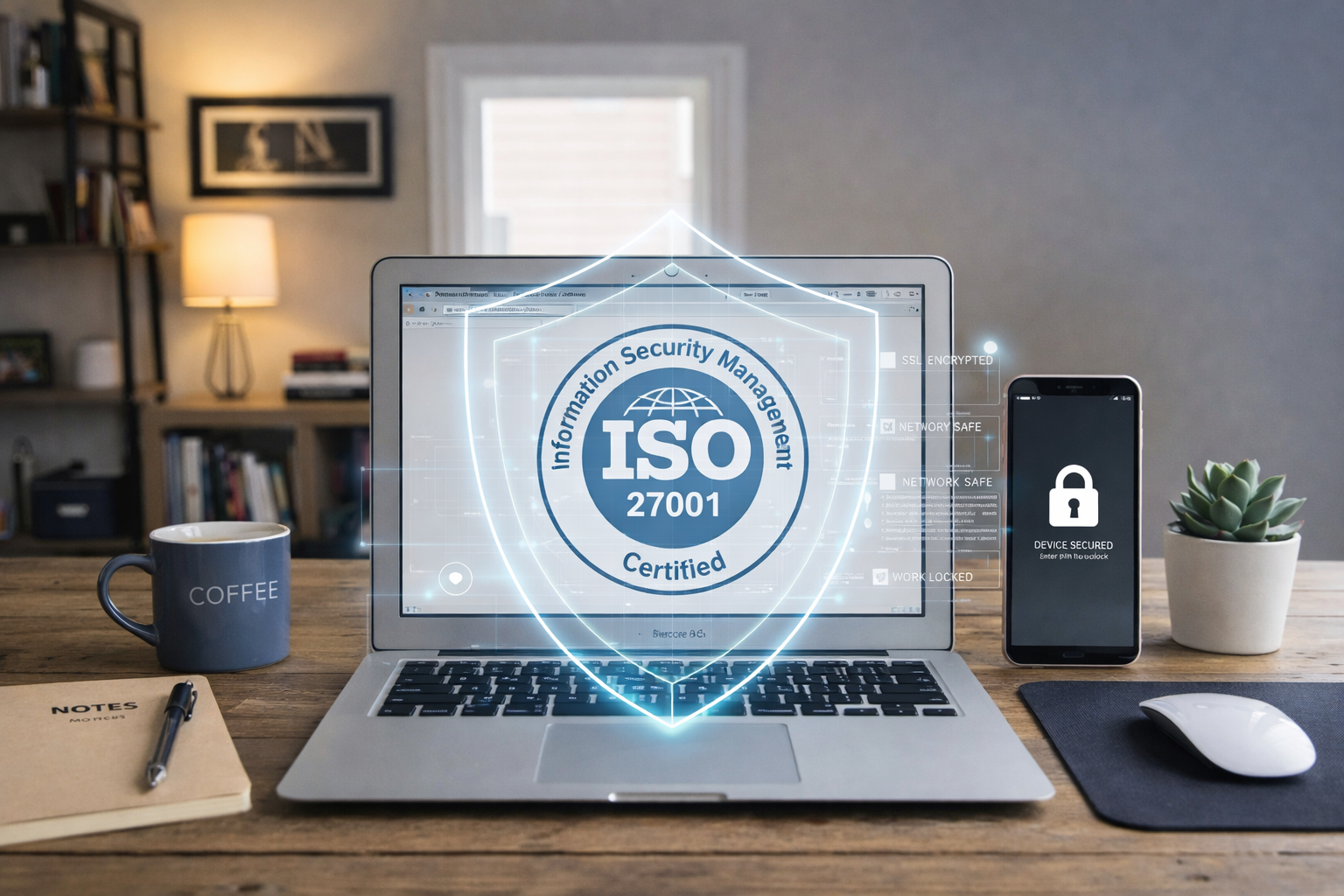
ISO 27001 IT solutions help organizations strengthen their ISMS framework through structured risk assessment, security controls, and hardware chain of custody across IT environments.
What are ISO 27001 IT solutions
ISO 27001 IT solutions refer to technology practices and operational controls that help organizations implement and maintain an Information Security Management System. These solutions support companies that need structured security governance to protect data, maintain compliance, and manage security risks across their IT environments.
An ISO 27001 framework focuses on protecting information assets through documented policies, security controls, and continuous monitoring. ISO 27001 IT solutions help organizations apply these principles across infrastructure, devices, and data handling processes so security practices remain consistent throughout daily operations.
ISO 27001 IT solutions definition
ISO 27001 IT solutions are security practices and supporting technologies used to implement an ISMS framework based on ISO 27001 standards. These solutions help organizations perform risk assessment, protect data privacy, secure PII security, and maintain audit readiness across their IT systems.
Within an ISMS framework, organizations define security policies, identify potential security risks, and implement controls that protect sensitive information across their technology environment.
Operational areas supported by ISO 27001 IT solutions
ISO 27001 IT solutions typically support several operational areas that help organizations protect information assets and maintain security governance.
Common areas include:
- Risk assessment processes within the ISMS framework
- Data privacy protection and control of sensitive information
- PII security to safeguard personal and customer data
- Audit readiness through security documentation and monitoring
- Hardware chain of custody to maintain control of physical IT assets
Together, these operational areas help organizations maintain structured security management across their IT infrastructure.
Core components of ISO 27001 IT solutions
ISO 27001 IT solutions support the implementation of an Information Security Management System by introducing structured controls across technology operations. These controls help organizations manage security risks, protect sensitive information, and maintain audit readiness as part of their ISMS framework.
To operate effectively, an ISMS framework must address several key areas that affect how information is handled within an organization. These areas include risk evaluation, data protection practices, and secure management of physical and digital assets.
Risk assessment within the ISMS framework
Risk assessment is a central component of ISO 27001 IT solutions. Organizations must identify potential security threats, evaluate their impact, and define appropriate controls to reduce those risks.
Within an ISMS framework, risk assessment processes help organizations understand where vulnerabilities exist across their IT infrastructure. This structured approach allows security teams to prioritize controls and maintain consistent protection for information assets.
Data privacy and protection of sensitive information
Data privacy controls ensure that sensitive information is handled according to defined security policies. ISO 27001 IT solutions help organizations establish safeguards that protect business data, customer information, and internal records.
These controls support PII security by limiting access to personal information and ensuring that sensitive data is processed through secure systems and documented procedures.
Audit readiness and compliance monitoring
Organizations that implement ISO 27001 must maintain clear documentation of their security practices. Audit readiness requires that policies, security controls, and operational procedures are properly recorded and monitored.
ISO 27001 IT solutions help maintain this documentation by supporting security monitoring, incident tracking, and control verification. These processes help organizations demonstrate that their ISMS framework operates according to defined security policies.
Hardware chain of custody for IT assets
Physical IT assets also play an important role in information security. Devices such as laptops and servers may store or access sensitive data, which means organizations must maintain control over how these assets are handled.
Hardware chain of custody ensures that devices remain traceable throughout their lifecycle. This includes tracking devices during provisioning, active use, maintenance, and recovery so organizations can maintain secure control over physical IT infrastructure.
Protecting IT infrastructure through hardware chain of custody
Information security is not limited to software systems and digital access controls. Physical IT assets such as laptops, servers, and storage devices can also contain sensitive information. Because of this, organizations implementing ISO 27001 IT solutions must maintain visibility and control over how these devices are handled.
Hardware chain of custody refers to the documented process of tracking physical IT assets throughout their lifecycle. This process helps organizations maintain accountability for devices that store or access corporate data. Within an ISMS framework, maintaining hardware chain of custody supports data privacy, protects PII security, and strengthens overall audit readiness.
Why hardware chain of custody matters
Devices used within an organization often contain or provide access to sensitive information. If these devices are lost, improperly handled, or transferred without documentation, organizations may face data privacy risks.
Hardware chain of custody helps prevent these risks by ensuring that each device is recorded, tracked, and monitored throughout its lifecycle. Organizations can document when devices are assigned to employees, transferred between teams, or returned for maintenance. This level of traceability supports stronger security governance and helps maintain audit readiness during security assessments.
Device lifecycle controls and information security
Device lifecycle management is closely connected to information security. Throughout their lifecycle, devices pass through several stages that require security oversight.
Typical lifecycle stages include:
- Device provisioning and configuration
- Assignment to employees for active use
- Maintenance or technical support
- Device recovery and reassignment
- Secure retirement or disposal
When these stages are properly documented, organizations can maintain a secure hardware chain of custody and demonstrate stronger control over their IT infrastructure.
ISO 27001 IT solutions for distributed organizations
Many organizations now operate across offices, remote teams, and global locations. Teams may work in Europe, the United States, APAC, or other regions while accessing the same corporate systems and information resources. This distributed environment increases the importance of consistent security controls across IT operations.
ISO 27001 IT solutions help organizations maintain a structured Information Security Management System that supports secure operations across these distributed environments. By implementing risk assessment processes, data privacy controls, and hardware chain of custody practices, organizations can maintain stronger protection for information assets even when teams operate in different locations.
Managing security across global IT environments
Organizations with distributed teams must apply consistent security policies across their technology infrastructure. Employees may access corporate systems through laptops, mobile devices, or remote networks, which increases the need for structured security governance.
ISO 27001 IT solutions help organizations manage these environments by defining security policies, monitoring access to sensitive information, and supporting risk assessment within the ISMS framework. These practices help security teams maintain visibility into information systems and ensure that data privacy and PII security controls remain consistent across regions.
Maintaining consistent security controls worldwide
Maintaining consistent security controls across global operations requires clear policies and documented procedures. Organizations must ensure that employees, systems, and physical devices follow the same security practices regardless of location.
ISO 27001 IT solutions support this goal by establishing standardized controls for data handling, security monitoring, and hardware chain of custody. These controls help organizations maintain audit readiness and demonstrate that their ISMS framework operates consistently across global teams.
Common questions about ISO 27001 IT solutions
What are ISO 27001 IT solutions
ISO 27001 IT solutions are technologies and operational controls that help organizations implement an Information Security Management System. These solutions support risk assessment, data privacy protection, PII security, and audit readiness within the ISMS framework.
What is an ISMS framework
An ISMS framework is a structured system used to manage information security within an organization. It includes policies, risk assessment processes, and security controls that protect sensitive information across IT operations.
How does ISO 27001 support data privacy
ISO 27001 supports data privacy by defining security controls that protect sensitive information. These controls help organizations manage access to data, protect PII security, and monitor how information is stored and processed.
What is hardware chain of custody in ISO 27001
Hardware chain of custody refers to the process of tracking physical IT assets throughout their lifecycle. This helps organizations maintain control over devices that store or access sensitive data and supports audit readiness.
Why is risk assessment important in ISO 27001
Risk assessment helps organizations identify security threats and evaluate their impact on information systems. Within the ISMS framework, risk assessment ensures that appropriate security controls are applied to protect data and maintain information security.
Strengthening IT security with structured operations
Organizations that manage sensitive information must maintain consistent security practices across their IT infrastructure. Structured operations help organizations apply security policies, perform risk assessment within the ISMS framework, and protect data privacy across systems and devices.
ISO 27001 IT solutions support these goals by introducing documented controls that strengthen audit readiness and protect PII security. When organizations implement structured processes for device management, data handling, and hardware chain of custody, they maintain stronger visibility over how information assets are used.
Esevel helps organizations maintain secure IT operations by supporting device lifecycle visibility and hardware chain of custody across global teams. This helps companies operating in Europe, the United States, APAC, and other regions maintain consistent security practices while protecting sensitive information.