Managing IT deployment has become increasingly complex as companies expand across borders and adopt hybrid work models. Businesses in Denmark face the challenge of equipping employees with secure, ready-to-use devices and applications without delays or disruptions. A well-executed IT deployment ensures that new hires are productive from day one, systems run smoothly, and security standards are consistently applied.
At the same time, companies must balance speed with compliance, cost control, and scalability. Whether it’s rolling out laptops, configuring collaboration tools, or setting up cloud environments, IT deployment services in Denmark help organizations standardize their processes and reduce IT headaches. The right approach not only improves efficiency but also gives businesses a competitive edge in today’s fast-moving digital economy.
What are IT deployment services?
IT deployment services are the backbone of setting up and rolling out technology across an organization. They ensure that every device, application, and system is ready to use, secure, and aligned with company standards before reaching employees. Instead of leaving teams to manage installations and configurations on their own, deployment services provide a structured, end-to-end approach that saves time and reduces errors.
Typical IT deployment services in Denmark include:
- Hardware deployment – provisioning laptops, desktops, servers, and networking equipment
- Software deployment – installing and configuring enterprise applications for daily operations
- Operating system imaging – applying standardized OS setups across all company devices
- Mobile device management (MDM) enrollment – enabling secure, remote device management
- Cloud deployment – rolling out SaaS tools, collaboration platforms, and cloud infrastructure
- Security configuration – implementing encryption, firewalls, and access controls
- Network setup – configuring routers, switches, VPNs, and wireless connectivity
- Data migration – securely transferring files, applications, and user settings
- Patch management and updates – keeping systems updated and compliant from day one
- Testing and validation – ensuring devices and apps work properly before handover
- Device delivery logistics – shipping pre-configured hardware to offices or employees directly
- Onboarding support – assisting new hires with device setup and first-day readiness
- Offboarding support – handling device returns, secure data wiping, and redeployment
- Lifecycle management integration – linking deployment with asset tracking, warranty, and refresh cycles
Compliance considerations in Denmark
IT deployments in Denmark must protect business operations, personal data, and customer trust. Devices, applications, and cloud services should follow local legal requirements and relevant industry standards from the start.
Key compliance considerations include:
- Data protection – Follow the General Data Protection Regulation (GDPR) and Danish Data Protection Act (Databeskyttelsesloven) when collecting, storing, and processing personal data.
- Cybersecurity controls – Use encryption, multi-factor authentication, secure configurations, and access controls.
- Sector requirements – Finance, healthcare, and public organizations may need stricter logging, auditing, and data handling.
- International transfers – Data shared outside Denmark must meet applicable transfer requirements.
- Device retirement – Remove company data securely and dispose of equipment through responsible recycling channels.
End-to-end IT deployment process
Effective IT deployment involves more than delivering equipment. A clear process helps businesses in Denmark minimize downtime, support employee productivity, and meet compliance requirements from the beginning.
A typical end-to-end IT deployment process includes:
- Planning and assessment – Identify business needs, employee roles, and compliance obligations before setting hardware, software, and security standards.
- Procurement and preparation – Source suitable devices, install operating systems, and configure applications, company policies, security controls, and productivity tools.
- Configuration and testing – Check device performance, security, and compatibility with company systems. Validate network access, VPNs, and collaboration platforms.
- Deployment and delivery – Send prepared devices to Danish offices or employees’ homes, with onsite setup provided where required.
- Employee onboarding – Provide clear setup instructions, remote IT support, or live assistance to help employees start with minimal disruption.
- Updates and patching – Keep systems secure and reliable through regular software updates and security patches.
- Lifecycle management and offboarding – Recover devices, complete certified data wiping, and arrange refurbishment or responsible recycling when employees leave or equipment reaches end of life.
Benefits of outsourcing IT deployment services in Denmark
Outsourcing IT deployment services gives organizations access to local expertise and global best practices, ensuring they can meet these challenges without stretching internal teams too thin.
Here’s how outsourcing delivers value in Denmark:
Expert knowledge of local compliance
Service providers are familiar with Denmark’s data protection laws such as General Data Protection Regulation (GDPR) and Danish Data Protection Act (Databeskyttelsesloven), helping businesses avoid regulatory penalties and ensuring that deployments meet privacy standards.
Adaptation to workforce trends
With Denmark’s growing population of remote and hybrid employees, outsourced providers can deliver pre-configured devices directly to homes or satellite offices, ensuring fast and reliable onboarding.
Scalability for a dynamic market
Many companies in Denmark experience rapid hiring cycles. Outsourced deployment makes it easier to scale IT resources up or down without major infrastructure investment.
Standardization across multiple sites
Businesses operating in major hubs like Copenhagen and Aarhus can maintain consistent device and software configurations regardless of location.
Cost efficiency in a competitive economy
Avoid the expense of maintaining large internal IT teams by tapping into external providers who already have the tools and processes in place.
Enhanced security posture
Local providers stay current with cyber risk regulations and best practices in Denmark, implementing encryption, MFA, and certified data wiping as standard.
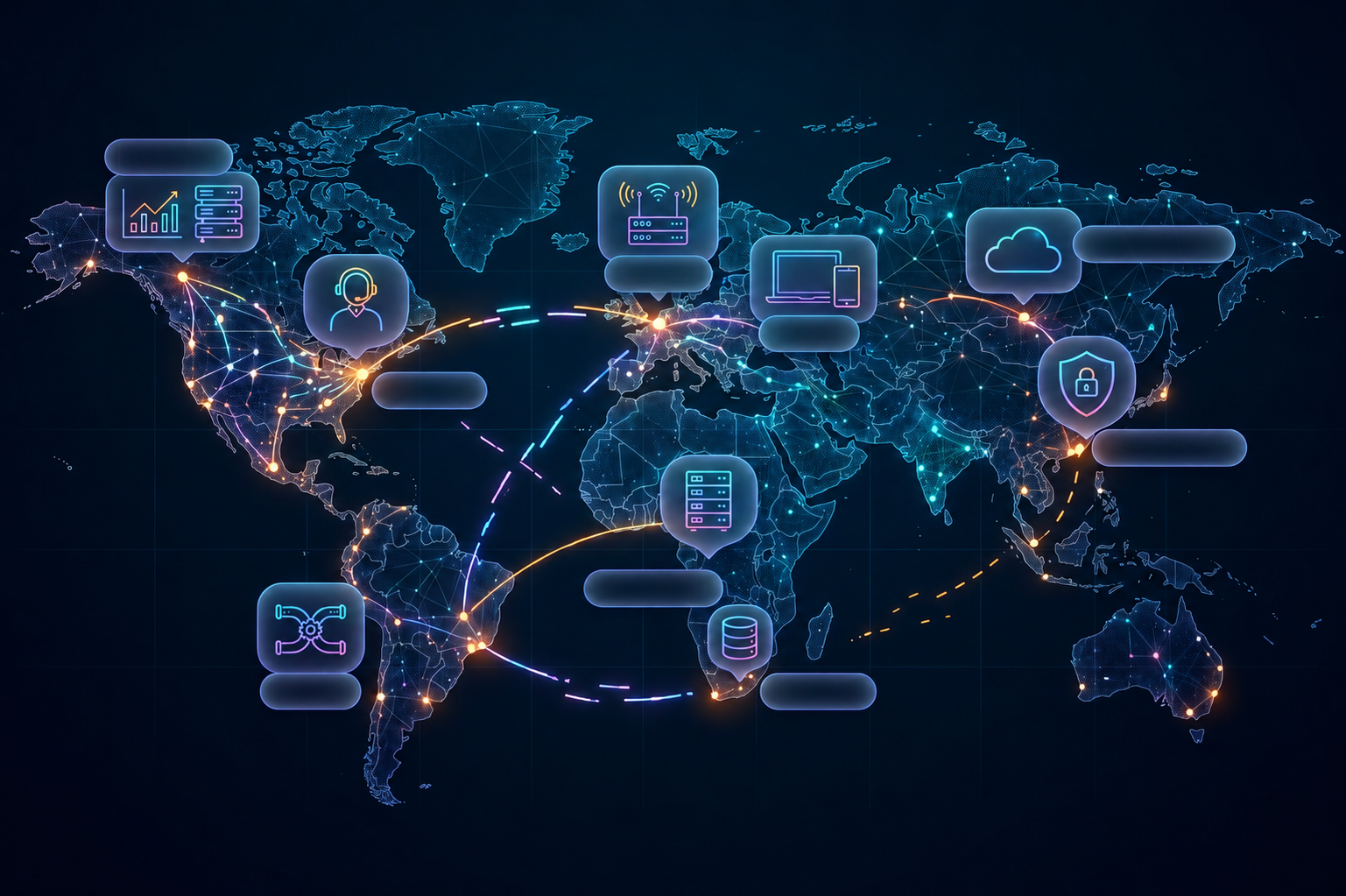
Global reach with local compliance
For international businesses with offices in Denmark, outsourced deployment providers ensure smooth rollouts that respect both local laws and global IT standards.
Simplify your IT deployment with Esevel
Successful IT deployment in Denmark goes beyond setup—it drives productivity, ensures compliance, and supports business growth. Outsourcing helps companies save time, cut costs, and deliver a seamless employee experience from day one.
Esevel makes this easy. As a full-stack IT platform for distributed teams globally, we handle everything from device procurement and configuration to delivery and lifecycle management. With local compliance expertise and global reach, Esevel ensures your IT deployment is fast, secure, and scalable.
Ready to simplify IT deployment in Denmark? Partner with Esevel and give your teams the tools they need to succeed.
FAQs
Q1. What is included in IT deployment services?
They typically cover hardware and software setup, configuration, network installation, data migration, and compliance checks.
Q2. Can IT deployment services support remote employees?
Yes. Many providers, including Esevel, offer pre-configured device shipping directly to employees’ homes.
Q3. How do IT deployment services ensure data security?
By applying encryption, access controls, and certified data wiping when replacing or retrieving devices.
Q4. How much do IT deployment services in Denmark cost?
Costs depend on service scope, device numbers, and compliance requirements. Providers can customize packages based on business needs.
Q5. Do IT deployment services help with scaling globally?
Yes. Providers with global reach can deploy IT resources to multiple countries consistently.