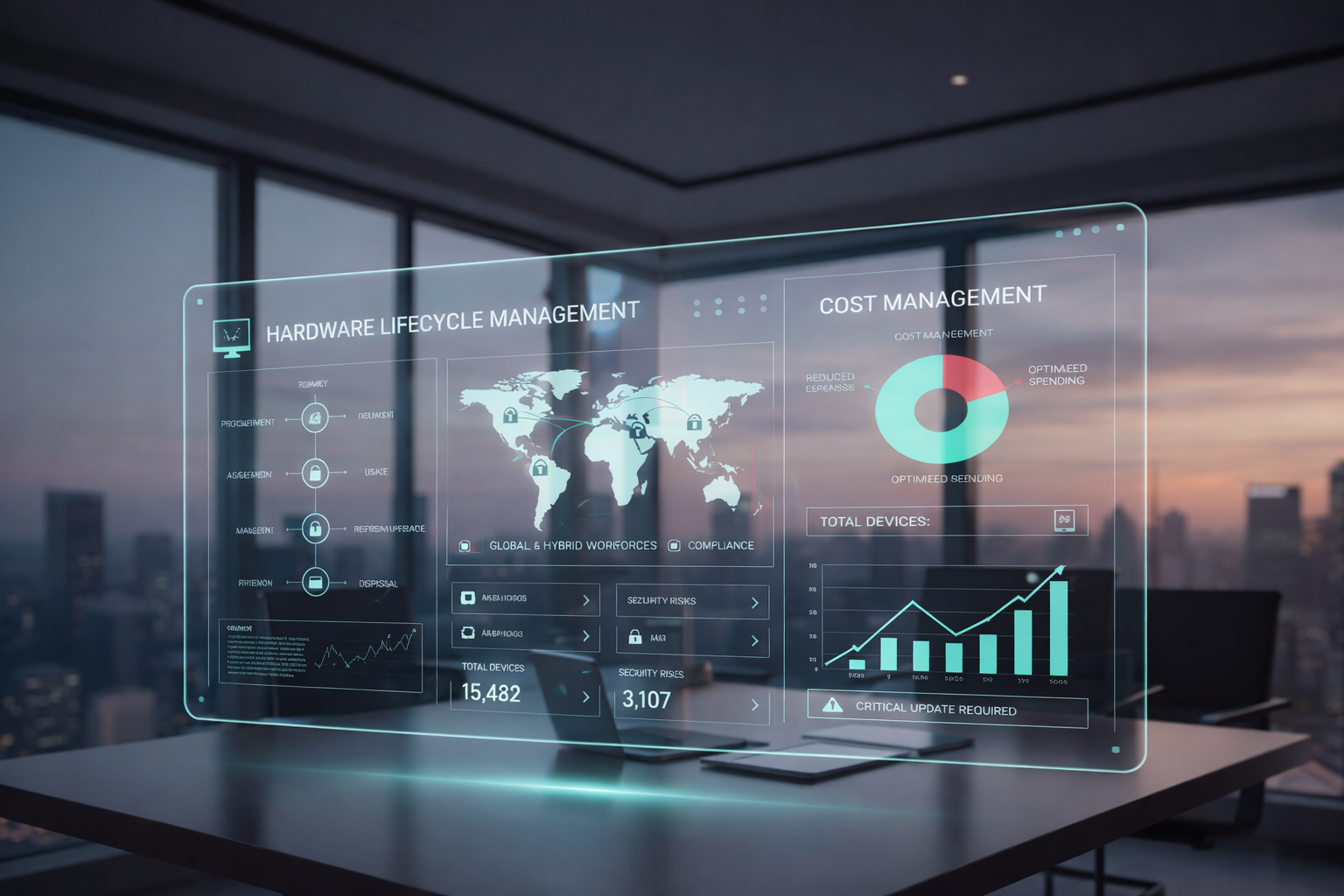
Many companies already use fixed asset management software. They track devices, record ownership, and generate reports. On paper, everything looks under control.
In reality, gaps still exist. Devices are delivered but not ready. Assets are tracked but not actively managed. Teams know what they own, but not what is happening to those assets day to day.
This is the limitation of most tools. They focus on tracking, not operations. As companies grow, this gap becomes harder to ignore.
This article explains what fixed asset management software actually does, where it falls short, and what companies need if they want full visibility and control across the asset lifecycle.
What is asset management software?
This type of asset management system helps companies track, manage, and control physical assets such as laptops, servers, and other long term equipment. It gives teams a clear view of what assets exist and supports better organization as the number of assets grows.
In simple terms, it records what assets are owned, where they are located, and who is using them. Instead of relying on spreadsheets or manual tracking, all information is stored in a centralized system that can be accessed and updated by relevant teams.
By keeping data consistent and up to date, the system reduces errors and improves visibility across operations. This becomes especially important as companies scale, where manual processes are harder to maintain and asset data needs to stay accurate across different teams and locations.
What fixed asset management system software does?
A fixed asset management system software connects asset data into one place. It allows teams to:
- Track asset location and ownership
- Monitor usage and status
- Maintain records for audits and reporting
This is why many companies adopt fixed assets management software as they scale. It improves visibility and reduces reliance on spreadsheets.
What asset management software actually solves
Fixed asset management software addresses a core problem: lack of visibility. As assets increase, companies need a reliable way to track and manage them.
Core problems it addresses
- Difficulty tracking asset location
- Unclear ownership across teams
- Inconsistent inventory records
- Limited visibility during audits
By centralizing data, the system tracking software helps teams maintain accurate records and make better decisions.
Key features that matter in asset management tools
Not all tools offer the same capabilities. The value of a system depends on the features it provides and how well they support daily operations.
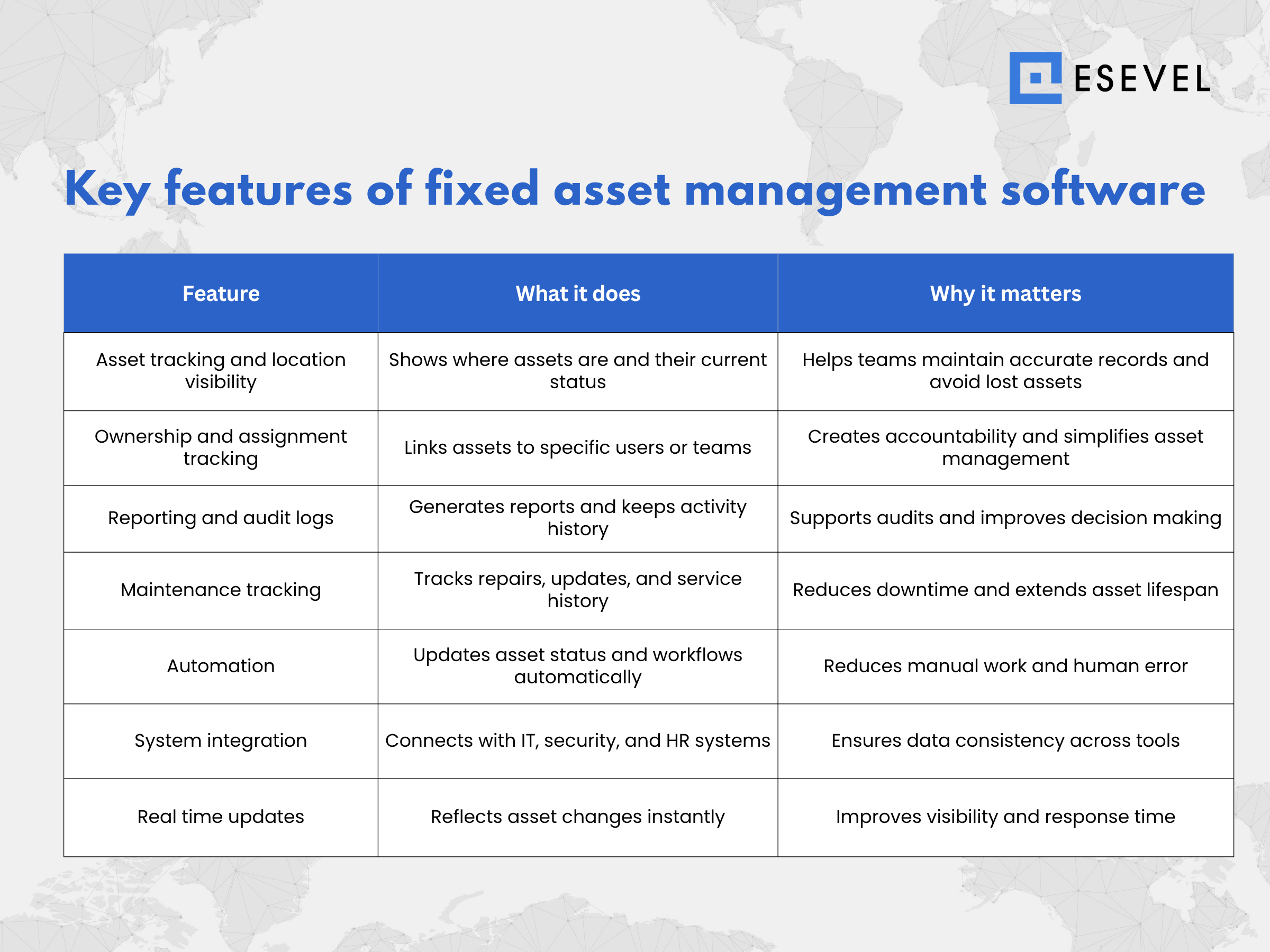
These features show how well a system supports both tracking and operations. Basic features help maintain visibility, while advanced features improve efficiency and reduce manual work.
As companies grow, the need shifts from simple tracking to automation and integration. Choosing the right combination ensures the system can scale without creating new gaps.
Where most fixed asset management software falls short
Fixed asset management software improves visibility, but it does not solve the full problem. Many tools are designed to track assets, not manage what happens to them over time.
The limitation of software only approach
Most systems focus on recording asset data. They show what assets exist, where they are, and who is using them. This is useful, but it is only one part of asset management.
In practice, companies still need to handle procurement, deployment, support, and recovery. These steps often sit outside the software, which creates gaps between data and operations. Teams may have accurate records, but still struggle to coordinate what happens next.
Why tracking is not enough
Tracking answers basic questions, but it does not ensure assets are ready or properly managed. A system may show that a device has been delivered, but it does not confirm if it is configured, secure, or ready for use.
This becomes a problem during onboarding. Employees may receive devices that are not prepared, even though they appear as “assigned” in the system. IT teams then need to step in and fix issues manually.
Tracking also does not handle ongoing support. It does not manage repairs, replacements, or recovery when employees leave. Without these processes, assets remain visible but not controlled.
The gap between data and action
The main issue is the gap between information and execution. Software provides data, but it does not take action.
Teams still need to:
- Coordinate with vendors for delivery
- Prepare devices before use
- Manage support requests
- Recover and reassign assets
When these tasks are handled outside the system, processes become fragmented. Teams rely on emails, spreadsheets, and manual updates to fill the gaps.
Why this becomes a bigger problem at scale
In small teams, these gaps may not be obvious. Teams can manage assets manually and resolve issues as they arise. As the company grows, the number of assets increases and operations spread across regions. Manual coordination becomes harder, and small gaps turn into repeated problems.
This is where most fixed asset management software falls short. It provides visibility, but not full control. Without connecting tracking to lifecycle management, companies struggle to scale asset operations efficiently.
Cloud based fixed asset management software
As teams become more distributed, companies are shifting toward cloud based systems to manage their assets more effectively.
Why companies adopt cloud solutions
Cloud based systems allow teams to access asset data from anywhere, without relying on local systems or manual updates. This creates a single source of truth that stays consistent across locations.
For remote and global teams, this is critical. It ensures that IT and operations can manage assets without being limited by geography.
Benefits for growing teams
Cloud systems support scaling by improving access and visibility across regions.
- Easier access across different locations and teams
- Real time updates that reflect asset changes instantly
- Faster scaling without the need for additional infrastructure
With these capabilities, companies can manage assets across regions with more consistency and less operational friction.
Fixed asset management software vs lifecycle management
Fixed asset management software and lifecycle management serve different roles. One focuses on visibility, while the other focuses on control and execution.
Key differences
| Fixed asset management software | Lifecycle management |
| Tracks assets and inventory | Manages the full asset lifecycle |
| Records ownership and location | Handles procurement and delivery |
| Generates reports and audit logs | Ensures deployment and setup |
| Provides visibility into assets | Supports maintenance and support |
| Shows current asset status | Manages recovery and reuse |
Why this difference matters
Fixed asset management software helps you understand what assets exist and where they are. However, it does not manage what happens before or after that data is recorded.
Lifecycle management fills this gap. It ensures that assets are not only tracked, but also deployed, maintained, and recovered properly.
This distinction is important because visibility alone does not guarantee control. Companies need both to manage assets effectively at scale.
What to look for in the best fixed asset management software
Choosing the right system requires more than comparing features. Companies need to evaluate how well the software supports real operations, not just tracking.
When selecting the best fixed asset management software, focus on how the system performs in day to day use:
- Visibility across all assets so teams can see location, ownership, and status at any time
- Integration with existing systems such as IT, HR, and security tools to avoid data silos
- Automation to reduce manual updates and improve accuracy
- Scalability to support growth across teams, assets, and regions
The best software for fixed asset management does more than store data. It supports both tracking and the operational processes that keep assets controlled and usable.
Why software alone is not enough for IT assets
IT assets require more than tracking. They need to be deployed, secured, supported, and recovered. Software helps with visibility, but it does not manage these processes.
As companies grow, this gap becomes more visible. Teams spend time coordinating across tools and vendors instead of focusing on operations. This is why companies move beyond tools and adopt systems that connect procurement, management, and support.
Rethinking fixed asset management for global teams
Managing fixed assets becomes more complex when teams operate across countries. Devices move between locations, employees, and vendors, which makes tracking and coordination harder.
In global environments, companies need more than basic tracking. They need a system that connects procurement, delivery, and asset management while maintaining visibility at every step.
Many traditional tools track assets but do not manage how they move or are supported across regions. This creates gaps in operations.
Esevel helps solve this by combining device procurement, tracking, and support in one system. It enables companies to manage assets across Europe, the US, APAC, and other regions with better visibility and control.
FAQs
What is fixed asset management software?
Fixed asset management software is a system that helps companies track and manage physical assets. It provides visibility into location, ownership, and status.
What is the best asset management software?
The best fixed asset management software depends on business needs. Companies should look for tools that offer visibility, integration, and scalability.
Is there free fixed asset management software?
Yes, free tools are available. However, they often have limited features and may not support growing teams or complex operations.
What features should asset management tools have?
Key features include asset tracking, ownership records, reporting, and integration with other systems. Advanced tools also offer automation and real time updates.
What is cloud based fixed asset management software?
Cloud based fixed asset management software allows teams to access asset data from anywhere. It provides centralized visibility for distributed teams.
Build asset management beyond software
Fixed asset management software improves visibility, but it does not solve everything.
As companies grow, tracking alone is not enough. Assets need to be managed across their full lifecycle, from procurement to recovery. A connected system changes this. It brings together tracking, deployment, support, and control into one process.
Esevel supports this by combining procurement, asset management, and IT support into one platform. It helps companies manage assets across global teams without losing visibility or control. If your current system only tracks assets, it may be time to move beyond software and build a system that supports real operations.