Most companies do not realize they have an IT infrastructure problem until something breaks. A device fails, access is missing, or a system slows down, and suddenly multiple teams are involved just to fix a basic issue.
At first, these problems seem isolated. As the company grows, they start to repeat. Devices are spread across locations, vendors respond at different speeds, and internal IT teams spend more time reacting than planning. The issue is not a lack of tools, but a lack of structure in how IT is managed.
This is where IT infrastructure management services come in. They are meant to reduce complexity and support operations at scale. However, many companies still struggle even after adopting these services because the underlying problems are not fully addressed.
This article explains what IT infrastructure management services actually mean, why companies rely on them, and what needs to change for IT operations to work consistently across teams and regions.
Why companies turn to IT infrastructure management services
As IT environments grow, managing infrastructure becomes more complex than most teams expect. What starts as a manageable setup quickly turns into a mix of devices, systems, and vendors that are difficult to coordinate.
Companies begin to notice recurring issues. Devices are not ready when needed, systems require constant monitoring, and internal teams spend more time fixing problems than improving operations. These challenges create pressure to find a more structured way to manage IT.
What these services are designed to solve
IT infrastructure management services are designed to reduce this complexity by taking over key operational responsibilities. Instead of relying entirely on internal teams, companies use these services to ensure their infrastructure is monitored, maintained, and supported consistently.
In practical terms, these services help companies:
- Maintain visibility across systems and devices
- Ensure infrastructure is actively monitored
- Reduce manual coordination between teams
- Improve reliability across operations
This is how companies move from reactive support to more structured IT management.
How managed services actually work
Managed services operate by assigning responsibility for IT operations to a provider, either fully or partially. Instead of handling everything internally, companies rely on external teams to manage infrastructure on an ongoing basis.
This can include monitoring systems, resolving issues, and maintaining performance across environments. The goal is to create a more predictable and scalable way to manage IT without increasing internal workload.
However, while this model improves support, it does not always solve deeper operational gaps, especially when infrastructure processes are still handled separately.
What do IT infrastructure management services actually include
Most descriptions of IT infrastructure management services focus on broad categories, but in practice, these services cover a wide range of operational responsibilities that keep systems running day to day.
The scope goes beyond monitoring or basic support. It includes how infrastructure is maintained, how issues are handled, and how systems are kept usable across different teams and locations.
Core service layers
At a practical level, IT infrastructure management services are typically structured into several layers of responsibility:
- Device and endpoint management, which ensures laptops, workstations, and other devices are configured, updated, and usable
- System and application support, which keeps internal tools and platforms running without disruption
- Network and connectivity management, which maintains stable access across offices and remote teams
- Monitoring and incident response, which detects issues early and resolves them before they escalate
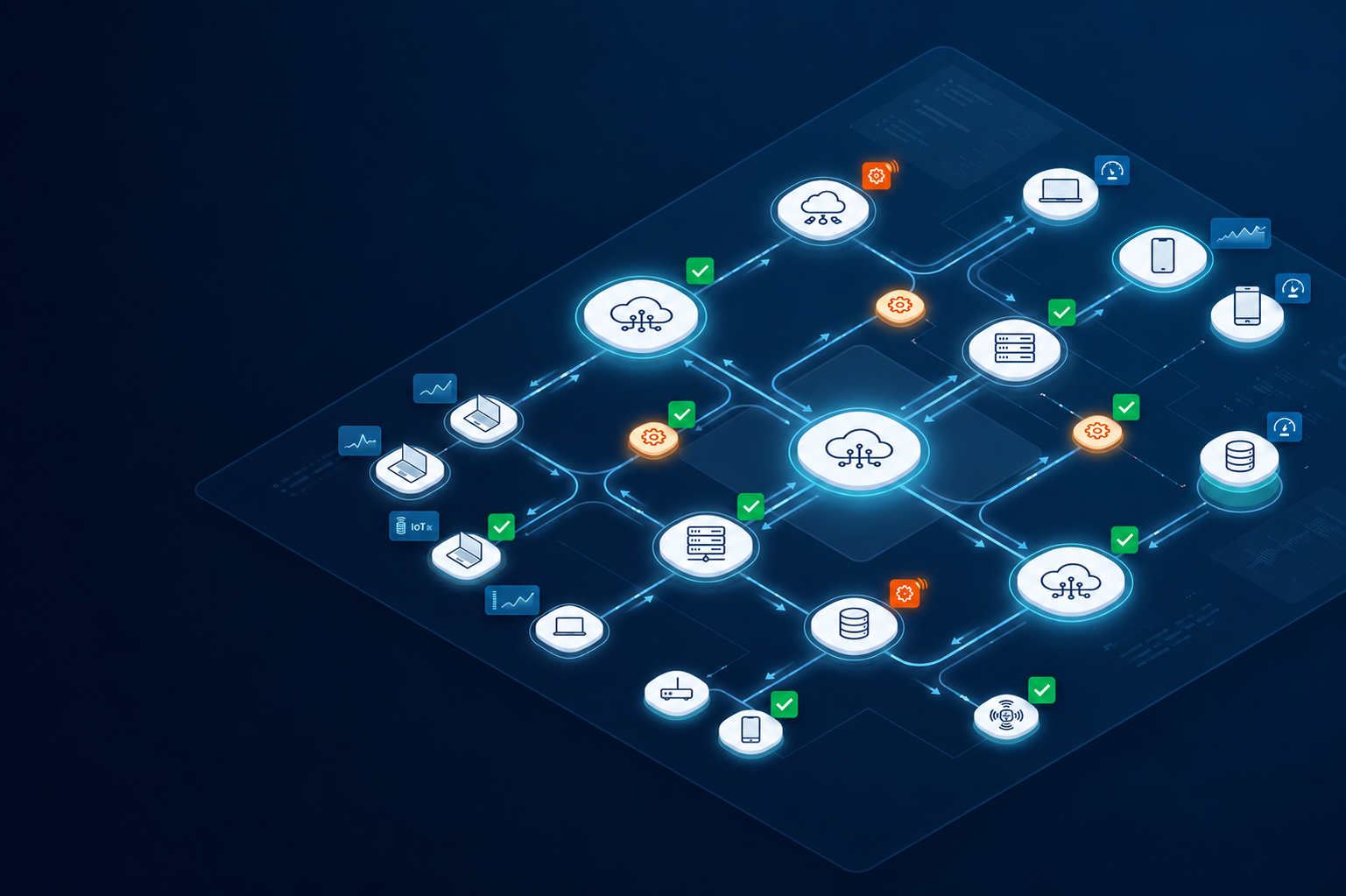
These layers form the foundation of IT infrastructure and service management, connecting technical systems with daily operations.
What this looks like in real operations
In real environments, these services are not isolated. They are part of continuous workflows that support employees and systems across the company.
For example, when a new employee joins, infrastructure services may be involved in preparing devices, ensuring system access, and maintaining performance from day one. When issues occur, monitoring systems trigger responses that require coordination between tools, providers, and internal teams.
This is where the complexity increases. While services cover many areas, they are often delivered in separate layers, which can create gaps between tracking, support, and execution.
Why scope alone is not enough
Even when companies adopt comprehensive services, challenges remain if these layers are not connected. Having monitoring, support, and device management in place does not automatically mean they work together as one system.
This is why understanding what services include is only part of the picture. The real challenge is how these services are structured and whether they support operations in a consistent and scalable way.
Types of IT infrastructure managed services
Companies adopt different types of IT infrastructure management services based on how their systems are structured and how much control they want to retain internally. These services are not limited to one model, but usually combine multiple layers such as remote support, cloud management, and device operations.
Fully managed vs co-managed
In a fully managed model, the provider takes responsibility for most IT operations, including monitoring, maintenance, and support. This approach reduces the need for internal IT resources and creates a more centralized structure.
In a co-managed model, internal teams work alongside external providers. Companies retain control over certain areas while outsourcing specific functions, which provides flexibility but requires stronger coordination.
Remote IT infrastructure management services
Remote services are designed for distributed environments where teams are not located in a single office. These services handle monitoring, troubleshooting, and support without requiring physical presence.
As companies expand globally, remote IT infrastructure management services allow centralized operations while supporting users across different regions.
Cloud infrastructure management services
Cloud-based services focus on managing systems that run in cloud environments rather than on-premise infrastructure. These services include performance monitoring, uptime management, and resource optimization.
Cloud managed services for IT infrastructure help companies scale faster and reduce reliance on physical infrastructure, but they also introduce new dependencies on platforms and providers.
Network and connectivity management services
Some services specialize in network infrastructure, which is essential for maintaining system performance and connectivity. These services ensure that users, systems, and locations remain connected without disruption.
They typically include:
- Network monitoring and performance optimization
- Connectivity management across regions
- Issue detection and resolution
This falls under IT infrastructure and network management services, which supports consistent access across environments.
Endpoint and device management services
These services focus on managing employee devices such as laptops and workstations throughout their lifecycle. They ensure devices are configured, secure, and ready for use across teams.
In practice, this includes provisioning, updates, maintenance, and support, all of which become more complex as companies scale across locations.
Hybrid and multi-vendor service models
Many companies rely on multiple providers for different parts of their infrastructure, such as cloud, network, and device management. This approach allows specialization but often creates fragmentation.
Managing multiple vendors requires coordination across systems, service levels, and response times, which can introduce inefficiencies if not handled properly.
Why companies use managed IT infrastructure services
As IT environments grow, managing infrastructure becomes more complex and harder to coordinate across systems, vendors, and regions. Companies turn to managed IT infrastructure services not only to reduce internal workload, but to bring structure, consistency, and scalability to operations that have become fragmented.
Key business drivers
Several operational challenges push companies toward managed services:
- Increasing internal workload, where IT teams spend more time resolving issues than improving systems
- Lack of consistent support, especially across different locations and time zones
- Difficulty scaling operations, as infrastructure grows faster than internal resources
- Limited visibility across systems, making it hard to track performance and usage
Managed services help address these issues by providing dedicated support and structured processes that reduce reliance on reactive problem solving.
When companies typically make the shift
The decision to adopt managed services often happens at specific growth points, such as expansion into new regions, rapid hiring, or increasing reliance on distributed systems. At this stage, internal teams usually reach a limit where manual coordination and disconnected tools are no longer sustainable, making managed services a practical way to stabilize operations.
What to look for in the best IT infrastructure management services
Choosing the right provider requires more than comparing service lists, because many vendors offer similar capabilities but differ in how those services are delivered in practice. Companies need to evaluate how well a provider supports real operations across teams, systems, and locations.
Key selection criteria
A strong IT infrastructure management service should provide:
- Coverage across regions, ensuring consistent support for global or distributed teams
- Reliable response times, with clear service level agreements
- Integration with existing systems, so workflows are not fragmented
- Visibility and reporting, allowing teams to monitor performance and usage
These criteria help ensure that services are both available and effective.
Beyond service coverage
Many companies focus on what services are included but overlook how those services are structured, which often leads to gaps in execution. Even when monitoring, support, and device management are available, teams may still need to coordinate across systems manually.
What good services look like in practice
Effective IT infrastructure management services create a connected system rather than isolated functions. In practice, this means devices are ready when needed, issues are resolved without escalation delays, and teams have clear visibility into infrastructure performance.
Future of IT infrastructure management services
As IT environments become more distributed and complex, the role of infrastructure management services is shifting from reactive support to proactive and lifecycle-driven operations. Companies are no longer just looking for vendors that fix issues, but for systems that can support continuous operations across devices, users, and regions.
Key trends shaping the future
Several trends are changing how infrastructure services are delivered:
- Remote-first operations, where infrastructure must support employees across multiple locations without relying on physical IT presence
- Increased automation, with monitoring and issue detection happening in real time to reduce manual intervention
- Integration across systems, connecting devices, applications, and networks into a unified view
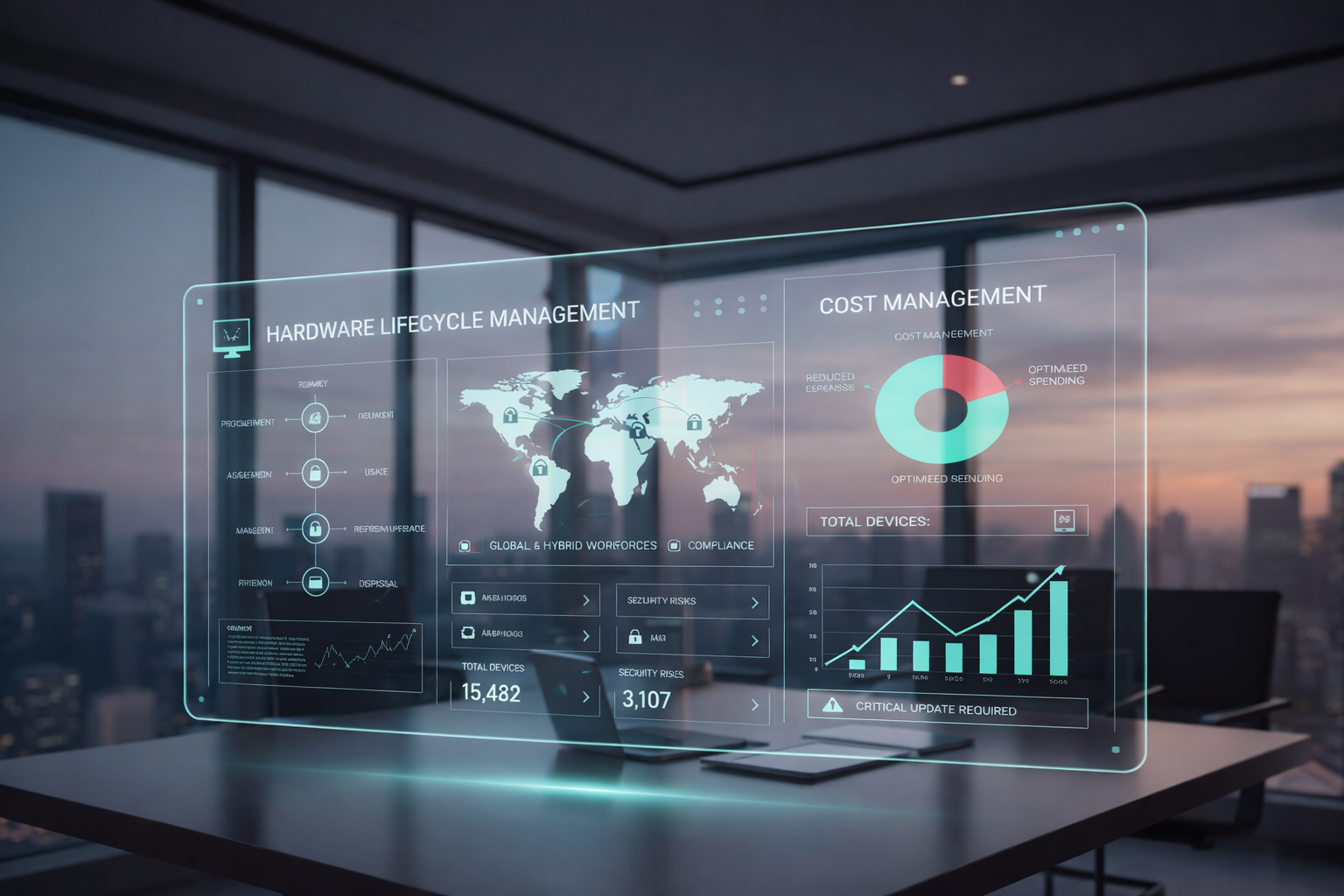
- Lifecycle-based management, where services extend beyond support to include procurement, deployment, and recovery
These trends reflect a shift from isolated service functions to more connected and scalable systems.
What this means for companies
As these changes take place, companies need to rethink how they evaluate infrastructure services. It is no longer enough to focus on uptime or response time alone. Instead, the focus is shifting toward how well services support the full lifecycle of infrastructure and how consistently they operate across environments.
Companies that adapt to this shift gain better visibility, faster operations, and fewer coordination issues between teams and vendors.
Where traditional managed services fall short
While managed services are designed to simplify IT operations, many traditional models still focus on limited areas of support and fail to address how infrastructure is managed end to end. This creates a gap between having support available and actually having control over operations.
Common limitations in traditional services
Most traditional managed services share similar weaknesses:
- Reactive, ticket-based support, where issues are addressed only after they occur
- Limited ownership, with providers responsible for specific tasks but not overall outcomes
- Fragmented service delivery, where different vendors handle different parts of infrastructure
- Minimal lifecycle coverage, with little involvement in procurement, deployment, or recovery
These limitations make it difficult to maintain consistency across operations, especially as companies scale.
Why these gaps become more visible at scale
In smaller environments, these gaps may not be obvious because teams can manage coordination manually. As infrastructure grows across locations and systems, the lack of integration becomes a major issue.
Teams must follow up on vendors, track asset status manually, and connect processes that are not designed to work together. This leads to delays, inefficiencies, and reduced visibility.
The real issue behind the model
The core problem is that traditional managed services treat infrastructure as a set of separate tasks rather than a connected system. Even when each service works individually, the overall operation remains fragmented.
This is why companies that rely only on traditional models often continue to experience operational challenges, even after outsourcing parts of their IT infrastructure.
A new model: lifecycle-based infrastructure management
Modern IT operations require a different approach that connects all stages of infrastructure management.
What modern services should include
A complete model includes:
- Procurement and global delivery
- Deployment and device setup
- Real-time tracking and visibility
- Ongoing support and maintenance
- Asset recovery and reassignment
This approach connects operations instead of managing them separately.
Esevel supports this model by combining IT infrastructure management with lifecycle control. It enables companies to manage devices and systems across regions while maintaining visibility and consistency.
FAQs
What is IT infrastructure management services
IT infrastructure management services refer to managing IT systems, including hardware, software, and networks, through structured support and external providers.
What is IT infrastructure managed services
IT infrastructure managed services involve outsourcing IT operations to a provider that handles monitoring, maintenance, and support.
What is infrastructure management service in IT industry
Infrastructure management services in the IT industry focus on maintaining systems, ensuring performance, and supporting operations across environments.
What are managed services for IT infrastructure
Managed services for IT infrastructure include monitoring, support, and management of systems to ensure stability and performance.
What is cloud infrastructure management
Cloud infrastructure management involves managing systems hosted in cloud environments, including performance, security, and availability.
Build infrastructure that scales without complexity
IT infrastructure management services are designed to simplify operations, but they often fall short when they focus only on support instead of the full lifecycle of infrastructure. As companies grow, managing IT requires more than reacting to issues, because teams need systems that connect procurement, deployment, tracking, and ongoing support into one consistent process.
A lifecycle-based approach makes infrastructure easier to scale by reducing fragmentation and improving visibility across teams and regions. Esevel supports this by combining infrastructure management with lifecycle control, serving global enterprises with employees across Europe, the US, APAC, and other regions, and helping companies maintain consistent operations without relying on disconnected tools or multiple vendors.