IT support and services support daily business operations across devices, applications, and networks. When these systems slow down or fail, teams cannot work efficiently. This is why many companies rely on structured IT support services to keep systems stable and available.
Managing IT internally can become difficult as systems grow more complex. Teams must handle support requests, maintain infrastructure, and manage security at the same time. Without structured IT support services, issues can take longer to resolve and system performance may become inconsistent.
What IT support and services mean
IT support and services refer to the combined management of technical support and IT operations. This includes resolving user issues, maintaining systems, and ensuring that infrastructure remains secure and functional.
IT support focuses on assisting users and fixing problems. IT services extend this by managing systems, monitoring performance, and maintaining long term stability.
A structured model includes:
- IT support for resolving technical issues
- IT services for managing systems and infrastructure
- IT managed services for ongoing monitoring and maintenance
This approach allows businesses to move from reactive troubleshooting to consistent IT service management.
What is included in IT support and services
IT support and services include several functions that work together to maintain stable operations and support users. These services cover daily troubleshooting, system management, security, and ongoing maintenance to reduce downtime and keep teams productive.
Help desk and tech support
Help desk support handles daily technical issues. This includes troubleshooting software problems, resolving access issues, and assisting with device related concerns, such as setting up tools like a scientific calculator, email clients, collaboration apps, or security software to ensure employees can work efficiently.
Device and infrastructure management
IT teams manage devices and systems to maintain consistent performance. This includes configuring laptops, maintaining servers, and ensuring systems follow company standards.
Monitoring and maintenance
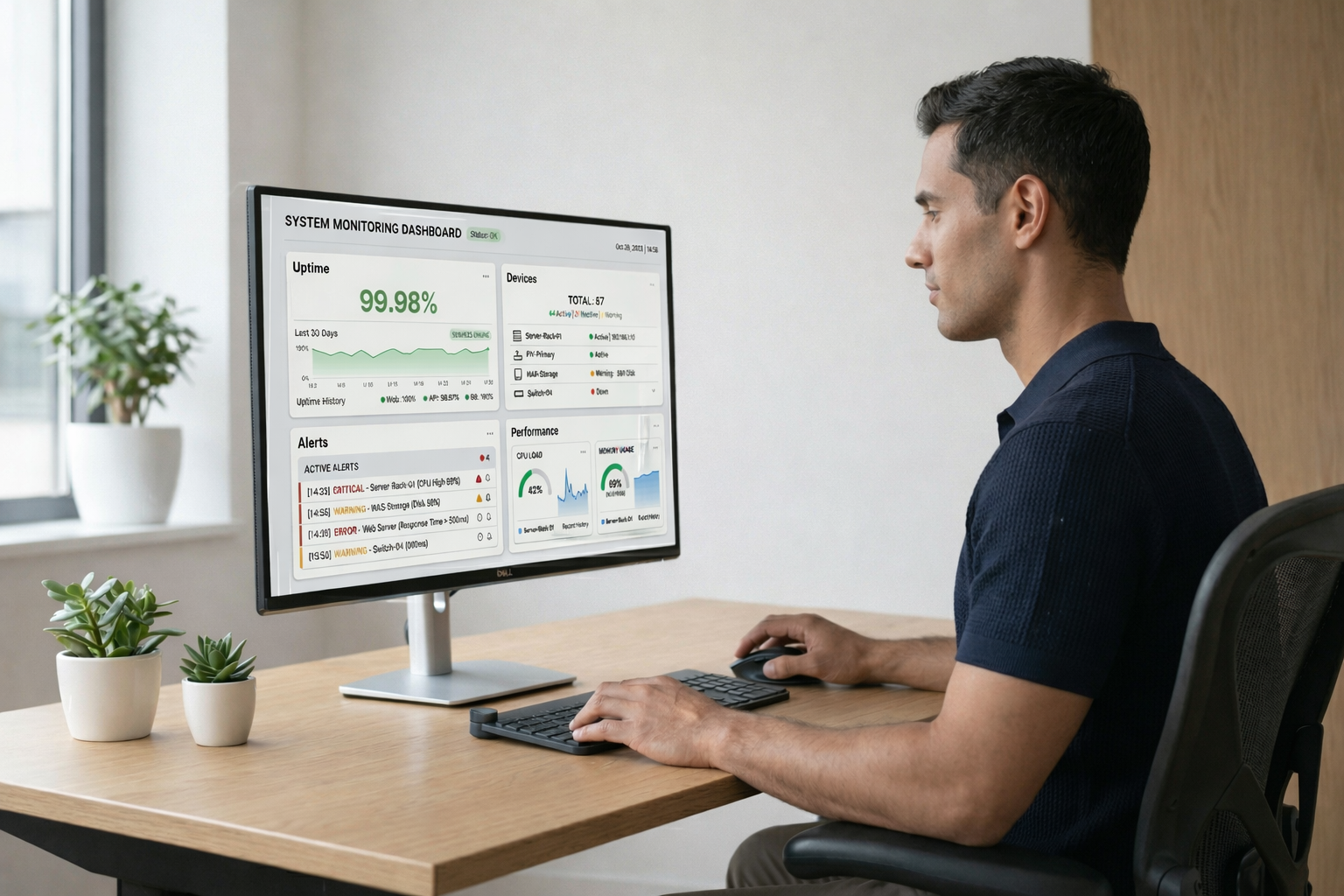
Monitoring tools track system performance and detect issues early. Maintenance tasks such as updates and patch management help keep systems stable and secure.
Security and system updates
Security support includes applying updates, managing access controls, and monitoring systems for potential risks. These practices help protect business data and maintain system integrity.
IT consulting and planning
Business IT consulting services help organizations plan system improvements and align IT operations with business needs. This includes optimizing infrastructure and improving system efficiency.
These services work together to maintain consistent IT operations and reduce operational risk.
Difference between IT support and managed IT services
Businesses often compare IT support with managed IT services when deciding how to manage IT operations.
| Aspect | IT support | Managed IT services |
| Scope | Focus on issue resolution | Covers support and system management |
| Approach | Reactive support | Proactive monitoring and maintenance |
| Cost model | Pay per issue or request | Subscription based or fixed model |
| System management | Limited | Continuous system oversight |
| Support coverage | Based on requests | Ongoing support and monitoring |
IT support focuses on resolving problems when they occur. Managed IT services provide continuous oversight and maintenance to prevent issues and maintain performance.
Why businesses use IT support and services
Businesses use IT support and services to maintain stable operations and reduce the burden on internal teams. As systems, users, and applications grow, managing IT without structure can lead to delays, inconsistent performance, and increased operational risk. Reliable IT support also helps businesses maintain the technology infrastructure needed to support online marketing efforts and other digital operations.
Improving system reliability
Reliable systems are essential for daily business operations. Applications, email, and shared systems must remain available for employees to complete their work. When systems fail or slow down, productivity drops and tasks are delayed.
IT support and services help maintain reliability through continuous monitoring, regular maintenance, and timely issue resolution. This structured approach ensures that systems remain stable and available, even as usage increases.
Reducing operational workload
Internal teams often handle IT tasks alongside their main responsibilities. This can create delays when issues arise, especially when teams lack the time or expertise to resolve them quickly.
IT support services take over routine tasks such as troubleshooting, updates, and system maintenance. This allows internal teams to focus on business priorities while ensuring that IT operations continue without interruption.
Access to expertise
Managing IT systems requires technical knowledge across multiple areas, including infrastructure, security, and system performance. Small teams may not have access to this range of expertise.
Outsourced IT support services provide access to experienced professionals who understand system management and best practices. This helps ensure that systems are maintained correctly and issues are handled efficiently.
Supporting business growth
As businesses expand, IT requirements increase. More employees, devices, and applications create additional demand on systems and support processes.
IT support and services help maintain consistent operations as the business grows. Structured support ensures that new users and systems can be integrated without disrupting existing operations.
These factors make IT support and services an important part of business operations. With structured support in place, organizations can maintain system stability, reduce operational risk, and manage IT more effectively.
Key benefits of IT managed services
Managed IT services provide structured support that helps businesses maintain stable systems and improve operational efficiency. These services combine proactive monitoring, predictable costs, and scalable support to reduce disruptions and support long term growth.
Cost predictability
Managed IT services often follow a fixed pricing model. This allows businesses to plan IT spending more accurately.
Proactive system management
Continuous monitoring and maintenance help detect issues early. This reduces disruptions and keeps systems stable.
Security and compliance support
Managed IT services include updates, patch management, and system monitoring. These practices help reduce security risks and maintain system integrity.
Scalable IT operations
Managed IT support services allow businesses to adjust support as needs change. This helps maintain consistent service as operations grow.
These benefits help businesses maintain reliable systems while managing IT more efficiently.
How to choose the right IT services provider
Choosing the right IT services provider affects how well systems run and how quickly issues are resolved. A structured evaluation helps businesses select a provider that aligns with operational needs, security requirements, and long term plans.
Evaluate service scope
Start by reviewing what services are included. A reliable provider should cover user support, device management, monitoring, maintenance, and security practices. Without clear coverage, some issues may fall outside the provider’s responsibility.
A well defined scope ensures that IT support and services remain consistent across systems and users, and reduces the risk of gaps in support.
Check response time and service levels
Response time plays a key role in maintaining system performance. Providers should define clear service levels that explain how quickly they respond to issues and how requests are prioritized.
Key points to review include:
- Expected response time for different types of issues
- Resolution time targets for common problems
- Availability of support during business hours or extended periods
- Method of support delivery such as remote or on site
Understanding these factors helps ensure that support remains reliable when issues occur.
Assess scalability
IT requirements change as businesses grow. A provider should be able to support more users, devices, and systems without requiring major changes to the service structure.
Scalable IT support helps maintain consistent operations as the organization expands, and reduces the need to switch providers as requirements increase.
Review security practices
Security is a core part of IT services. Providers should follow consistent practices such as applying updates, managing access controls, and monitoring systems for potential risks.
It is important to ensure that the provider maintains a structured approach to security and supports basic data protection requirements. This helps reduce risk and maintain system stability over time.
Choosing the right IT services provider requires careful evaluation of these factors. With the right provider, businesses can maintain reliable IT operations and support long term growth more effectively.
How IT support and services improve daily operations
IT support and services help businesses keep systems running and support users in their daily work. These services focus on maintaining performance, resolving issues quickly, and ensuring consistent system reliability across the organization.
Key improvements include:
- Maintaining system performance through monitoring and maintenance
- Reducing downtime with faster issue resolution
- Supporting users with consistent tech support services
- Improving visibility through structured IT service management
- Maintaining system reliability across devices and applications
These improvements help businesses operate more efficiently and reduce operational disruptions.
Frequently asked questions about IT support and services
What is IT support and services
IT support and services refer to the combination of technical support and system management. This includes resolving user issues, maintaining systems, and ensuring that IT infrastructure remains stable and secure.
What is the difference between IT support and managed services
IT support focuses on resolving issues when they occur. Managed services provide ongoing monitoring, maintenance, and system management to prevent issues and maintain performance.
What is included in IT support services
IT support services typically include help desk support, device management, system monitoring, updates, and security practices to maintain stable operations.
How much do IT services cost
The cost depends on the scope of services and the number of users or devices. Many providers offer subscription based models that provide predictable pricing.
When should a business outsource IT support
Businesses often outsource IT support when internal resources are limited or when systems become more complex. Outsourced support helps maintain consistent operations and access technical expertise.
Building reliable IT operations with structured support
IT support and services help businesses maintain stable systems and consistent operations. As IT environments grow more complex, structured support becomes essential to manage devices, systems, and user needs effectively.
By combining support, monitoring, and system management, organizations can reduce downtime, improve performance, and maintain reliable IT operations.
Many organizations simplify these processes with platforms such as Esevel, which brings IT support, device operations, and system visibility into one structured approach. If your organization wants to improve IT operations and maintain consistent system performance, this approach can help build a more reliable foundation for your business.