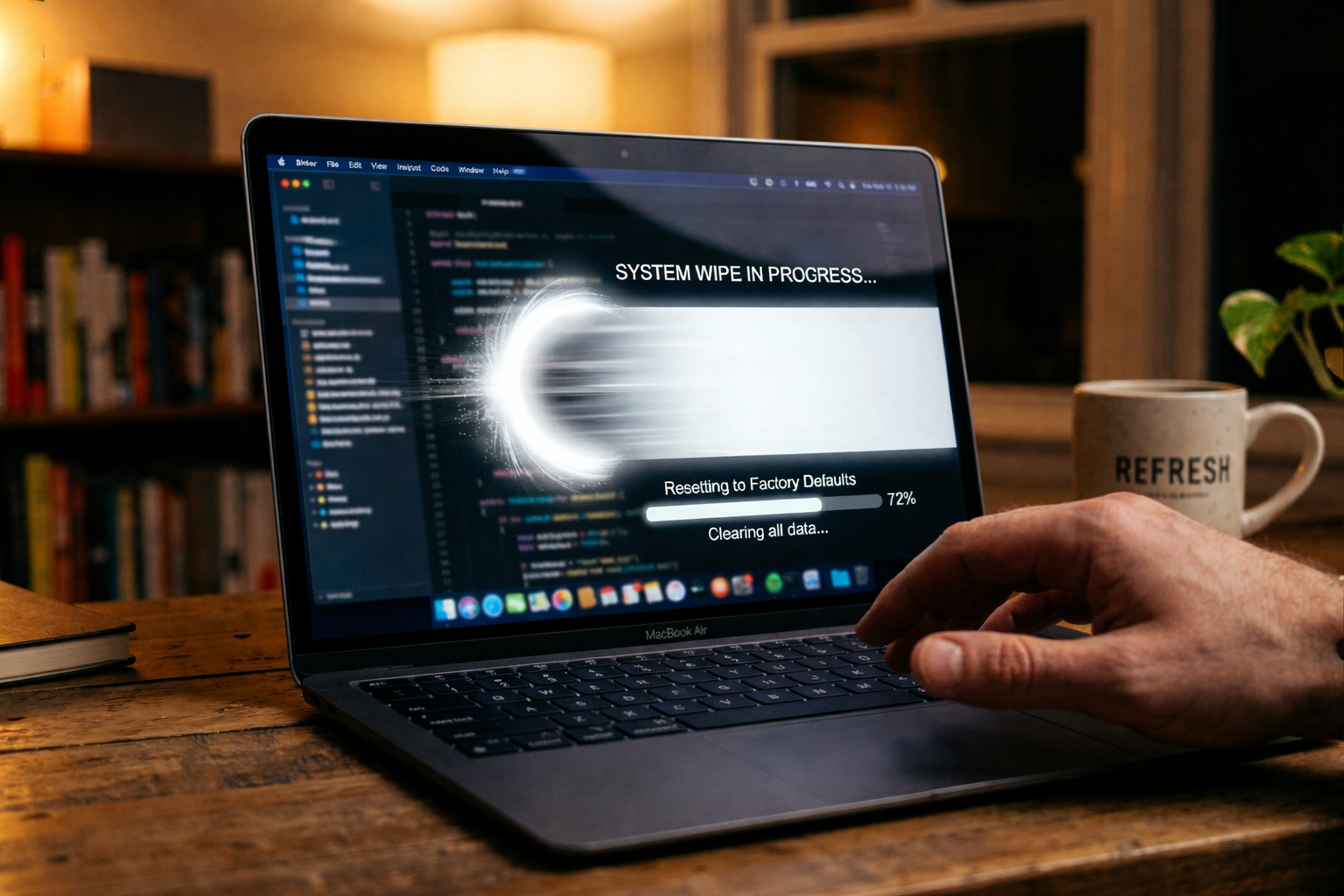
Many organizations focus heavily on onboarding but underestimate the operational complexity of offboarding. When employees leave, laptops and other devices must be retrieved, secured, and prepared for future use.
Without structured offboarding operations, companies may lose track of hardware assets, leave corporate data exposed, and delay device recovery. These issues become even more difficult when employees work from different regions.
Organizations streamline offboarding by implementing structured device retrieval and redeployment processes. These processes include asset recovery, secure data erasure, laptop cleaning, and redeployment logistics so devices can be safely reused.
What it means to streamline offboarding
Offboarding is a critical part of device lifecycle management. When employees leave an organization, IT teams must recover devices, secure company data, and maintain accurate asset inventory records. A structured offboarding process helps ensure that hardware assets remain under operational control.
Why offboarding operations matter for IT teams
Offboarding goes beyond disabling user accounts. IT teams need to retrieve company devices, safeguard corporate data, and ensure asset records stay up to date.
A structured offboarding process ensures that laptops, smartphones, and other managed devices are retrieved promptly. It also ensures that devices follow defined security procedures before they are reused or stored.
When organizations streamline offboarding, they maintain stronger control over device inventory and reduce the risk of unmanaged hardware remaining outside company oversight.
Device retrieval and redeployment in IT lifecycle management
Device retrieval and redeployment play an important role in IT asset lifecycle management. Instead of purchasing new hardware for every employee, organizations can recover devices from departing employees and prepare them for redeployment.
This lifecycle approach supports several operational goals:
• maintain accurate asset inventory
• reduce unnecessary hardware purchases
• protect corporate data during device transitions
• improve device utilization across teams
By integrating device retrieval into lifecycle management, organizations ensure that hardware assets remain visible and operational throughout their lifecycle.
Why device retrieval becomes difficult for distributed teams
Offboarding is a critical part of device lifecycle management. When employees leave an organization, IT teams must recover devices, secure company data, and maintain accurate asset inventory records. A structured offboarding process helps ensure that hardware assets remain under operational control.
Remote employees and asset visibility challenges
Distributed work environments often create visibility challenges for IT teams. Employees may work from different cities or countries, which makes it harder to track the physical location of devices.
Without centralized asset tracking systems, companies may struggle to determine which employee currently holds a device. This lack of visibility can delay device retrieval during the offboarding process.
Security risks when laptops are not recovered
Unrecovered laptops introduce security risks because corporate data may remain on devices outside company control. Even when user accounts are disabled, sensitive information may still exist locally on the device.
Organizations reduce these risks by ensuring that devices are retrieved promptly and processed through secure data erasure procedures.
Logistics challenges in global offboarding
Device retrieval becomes more complex when employees work across multiple regions. Shipping coordination, local courier services, and cross border logistics must be considered.
Companies must coordinate asset recovery while ensuring that devices are returned safely and efficiently. This process often requires structured redeployment logistics and regional coordination.
Key systems used for device retrieval and redeployment
Organizations streamline offboarding by using systems that help track devices, protect corporate data, and coordinate asset recovery. These systems support the operational workflow required to retrieve, prepare, and redeploy devices.
Asset inventory and device tracking systems
Asset inventory systems allow IT teams to track devices across the organization. These systems record device ownership, assignment history, and lifecycle status.
With centralized tracking, IT administrators can quickly identify which devices must be retrieved when employees leave the company.
Secure data erasure and compliance processes
Secure data erasure ensures that corporate data is removed from devices before they are redeployed or stored. Data erasure processes typically follow verified methods that prevent information from being recovered.
These processes help organizations protect corporate data and maintain compliance with internal security policies.
Device storage and lifecycle documentation
Recovered devices may be stored temporarily before they are redeployed. During this stage, organizations maintain lifecycle documentation to track the condition and status of each device.
Device storage also allows IT teams to prepare hardware for future assignments.
Redeployment logistics coordination
Redeployment logistics involve preparing recovered devices for new employees. Devices may be reassigned locally or shipped to another location depending on operational needs.
When redeployment logistics are organized effectively, organizations can reuse devices quickly and maintain consistent technology standards across teams.
Device retrieval and redeployment workflow
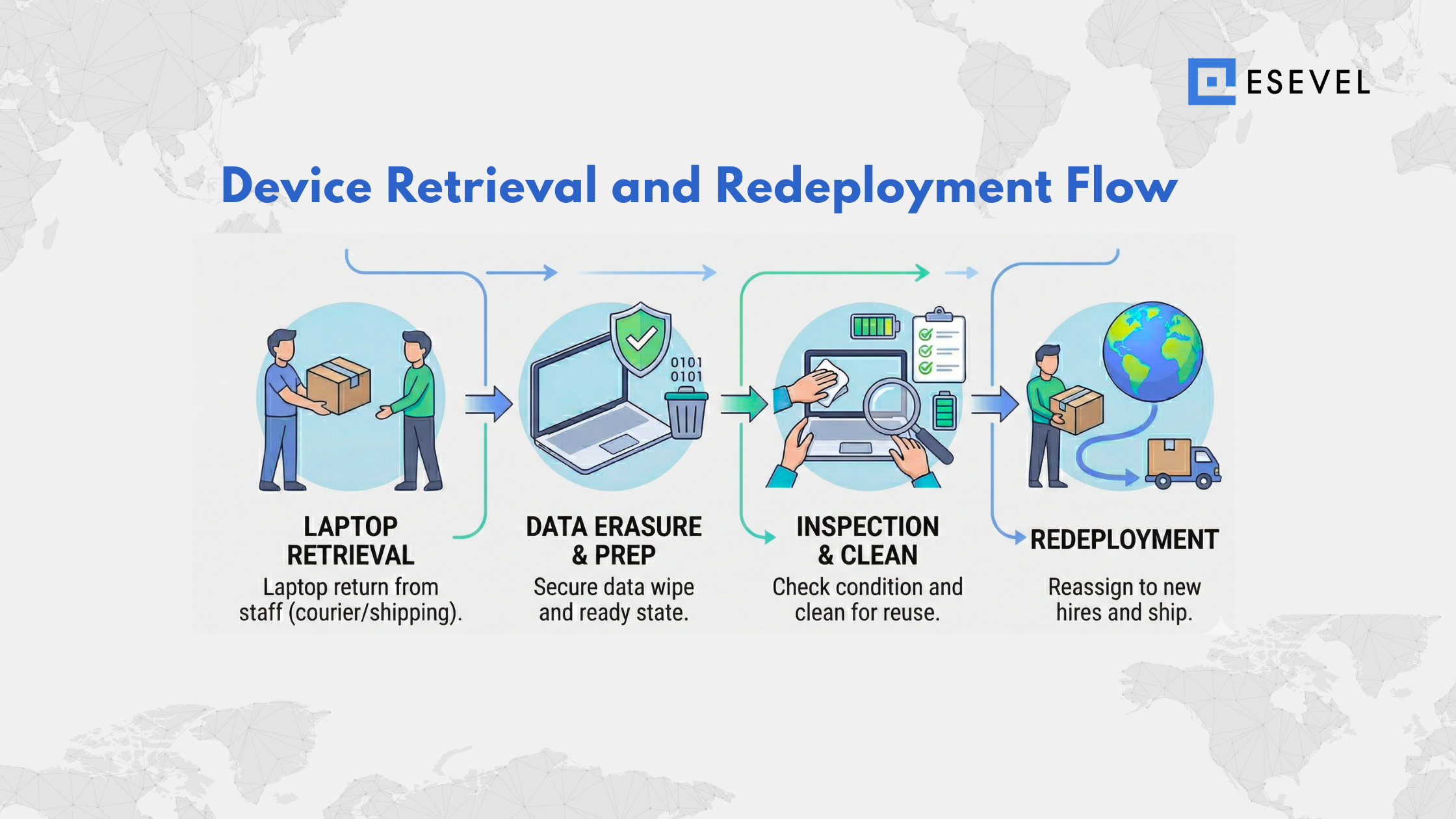
Organizations streamline offboarding by using systems that help track devices, protect corporate data, and coordinate asset recovery. These systems support the operational workflow required to retrieve, prepare, and redeploy devices.
Laptop retrieval from departing employees
When an employee exits the organization, IT teams begin the asset recovery process. This process usually includes confirming device ownership and coordinating the return of company hardware.
Retrieval may involve courier pickup services or return shipping depending on the employee’s location.
Secure data erasure and device preparation
Once the device is returned, IT teams perform secure data erasure to remove corporate data from the system. This step ensures that the device can be safely reused.
After data erasure, administrators verify that the device is ready for redeployment.
Laptop cleaning and hardware inspection
Recovered laptops are typically inspected for physical condition and cleaned before reuse. Hardware components such as batteries and storage drives may also be checked during inspection.
This step helps ensure that devices remain reliable for the next user.
Redeployment logistics for new employees
Prepared devices can then be reassigned to new employees. Redeployment logistics may involve shipping devices to different offices or remote workers.
A structured redeployment workflow allows organizations to reuse devices efficiently while maintaining accurate asset records.
Offboarding operations for global teams
Offboarding operations usually follow a structured sequence. Each stage ensures that devices are recovered safely, secured properly, and prepared for future use.
Regional device retrieval across global locations
Organizations with distributed teams often manage device retrieval across several regions. Employees may be located in different countries, which requires coordinated logistics and asset tracking.
Regional retrieval processes help ensure that devices are returned regardless of employee location.
Coordinating redeployment across Europe, the United States, and APAC
Global organizations frequently redeploy devices across multiple regions. A laptop recovered from one employee may be reassigned to another employee in a different location.
Coordinating redeployment across Europe, the United States, and APAC requires structured logistics planning and consistent asset tracking systems.
Maintaining lifecycle visibility across redeployed devices
Lifecycle visibility ensures that organizations maintain accurate records as devices move between users. Asset tracking systems document each stage of the device lifecycle from assignment to recovery and redeployment.
Maintaining lifecycle visibility helps IT teams manage hardware inventory more effectively.
Common questions about streamlining offboarding
What does it mean to streamline offboarding
Streamlining offboarding means organizing the processes used to recover devices, secure corporate data, and update asset records when employees leave the company.
Why is device retrieval important during offboarding
Device retrieval ensures that company hardware is recovered and that corporate data is removed from devices before they are reused or stored.
What is secure data erasure
Secure data erasure is the process of permanently removing data from storage devices so that the information cannot be recovered.
How does asset recovery support IT asset management
Asset recovery helps organizations maintain accurate hardware inventory by retrieving devices from departing employees and updating lifecycle records.
What is device redeployment
Device redeployment is the process of preparing recovered devices and assigning them to new employees after inspection and data removal.
Turning offboarding into a structured lifecycle operation
Offboarding becomes more manageable when organizations treat device recovery as part of a structured lifecycle process. Asset recovery, secure data erasure, laptop cleaning, device storage, and redeployment logistics work together to maintain control over hardware assets.
Platforms such as Esevel support these operations by coordinating device retrieval, lifecycle tracking, and redeployment logistics through a centralized system. This approach helps organizations manage hardware operations across distributed teams in Europe, the United States, APAC, and other regions while maintaining consistent device lifecycle management.