Automation is often seen as a way to speed up IT tasks, but infrastructure automation plays a much larger role in modern operations. Many teams still rely on manual processes across provisioning, monitoring, maintenance, and support, which creates delays and inconsistency as infrastructure grows.
As systems become more complex, infrastructure automation becomes essential for maintaining consistency, efficiency, and control. It helps teams reduce repetitive work, apply standards more reliably, and manage infrastructure across devices, systems, networks, and regions.
For modern IT operations, automation is not just about scripts or tools. It is about building a structured system that connects infrastructure work across the full lifecycle.
What is infrastructure automation
Infrastructure automation is the use of software, workflows, and policies to manage IT infrastructure with less manual effort. It helps teams automate repeatable tasks across provisioning, deployment, monitoring, maintenance, and updates.
Infrastructure automation definition
In simple terms, infrastructure automation means automating the provisioning, management, and operation of IT infrastructure. This can include servers, devices, cloud systems, applications, networks, and support workflows.
The goal is not to remove IT teams from the process. Instead, automation in IT infrastructure helps teams reduce repetitive manual work, improve accuracy, and apply consistent standards across environments.
An automated infrastructure allows teams to manage systems more predictably. Instead of configuring every device or system by hand, teams can use predefined workflows that ensure each step follows the same standard.
What infrastructure automation includes
Automating infrastructure can apply to many parts of IT operations, including:
• Device and system provisioning
• Configuration and deployment
• Monitoring and maintenance
• Scaling and updates
These areas often work together. For example, a new employee may need a laptop, access to systems, security policies, and monitoring from day one. Automating infrastructure helps connect these steps so teams do not rely on manual follow ups.
This is why infrastructure automation applies across multiple layers, not just one task or one tool.
Core components of infrastructure automation
Infrastructure automation spans both technical infrastructure layers and the operational processes that support them. To work well, automation must connect what happens across devices, applications, networks, and support workflows.
Infrastructure layers automated
Automation can support several infrastructure layers:
• Devices and endpoints, such as laptops, desktops, and workstations that need setup, configuration, and ongoing updates
• Applications and systems, including business platforms that require deployment, access management, and performance monitoring
• Network and connectivity, where teams need consistent configuration, monitoring, and issue detection across environments
These layers are connected in daily operations. A device may depend on network access. An application may depend on correct identity settings. A support workflow may depend on accurate asset data.
This is why IT infrastructure automation needs to account for the full environment, not only individual systems.
IT infrastructure automation scope
The scope of IT infrastructure automation usually includes four major areas:
• Provisioning and deployment automation, which helps teams prepare devices, systems, and environments faster
• Monitoring and alert automation, which detects issues and notifies teams when action is needed
• Maintenance and update automation, which supports patching, configuration changes, and system improvements
• Support workflow automation, which helps route issues, trigger actions, and reduce manual coordination
Together, these functions help IT teams move from reactive work to more structured operations. They also create the foundation for lifecycle based infrastructure management.
Benefits of infrastructure automation

The benefits of this approach go beyond faster task completion. Automation helps IT teams create repeatable processes, reduce operational gaps, and keep systems consistent as infrastructure grows.
More consistent infrastructure setup
Automation allows teams to apply the same standards across devices, systems, and environments. This reduces variation between setups and helps maintain consistency as infrastructure scales.
Less time spent on repetitive tasks
IT teams often spend time on manual configuration, follow ups, and routine updates. Automation reduces this workload so teams can focus on higher value work.
Fewer configuration mistakes
Manual processes increase the risk of missed steps or inconsistent setup. Automated workflows help reduce these errors by following predefined rules and repeatable steps.
Faster response to infrastructure changes
When teams need to add users, update systems, or adjust configurations, automation helps them respond faster. This is especially useful in environments that change often.
Better visibility across operations
Automated processes can connect data from provisioning, monitoring, and maintenance. This gives teams a clearer view of what is happening across infrastructure.
The benefits of infrastructure automation in DevOps are especially clear. DevOps teams use automation to create consistent environments, reduce manual handoffs, and support faster delivery without sacrificing control.
Infrastructure automation tools
Infrastructure automation tools are essential for modern operations, but they are only part of the solution. Tools help automate specific tasks, while teams still need clear processes and integration across systems.
Types of infrastructure automation tools
These tools usually fall into a few main categories, and each one supports a different part of IT operations.
Configuration management tools help keep systems consistent by applying the same settings across servers, devices, or environments. This reduces configuration drift caused by manual changes.
Provisioning and deployment tools automate the setup of cloud resources, servers, applications, or environments. They are common in DevOps infrastructure automation because they make deployment faster and more repeatable.
Monitoring and alerting tools track system health, performance, and availability. They support automated infrastructure monitoring by detecting issues early and sending alerts when action is needed.
Workflow automation tools connect tasks across systems and teams, such as routing tickets, triggering approvals, or updating asset records.
These tools are useful, but they work best when connected. If each tool operates separately, teams still rely on manual coordination, which limits the value of automation.
Limitations of tools
Infrastructure automation tools are useful, but they often operate independently. One tool may handle monitoring, another may handle deployment, and another may manage configuration.
This creates several practical limitations:
• Tools require integration across systems
• Data may be spread across platforms
• Workflows may still depend on manual coordination
• Tools may not provide full lifecycle visibility
This is why automation tools for infrastructure should be supported by a broader operating model. Without that structure, companies may automate tasks but still struggle to manage infrastructure as a complete system.
Infrastructure automation solutions and frameworks
Companies need structured infrastructure automation solutions when individual tools are no longer enough. A strong solution connects automation across teams, systems, and lifecycle stages.
Infrastructure automation solutions
Infrastructure automation solutions help companies move beyond individual tools and build a more connected way to manage infrastructure. Instead of automating one task at a time, these solutions bring multiple functions together, such as provisioning, deployment, monitoring, maintenance, and support workflows.
This matters because infrastructure work rarely happens in isolation. A device or system may need to be provisioned, configured, monitored, updated, and supported throughout its lifecycle. When each step happens in a separate tool, teams still need to coordinate manually.
A stronger automation solution provides centralized visibility and control across these processes. It helps teams understand what is happening across infrastructure, apply consistent standards, and reduce gaps between tools, teams, and systems.
For growing companies, this creates a more reliable operating model. Automation becomes less about isolated scripts and more about building a system that supports infrastructure at scale.
Infrastructure automation framework
An infrastructure automation framework is a structured way to define how automation should work across the organization. It sets standards for tools, processes, ownership, and governance.
A useful framework helps teams answer important questions:
• Which tasks should be automated first
• Which systems need to be connected
• Who owns each workflow
• How changes are tested and maintained
• How automation supports security and compliance
Without a framework, automation can become inconsistent. With one, teams can scale automation while keeping processes aligned.
AI in infrastructure automation
AI is starting to enhance infrastructure automation by improving how teams detect issues, analyze patterns, and make decisions. However, AI infrastructure automation should be seen as a practical support layer, not a replacement for good processes.
AI infrastructure automation
AI-powered automation can support predictive monitoring, anomaly detection, and decision support. For example, AI can help identify unusual system behavior, suggest likely causes of issues, or prioritize alerts based on impact. As these systems become more complex, enterprise AI architecture can help organizations structure AI capabilities across different infrastructure and operational environments.
This can reduce noise and help teams respond faster. However, AI works best when infrastructure data is accurate and workflows are already well structured.
AI infrastructure automation consulting
Some companies use AI infrastructure automation consulting to evaluate where AI can improve operations. This may include reviewing monitoring practices, identifying repetitive workflows, or designing better automation models.
The practical goal is not to add AI for its own sake. The goal is to improve infrastructure reliability, reduce manual work, and support faster decisions.
Infrastructure automation in DevOps and modern IT
DevOps infrastructure automation has become a major driver of modern IT operations. DevOps teams use automation to reduce manual handoffs between development, operations, and infrastructure teams.
Role of DevOps in automation
In DevOps, automation supports faster and more reliable delivery. It allows teams to define infrastructure through repeatable processes, apply changes consistently, and reduce delays between development and operations.
DevOps automation practices often support:
• Continuous integration and deployment
• Automated infrastructure workflows
• Faster release cycles
• Consistent environment setup
This helps teams reduce configuration drift, where systems become inconsistent because changes are made manually over time.
Infrastructure automation examples
Real world use cases help show how automation works in practice. Most examples focus on repeatable tasks that are important but time consuming when handled manually.
Common infrastructure automation examples include:
• Automated device provisioning for new employees, where systems trigger setup steps before the employee starts
• Automated updates and patching, where devices and systems receive required updates through defined workflows
• Automated monitoring and alerts, where performance issues are detected and routed to the right team
• Automated asset tracking and reporting, where infrastructure records update as devices move through their lifecycle
These examples show the value of automation, but they also highlight an important point. Isolated automation is helpful, but execution matters more than individual use cases.
If provisioning is automated but tracking is manual, gaps remain. If monitoring is automated but support workflows are disconnected, issues may still take too long to resolve.
Infrastructure automation as part of IT lifecycle management
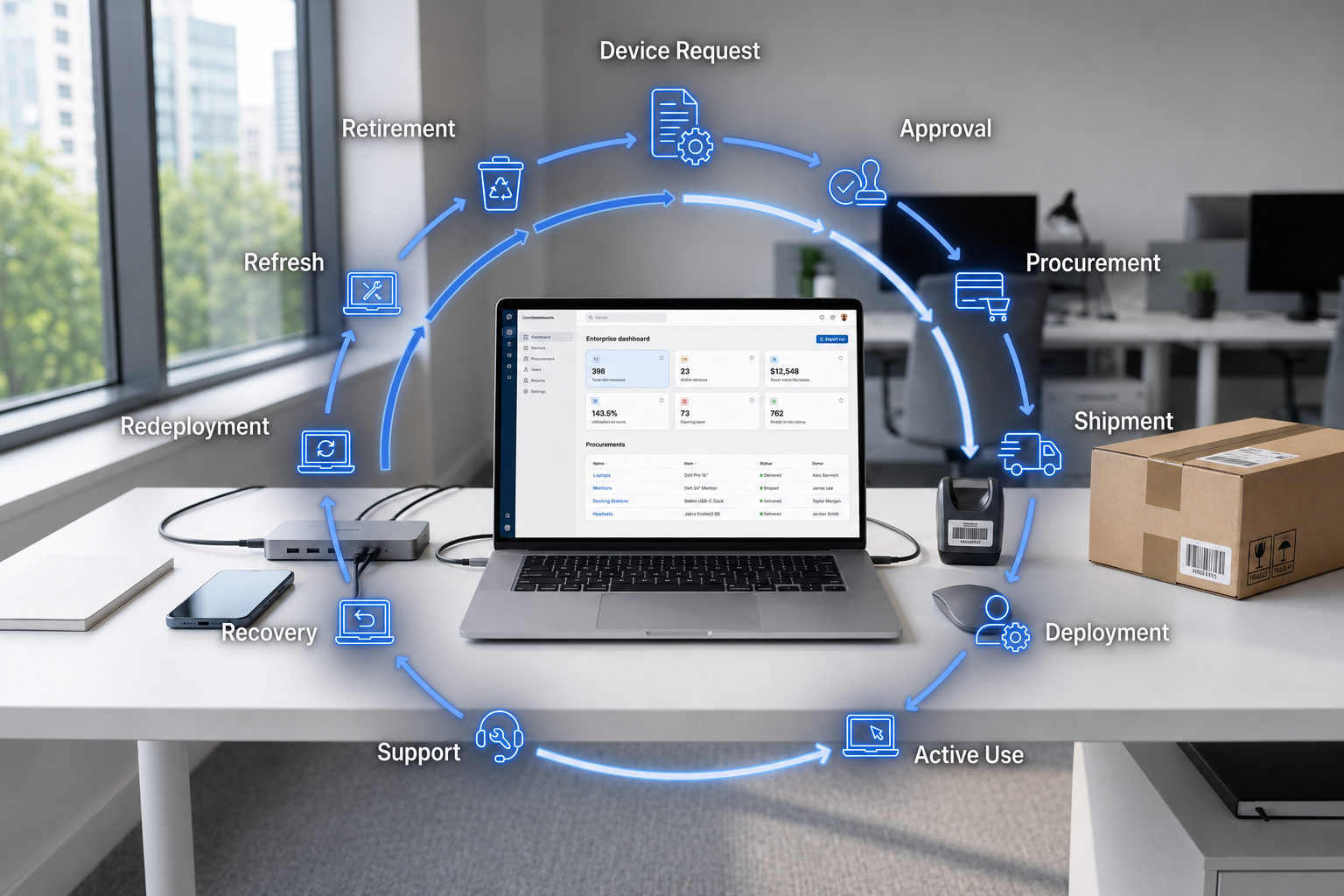
Infrastructure automation should support the full IT lifecycle, not just isolated tasks. When automation connects procurement, deployment, tracking, support, and recovery, IT operations become more consistent and easier to scale.
This means automation should help manage how infrastructure moves through the business, from provisioning to ongoing support and eventual replacement. Instead of relying on separate scripts or tools, teams gain a connected process with better visibility and fewer manual handoffs.
For global teams, this also means combining centralized standards with local execution across regions. Esevel supports this lifecycle-driven approach by connecting automation with global device procurement, deployment, tracking, support, and recovery in one system.
FAQs
What is infrastructure automation
Infrastructure automation is the use of software and workflows to automate the provisioning, management, and operation of IT infrastructure. It helps teams reduce manual effort, improve consistency, and manage systems more efficiently.
What are infrastructure automation tools
Infrastructure automation tools help automate tasks such as configuration, deployment, monitoring, and maintenance. They are useful for specific functions, but they work best when connected to a broader lifecycle strategy.
What are the benefits of infrastructure automation
The main benefits include faster deployment, fewer manual errors, better consistency, and improved scalability. It also helps teams manage growing infrastructure without relying on repetitive manual work.
What is infrastructure automation in DevOps
Infrastructure automation in DevOps refers to using automated workflows to manage infrastructure as part of development and operations. It supports faster releases, consistent environments, and more reliable delivery.
How do you implement infrastructure automation
To implement infrastructure automation, teams should start by identifying repeatable tasks, defining standards, choosing suitable tools, and connecting workflows across the infrastructure lifecycle. The best results come when automation supports procurement, deployment, monitoring, support, and recovery.
Build automation that scales with your infrastructure
Infrastructure automation is not just about tools, scripts, or faster task completion. It is about creating a system that keeps infrastructure consistent, visible, and manageable as the organization grows.
As teams scale across regions, automation must connect with the full IT lifecycle. That means linking procurement, deployment, monitoring, support, and recovery into one structured workflow instead of automating isolated tasks. A lifecycle driven approach turns automation into operational control. Esevel supports this by helping companies simplify global IT operations through connected procurement, deployment, tracking, support, and recovery, giving modern teams the structure they need to scale with confidence.