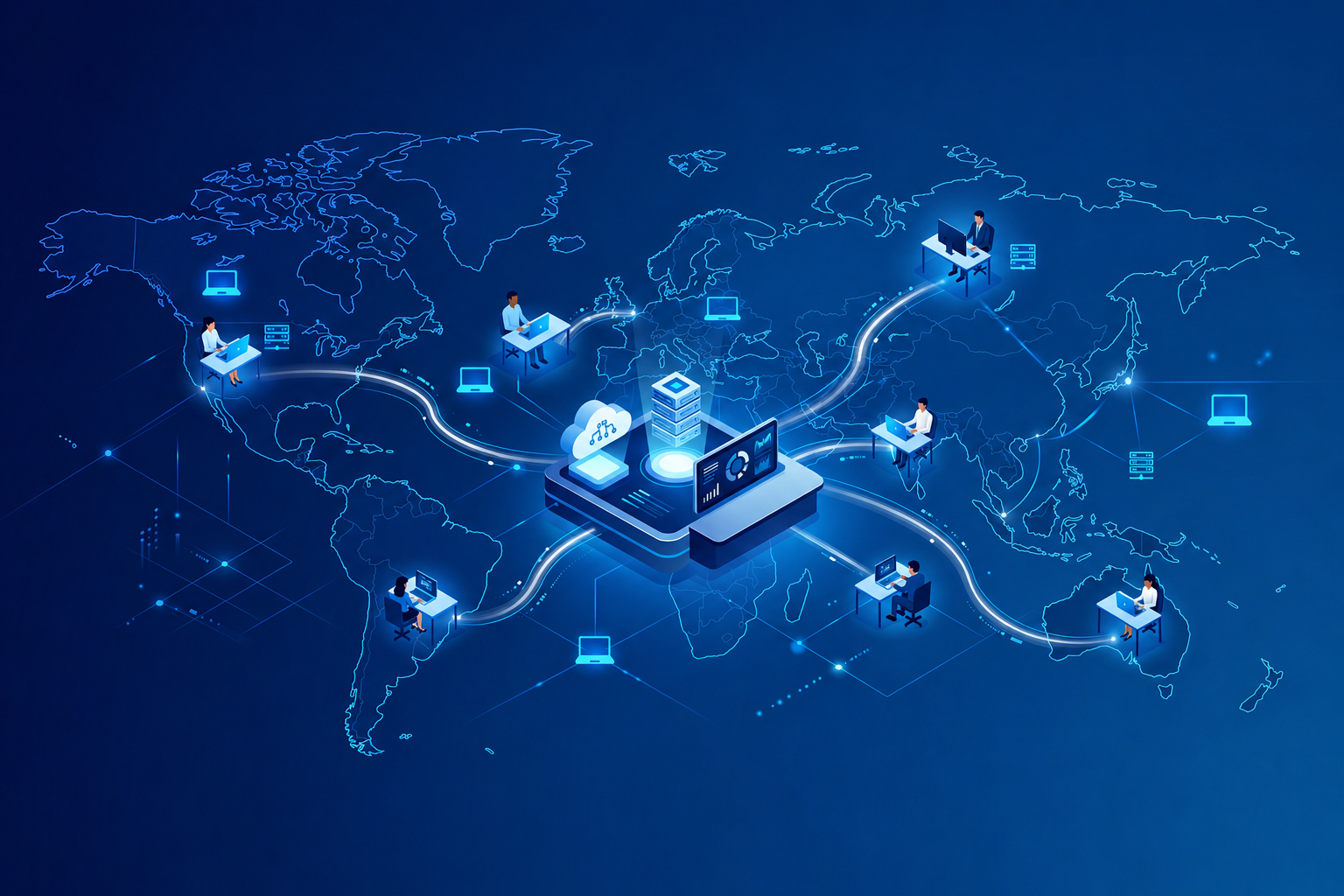
Most companies rely on IT to run daily operations, from internal systems to employee devices. As teams grow and spread across locations, managing that infrastructure becomes harder to control and more difficult to standardize.
The challenge is not just about having the right tools. IT infrastructure is often fragmented across vendors, systems, and regions, which makes it difficult to maintain visibility and consistency across the organization.
Today, IT infrastructure management is shifting from basic maintenance to a lifecycle-driven approach that connects procurement, deployment, and ongoing support. This article explains what that means in practice and how modern teams manage IT at scale.
What is IT infrastructure management
Before diving into tools and strategies, it is important to define what IT infrastructure management actually covers in real operations.
IT infrastructure management definition
IT infrastructure management refers to the process of managing and maintaining all the technology components that support a company’s operations. This includes hardware, software, networks, and systems that employees rely on every day.
In simple terms, it answers the question: what is IT infrastructure management. It is about keeping all IT resources running, secure, and aligned with business needs.
What IT infrastructure includes
IT infrastructure consists of several core elements that work together.
- Hardware such as laptops, servers, and devices
- Software including applications and operating systems
- Networks that connect systems and users
- Systems that support business processes and workflows
Understanding these components helps clarify what needs to be managed and why it becomes complex as companies scale.
Core components of IT infrastructure management
Managing infrastructure requires more than knowing what assets exist. It involves understanding how different layers interact and how they are maintained over time.
Infrastructure layers
IT infrastructure operates across several layers, each supporting a different part of the business. Understanding these layers helps teams identify where issues occur and how to manage them effectively.
- Devices and endpoints: laptops, desktops, and mobile devices used by employees. These are the most visible layer and often the most difficult to manage at scale
- Applications and systems: business tools, internal platforms, and operating systems that employees rely on to perform their work
- Network and connectivity: internet access, internal networks, and cloud connectivity that enable communication between users and systems
Each layer depends on the others. If connectivity fails, applications become unusable. If devices are not properly managed, security and performance issues quickly follow.
IT infrastructure and management scope
Managing IT infrastructure involves more than maintaining these layers, as it also includes the ongoing processes that keep systems running smoothly and securely.
- Monitoring to detect issues early and maintain system health
- Maintenance to ensure devices and systems stay updated and perform well
- Security to protect data, control access, and enforce policies
- Support to resolve issues quickly and keep employees productive
These responsibilities often sit across different teams or tools, which can create gaps in execution. This is why many organizations struggle to maintain consistency as they scale.
To manage infrastructure effectively, these components must be connected through a structured approach. This is where lifecycle management becomes critical.
IT infrastructure management lifecycle
IT infrastructure is not static. Devices, systems, and networks move through different stages as companies grow, hire, and operate across locations. Managing infrastructure effectively means understanding this lifecycle and controlling each stage in a structured way.
IT infrastructure lifecycle management refers to how companies handle IT resources from the moment they are needed to the point they are replaced or retired. When this lifecycle is not managed properly, teams lose visibility, costs increase, and security risks grow.
A complete lifecycle typically includes:
- Procurement: selecting and purchasing the right devices, systems, and tools based on business needs and budget
- Deployment: setting up devices and systems so employees can start work without delays or manual configuration
- Monitoring: maintaining visibility into performance, usage, and system health across all locations
- Maintenance: updating software, managing patches, and ensuring systems remain secure and reliable
- Recovery: retrieving, replacing, or decommissioning assets when employees leave or devices reach end of life
Each stage depends on the previous one. Poor procurement decisions can lead to incompatible systems. Weak deployment processes can slow down onboarding. Lack of monitoring makes it difficult to detect issues before they affect operations.
This is why IT infrastructure lifecycle management is becoming a core focus for modern teams. Instead of reacting to issues, companies are building structured processes that connect each stage and reduce operational gaps.
Understanding the lifecycle is key to improving how infrastructure is managed. The next step is looking at how assets are tracked and controlled within that lifecycle.
IT infrastructure asset management
Within infrastructure management, asset management plays a key role in maintaining control over physical and digital resources.
What it covers
Asset management is not limited to tracking inventory. It connects multiple layers of infrastructure operations.
- Device tracking across teams, locations, and departments
- Ownership assignment so every asset has a responsible user
- Usage visibility to understand how devices are utilized over time
- Status tracking to monitor whether assets are active, idle, or retired
This level of visibility allows teams to make better decisions about resource allocation and planning.
Why it matters
Without structured asset management, infrastructure becomes harder to control as the company grows.
- Cost control improves when unused or duplicate assets are identified and optimized
- Security improves when devices are monitored and access is managed properly
- Operational efficiency increases when teams can quickly locate and manage assets
When asset data is incomplete or outdated, teams often rely on manual processes, which leads to errors and delays. This is where many organizations start to experience larger infrastructure challenges.
IT infrastructure management challenges
As infrastructure grows across teams and regions, managing it becomes more complex. The challenges are not just about technology but also about coordination and process.
Most organizations face similar IT infrastructure management challenges as they scale.
- Lack of visibility across devices, systems, and locations, which makes it difficult to maintain control
- Manual processes that rely on spreadsheets or disconnected systems
- Multiple vendors handling different parts of the infrastructure
- Global complexity when managing distributed teams across regions
These challenges often exist even when companies invest in tools. The issue is not the absence of tools, but how they are used and integrated into daily operations.
This leads to a heavy reliance on multiple systems that do not communicate well with each other, which brings us to the role of tools in infrastructure management.
IT infrastructure management tools
Most companies rely on multiple tools to manage different parts of their IT infrastructure. These tools help with monitoring systems, tracking assets, and supporting users, but they are often built to solve specific problems rather than manage operations as a whole.
To understand their role more clearly, it helps to look at what these tools do well and where they fall short in real-world usage.
How IT infrastructure management tools compare
Different tools serve different functions, but they rarely connect into a single workflow. The table below shows how these tools support IT operations and where their limitations begin.
| Function | What tools do well | What they miss |
| Monitoring | Track system performance | No lifecycle visibility |
| Ticketing | Manage support requests | Not connected to asset data |
| Asset tracking | Show asset location and status | No control over operations |
Each of these tools solves an important part of the problem, but they operate in isolation. This is why many teams still struggle with coordination and visibility across their infrastructure, even when the right tools are in place.
IT infrastructure managed services
Managed services provide an alternative approach by allowing companies to outsource parts of their IT operations to external providers.
What are managed services for IT infrastructure
IT infrastructure managed services involve external teams handling tasks such as monitoring, maintenance, and support. This reduces the need for internal resources and helps companies maintain operations more consistently.
Managed services for IT infrastructure are often used by companies that want to focus on their core business while relying on specialists for IT operations.
Remote IT infrastructure management services
As companies adopt remote and hybrid work models, remote IT infrastructure management services are becoming more common.
- Teams operate across different locations and time zones
- Employees need support regardless of where they are
- IT teams must manage systems without being physically present
Remote services typically include monitoring, support, and device management, allowing companies to maintain operations without geographic limitations.
IT infrastructure and network management services
IT infrastructure and network management services focus on maintaining connectivity and system performance across environments.
- Network monitoring to identify and resolve issues quickly
- Connectivity management across offices and remote locations
- Performance optimization to ensure systems run efficiently
These services help improve reliability, but they often remain focused on specific areas rather than the full lifecycle of infrastructure.
This is where traditional approaches begin to show their limitations.
Where traditional IT infrastructure management falls short
Traditional approaches often focus on reacting to problems instead of managing systems proactively.
Key limitations
- Reactive support instead of proactive management
- Siloed tools that do not integrate well
- No visibility into the full lifecycle of assets and systems
These limitations create inefficiencies that slow down operations and increase costs. Teams spend more time fixing problems than improving systems. To address these issues, companies are shifting toward a more integrated approach.
A modern approach to manage IT infrastructure
Modern infrastructure management focuses on connecting processes instead of relying on separate tools. The goal is to create a system that supports operations from start to finish.
From tools to systems
Instead of managing multiple tools independently, companies are moving toward integrated workflows.
- Centralized visibility across all assets and systems
- Connected processes that link procurement, deployment, and support
- Reduced reliance on manual coordination between teams
This shift allows organizations to operate more efficiently and maintain consistency across regions.
What modern IT infrastructure management solutions include
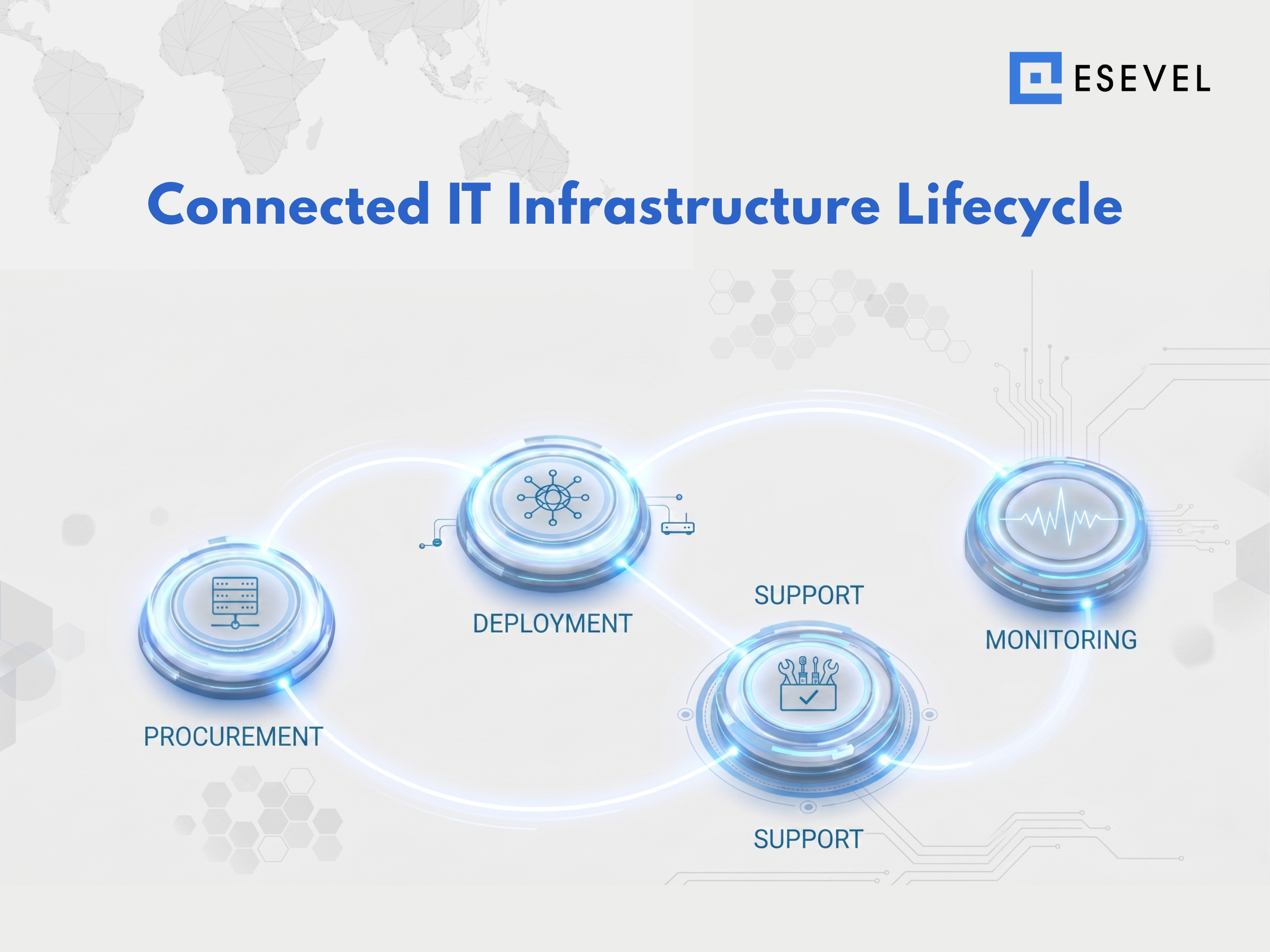
Modern IT infrastructure management solutions are built around lifecycle management.
- Procurement of devices and systems aligned with business needs
- Deployment that ensures employees receive ready to use equipment
- Tracking and monitoring that provide real time visibility
- Support and maintenance that minimize downtime and disruptions
By connecting these stages, companies can manage infrastructure more proactively. This approach becomes even more important for organizations with global teams.
Rethinking IT infrastructure for global teams
Managing IT infrastructure for distributed teams requires more than tools and services. It requires a system that can operate across regions while maintaining consistency and control.
Esevel approaches this by combining lifecycle management with global execution. It supports procurement, deployment, tracking, and support across multiple countries, while providing centralized visibility for IT teams.
This lifecycle approach helps companies manage infrastructure as a unified system rather than a collection of disconnected processes. As teams continue to scale globally, this model becomes essential for maintaining efficiency and control.
FAQs
Decision-makers often ask similar questions when evaluating IT infrastructure strategies. Here are the key answers in a clear and direct format.
What is IT infrastructure management
IT infrastructure management is the process of managing hardware, software, networks, and systems that support business operations. It ensures that all IT resources are secure, functional, and aligned with company needs.
What are IT infrastructure managed services
IT infrastructure managed services are outsourced services where external providers handle monitoring, support, and maintenance. These services help companies reduce internal workload and improve operational reliability.
What are IT infrastructure management tools
IT infrastructure management tools are software solutions used for monitoring, support, and asset tracking. They help manage specific tasks but often need to be combined with other systems for full lifecycle control.
What are remote IT infrastructure management services
Remote IT infrastructure management services allow companies to manage systems and support users across different locations. They are commonly used by distributed teams to maintain operations without being physically present.
How to manage IT infrastructure
Managing IT infrastructure requires a lifecycle approach that includes procurement, deployment, monitoring, maintenance, and recovery. Companies that connect these stages into one system can reduce complexity and improve efficiency.
Build infrastructure that scales with your team
IT infrastructure is no longer just a set of tools. It is a system that supports how your company operates and grows over time.
Companies that rely on disconnected tools often struggle with visibility and control. Esevel helps solve this by combining lifecycle management with global IT operations, allowing teams to manage infrastructure more efficiently as they scale.