Organizations today operate with hundreds or even thousands of laptops, smartphones, and other endpoints across offices and remote locations. As companies grow, IT teams must manage large volumes of devices while maintaining consistent hardware standards and operational control.
Without structured systems, device provisioning, tracking, and maintenance quickly become difficult to coordinate. IT departments may struggle to maintain accurate asset inventory, monitor device activity, and keep operations running at the level of operational capacity required for distributed teams.
To maintain stability as device fleets grow, organizations rely on tools that support hardware management scale. Centralized dashboards, device tracking systems, and structured lifecycle management allow IT teams to manage large volumes of devices across global locations while maintaining consistent oversight.
What it means to manage large volumes of devices
Managing a few company devices is relatively simple. However, when organizations grow and operate across several locations, IT teams must manage large volumes of devices while maintaining consistent standards, visibility, and operational control. This process involves coordinating hardware procurement, provisioning, monitoring, and lifecycle management across a wide device environment.
When device fleets expand, the goal of IT operations is not only to distribute hardware but also to maintain clear asset inventory records, accurate device tracking, and stable operational capacity. Structured systems and centralized management tools help organizations maintain this level of control as device numbers increase.
Managing device environments at scale
Device environments grow quickly as companies hire employees, expand into new regions, and support remote work. Each new employee requires a laptop or smartphone that must be configured, assigned, and monitored throughout its lifecycle.
At scale, managing devices involves several operational responsibilities:
- Maintaining an accurate asset inventory for every device
- Tracking device ownership and assignment
- Ensuring devices meet company configuration standards
- Monitoring device status and maintenance needs
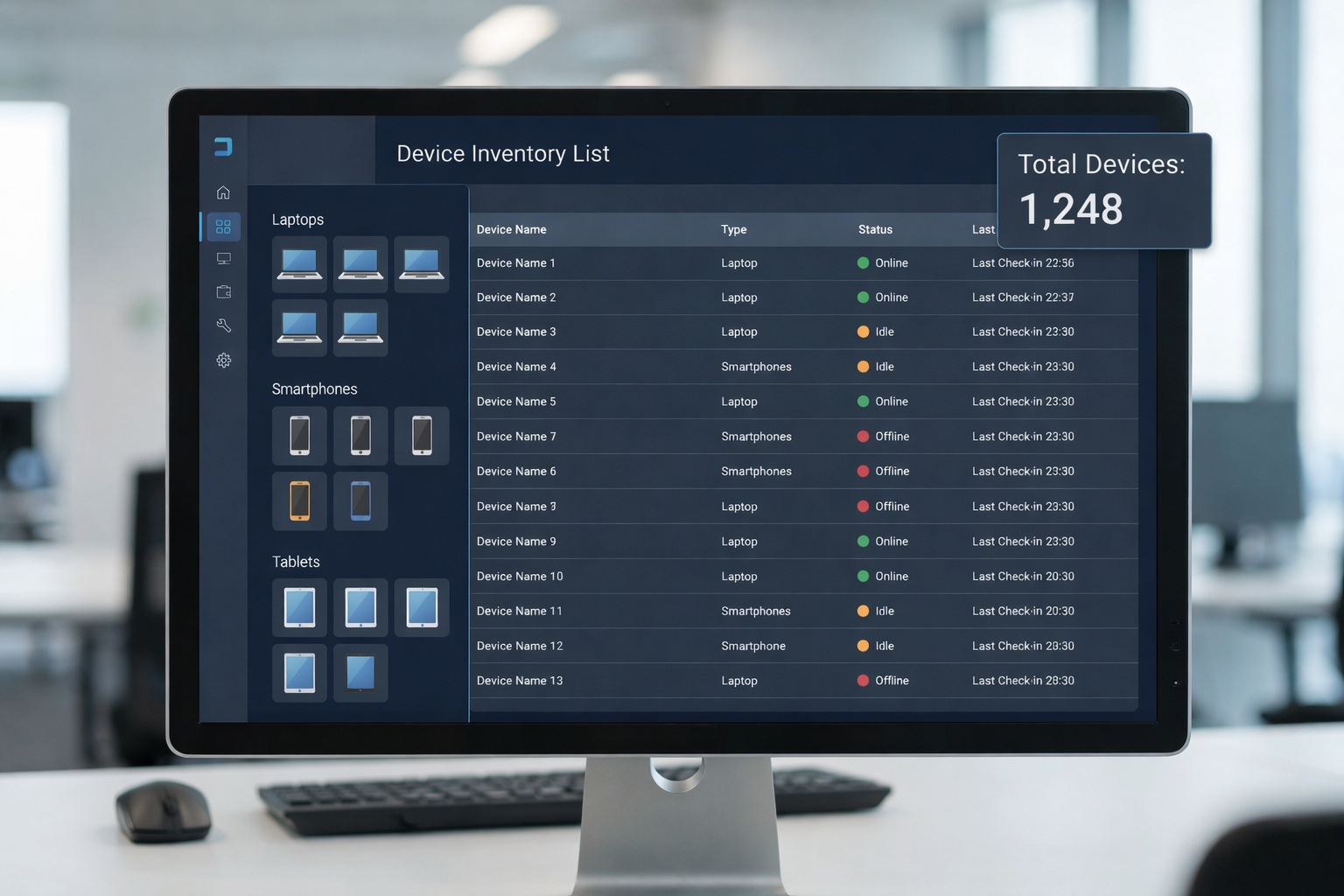
To support these tasks, many organizations rely on centralized dashboards that provide visibility into device fleets. These systems allow IT teams to review asset inventory, monitor device status, and maintain control over large device environments from a single operational interface.
Why device management becomes complex as organizations grow
Device management becomes more complex as organizations increase their operational footprint. When companies operate across multiple offices or distributed teams, devices may be shipped, deployed, and used in different regions at the same time.
Without proper infrastructure, several challenges often appear:
- Incomplete asset inventory records
- Limited visibility into device locations
- Inconsistent configuration standards
- Difficulty maintaining device tracking across teams
These issues reduce operational capacity and create unnecessary work for IT departments. To manage large volumes of devices effectively, organizations must implement systems that support hardware management scale while maintaining consistent oversight across the entire device environment.
Key systems used to manage large volumes of devices
Organizations that manage large volumes of devices rely on structured systems to maintain visibility, control, and operational efficiency. As device fleets grow across offices and remote locations, IT teams must coordinate asset inventory, monitor device activity, and maintain consistent hardware standards.
Without centralized tools, tracking hundreds or thousands of devices becomes difficult. Systems that support hardware management scale help IT teams maintain operational capacity while keeping device environments organized and secure.
Centralized dashboards for device visibility
A centralized dashboard allows IT teams to monitor the status of devices from a single interface. Instead of managing devices through separate tools or manual records, administrators can review asset inventory, device assignments, and operational status through one management system.
Centralized dashboards support hardware management scale by providing visibility into large device environments. IT teams can quickly identify which devices are active, which devices require maintenance, and where equipment is currently assigned.
These dashboards also support device tracking across multiple locations. When organizations operate across offices or remote environments, centralized visibility helps IT teams maintain consistent oversight without relying on local spreadsheets or disconnected records.
Asset inventory management systems
Asset inventory systems provide structured records for every device used within an organization. Each device receives a unique record that contains important operational information such as device type, ownership, configuration details, and lifecycle status.
Maintaining an accurate asset inventory helps organizations manage large volumes of devices more effectively. IT teams can monitor device availability, track assignments to employees, and review lifecycle stages as equipment moves from provisioning to active use.
Asset inventory systems also support hardware governance. When devices are recorded consistently, organizations maintain clear visibility into their technology environment and can manage hardware resources with greater accuracy.
Device tracking across distributed environments
Device tracking becomes essential when organizations operate across multiple offices, remote teams, or global regions. Companies that manage large volumes of devices must maintain visibility into where devices are located and who is responsible for them.
Device tracking systems help IT teams monitor device movement, assignment, and status across distributed environments. This visibility helps organizations maintain control of asset inventory even when employees work in different regions.
For companies with global teams across Europe, the United States, and APAC, device tracking ensures that devices remain visible within the organization’s technology environment. By maintaining accurate records and monitoring device activity, IT teams can support hardware management scale while maintaining operational stability.
Device lifecycle management at hardware management scale
Organizations that manage large volumes of devices must also maintain visibility across the entire device lifecycle. Each device moves through several operational stages, from procurement and provisioning to maintenance and replacement. Without structured lifecycle management, it becomes difficult for IT teams to maintain accurate asset inventory and device tracking.
Device lifecycle management provides a framework that helps organizations coordinate hardware operations at scale. By managing each stage of the device lifecycle, IT teams can maintain operational capacity while supporting growing device fleets across distributed teams.
Device lifecycle stages in large device environments
In environments where organizations manage large volumes of devices, each device typically follows a defined lifecycle. These stages help IT teams maintain control of hardware assets and ensure that devices remain functional throughout their operational use.
Common lifecycle stages include:
- Device procurement aligned with approved hardware standards
- Device provisioning and configuration before deployment
- Assignment of devices to employees and teams
- Monitoring, maintenance, and technical support during active use
- Device recovery, refresh, or replacement when devices reach the end of service
When organizations coordinate these lifecycle stages effectively, device management becomes more predictable. IT teams maintain accurate asset inventory records and can track devices as they move through different phases of use.
Maintaining asset visibility across the device lifecycle
Maintaining visibility across the device lifecycle is essential when organizations manage large volumes of devices. As devices move between employees, offices, and operational stages, IT teams must maintain accurate records that reflect the current status of each asset.
Centralized dashboards and asset inventory systems support this visibility by providing continuous device tracking. These systems allow IT teams to review device assignments, monitor lifecycle stages, and maintain clear records across distributed environments.
When lifecycle visibility is maintained, organizations can support hardware management scale while maintaining operational control. IT teams remain aware of device status, maintain consistent asset inventory records, and ensure that device fleets remain organized as the organization grows.
Scaling hardware management across growing teams
As organizations expand, the number of managed devices increases quickly. Hiring new employees, opening new offices, and supporting remote work all require additional hardware. To manage large volumes of devices effectively, IT teams must implement processes that allow device operations to scale without overwhelming internal resources.
Hardware management scale depends on structured workflows, reliable asset inventory records, and consistent device tracking. When these systems are in place, IT departments can maintain operational capacity while supporting growing teams.
Bulk provisioning for device deployment
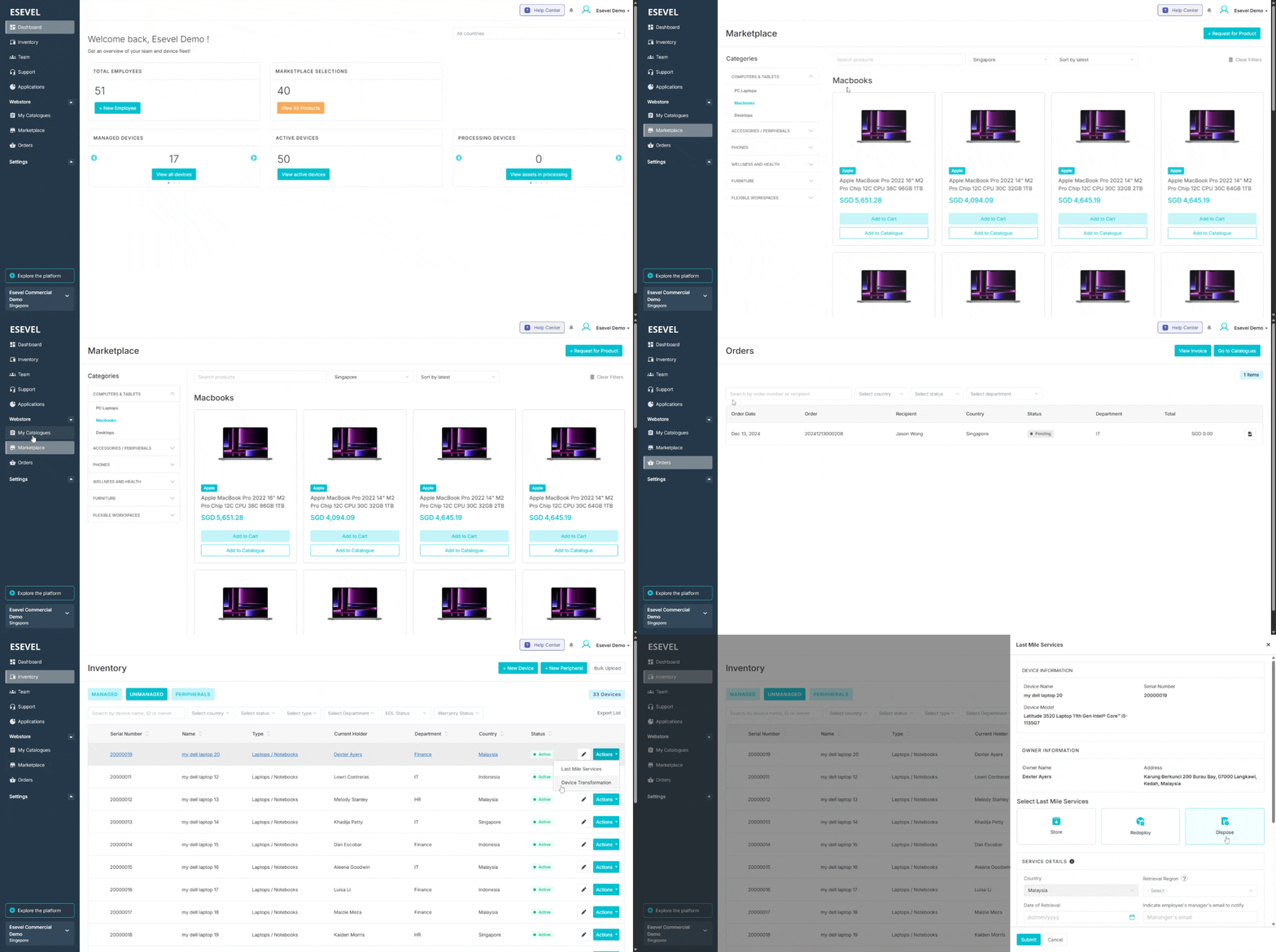
Bulk provisioning allows IT teams to prepare multiple devices at the same time. Instead of configuring each laptop or smartphone individually, administrators can standardize device preparation and deploy equipment in batches.
Typical bulk provisioning workflows include:
• preparing devices according to approved hardware standards
• applying configuration settings and security policies
• assigning devices to employees or departments
• registering devices in asset inventory systems for device tracking
Bulk provisioning helps organizations manage large volumes of devices efficiently. When onboarding multiple employees or expanding teams, IT departments can deploy devices faster while maintaining consistent configuration standards.
Maintaining operational capacity for IT teams
As device fleets grow, IT teams must maintain operational capacity without increasing administrative complexity. Managing hundreds or thousands of devices manually can quickly create bottlenecks if systems are not designed for scale.
Organizations often rely on centralized dashboards and asset inventory systems to maintain operational capacity. These tools allow IT teams to review device records, monitor device status, and coordinate maintenance activities without relying on fragmented processes.
By maintaining structured management systems, organizations ensure that device fleets remain organized even as the number of devices continues to grow.
Managing device fleets for distributed organizations
Modern organizations often operate across multiple offices and remote environments. Employees may work in different cities or countries while relying on company devices to perform daily tasks. For this reason, IT teams must manage large volumes of devices across distributed teams.
Distributed device fleets require clear governance and consistent operational standards. Asset inventory systems and device tracking tools help organizations maintain visibility even when devices are used across different locations.
Supporting employees across global locations
Companies with international teams must coordinate device management across multiple regions. Devices may be shipped, deployed, and used in different locations at the same time.Organizations often support employees in regions such as Europe, the United States, and APAC.
Managing large volumes of devices across these locations requires consistent asset inventory records and device tracking systems. IT teams must maintain visibility into where devices are located and how they are being used.
When device operations are structured properly, organizations can support global teams while maintaining centralized oversight.
Maintaining consistent device standards worldwide
Consistent hardware standards are essential for organizations that operate across multiple locations. Without clear device standards, companies may end up supporting a wide range of device models and configurations, which increases operational complexity.
Maintaining consistent device standards helps organizations manage large volumes of devices more effectively. Standardized hardware models simplify provisioning, maintenance, and technical support.
Asset inventory systems also help IT teams maintain these standards. By recording device information and tracking lifecycle status, organizations ensure that hardware management remains organized and scalable.
Common questions about managing large volumes of devices
What does it mean to manage large volumes of devices
Managing large volumes of devices refers to operating and maintaining a large fleet of laptops, smartphones, and other endpoints across an organization. This includes asset inventory management, device provisioning, device tracking, and lifecycle oversight.
How do companies manage hardware at scale
Companies manage hardware at scale by using centralized dashboards, asset inventory systems, and device tracking tools. These systems help IT teams maintain visibility into devices across multiple locations while supporting operational capacity.
What is asset inventory in device management
Asset inventory refers to the structured record of devices used within an organization. Asset inventory systems track device details such as ownership, configuration, lifecycle status, and device location.
Why is device tracking important
Device tracking helps organizations monitor where devices are located and who is using them. Accurate device tracking supports asset visibility, improves hardware governance, and helps IT teams manage large volumes of devices more effectively.
What is bulk provisioning
Bulk provisioning is the process of preparing and configuring multiple devices at the same time. IT teams use bulk provisioning to deploy devices quickly while maintaining consistent configuration standards.
Building scalable device management operations
Organizations that manage large volumes of devices require structured systems that support hardware management scale. Centralized dashboards, asset inventory platforms, and device tracking tools allow IT teams to maintain visibility and operational control across growing device fleets.
When device lifecycle management is supported by clear operational frameworks, organizations can maintain consistent hardware standards while supporting distributed teams.
Esevel helps companies manage large volumes of devices across global teams through structured device lifecycle management, asset inventory visibility, and coordinated hardware operations across Europe, the United States, APAC, and other regions.