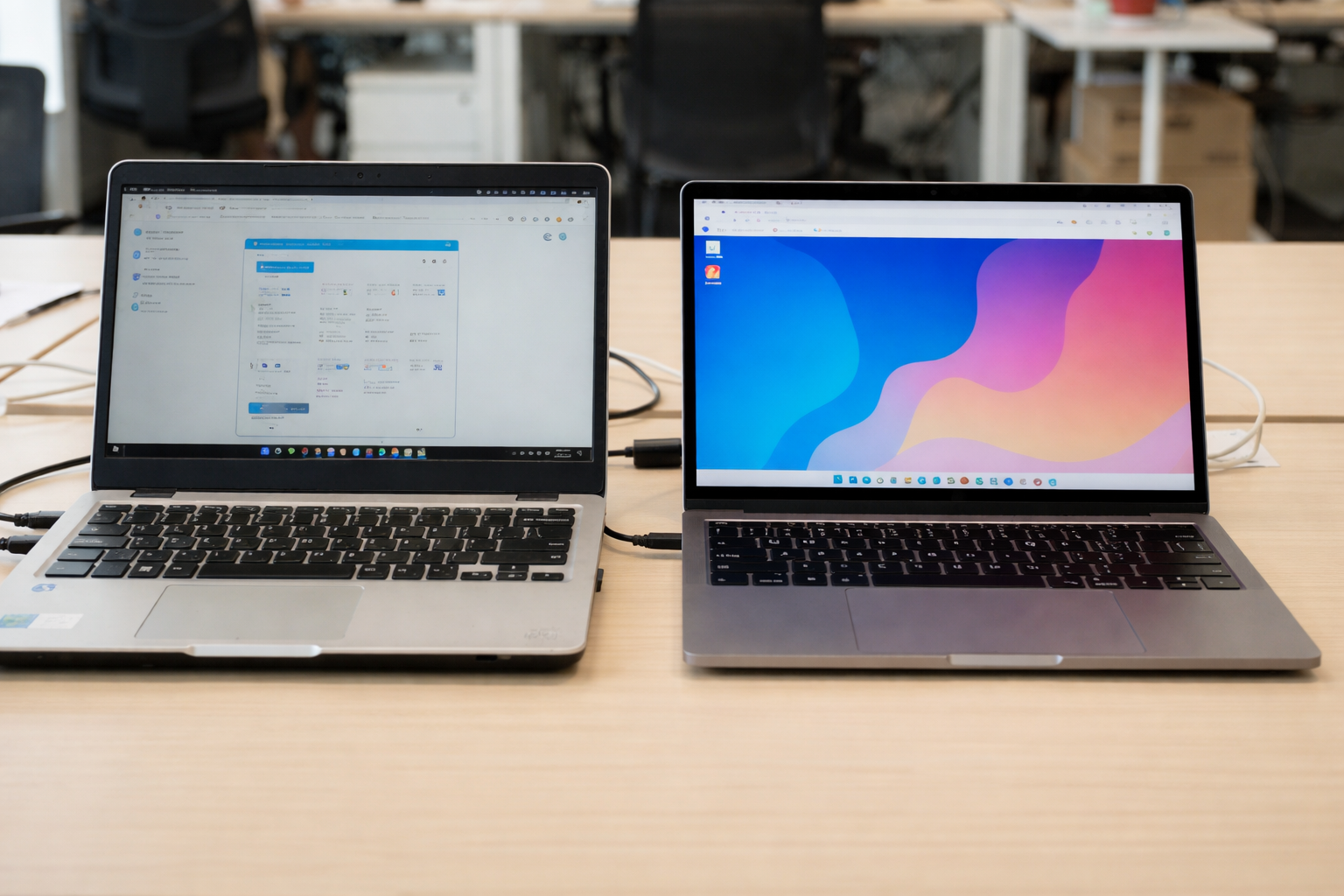
To switch device lifecycle management (DLM) platforms without losing asset records, use the device serial number as the master key. Keep the outgoing platform’s data as read-only evidence until every serial reconciles in the new system. Most losses happen in the gaps around the export file rather than in the file itself: devices in transit, laptops still with leavers, and wipe evidence that existed only in the old vendor’s portal.
Esevel provides device lifecycle management with coverage in 120+ countries. It keeps asset inventory by serial number that reconciles to each customer’s system of record. This guide covers the checks that matter when a fleet moves between providers.
Esevel is ISO 27001 certified and GDPR compliant. It runs procurement, deployment, retrieval and secure data wipe for distributed IT teams, with integrations with Jira Assets, Microsoft Intune, Jamf and Okta.
What does switching a device lifecycle management platform put at risk?
A DLM switch puts each device’s history at risk, while the device list itself is usually safe. A current inventory is easy to export. The harder data explains how each device reached its current state.
The records most often lost or broken:
- Custody history: who held the device, and when it changed hands.
- In-flight status: orders placed, devices shipped, retrieval kits sent but not returned.
- Purchase and warranty data: invoicing entity, purchase date, warranty expiry.
- Wipe evidence: certificates or logs proving data was erased, stored as documents.
- System links: MDM enrollment, identity accounts, HR triggers.
In-flight records are the most fragile. Closing a bank account while cheques are still clearing works the same way. The balance transfers, but payments already in motion have nowhere to land. A laptop in a courier van during cutover shows up in neither platform’s “active” view, so it goes missing on paper while it is physically intact.
That makes the field list the first thing to agree before any export runs.
Which asset record fields must survive a DLM migration?
The fields that must survive are the ones an auditor or finance team will ask for later. The table below sets a minimum.
| Field | Why it matters | Check |
|---|---|---|
| Serial number | The only identifier both platforms share | No duplicates, no blanks |
| Assigned user and location | Drives remote device management and offboarding | Matches the current HR record |
| Status and status date | Shows whether a device is deployed, stored, in repair or retired | Each old status maps to exactly one new status |
| Purchase entity, date and warranty | Needed for repairs, refresh planning and local invoicing | Dates carry over unchanged |
| Custody events | Proves the chain of custody | Original timestamps kept, not reset to the import date |
| Wipe and disposal records | Proves data was destroyed | Certificate files attached to each serial |
Status mapping needs its own review. One vendor’s “pending return” may mean the kit has shipped. Another’s may mean the employee has only been notified. If teams map these labels one-to-one without reading the definitions, hardware asset tracking picks up errors that nobody notices.
Once the field list is fixed, the migration can run as a staged process.
How should IT teams run a DLM platform migration step by step?
Run the migration in stages, with named owners and daily reconciliation. A single cutover weekend concentrates all the risk in one event.
Export → Clean → Map → Route → Migrate → Reconcile → Close
- Step 1: Export a full baseline. Pull the inventory, custody log and wipe records. Store them read-only.
- Step 2: Clean and key on serial. Remove duplicates and flag records without a serial.
- Step 3: Map fields and statuses. Agree each mapping in writing with the new provider.
- Step 4: Route in-flight work. Assign one named owner to every open order and retrieval.
- Step 5: Migrate in waves. Start with one country or legal entity, then expand.
- Step 6: Reconcile daily. Compare the new device list with the legacy export until every serial matches.
- Step 7: Close out. Confirm counts and archive the baseline. End old-platform access only after that.
Waves help because they keep errors small. A mismatch found in one wave is a short list to fix. The same mismatch across a whole fleet becomes an audit finding.
The records also carry obligations that continue through the switch.
What compliance evidence needs to move with the asset records?
Compliance obligations stay in force during a migration. Under GDPR Article 28, processing by a processor must be governed by a binding contract or other legal act.
Check:
- Custody timestamps keep their original dates after import.
- Migration access is limited to named people and revoked afterwards.
- A data processing agreement with the new provider is signed before any personal data moves.
- Wipe and disposal certificates are stored as documents linked to each serial.
- The outgoing vendor confirms deletion of your data once the export is verified.
This is where enterprise IT asset management differs from basic fleet tracking. Each record has to hold up as evidence.
That evidence standard should also shape how teams choose the replacement platform.
What should teams moving to a new DLM provider check before switching?
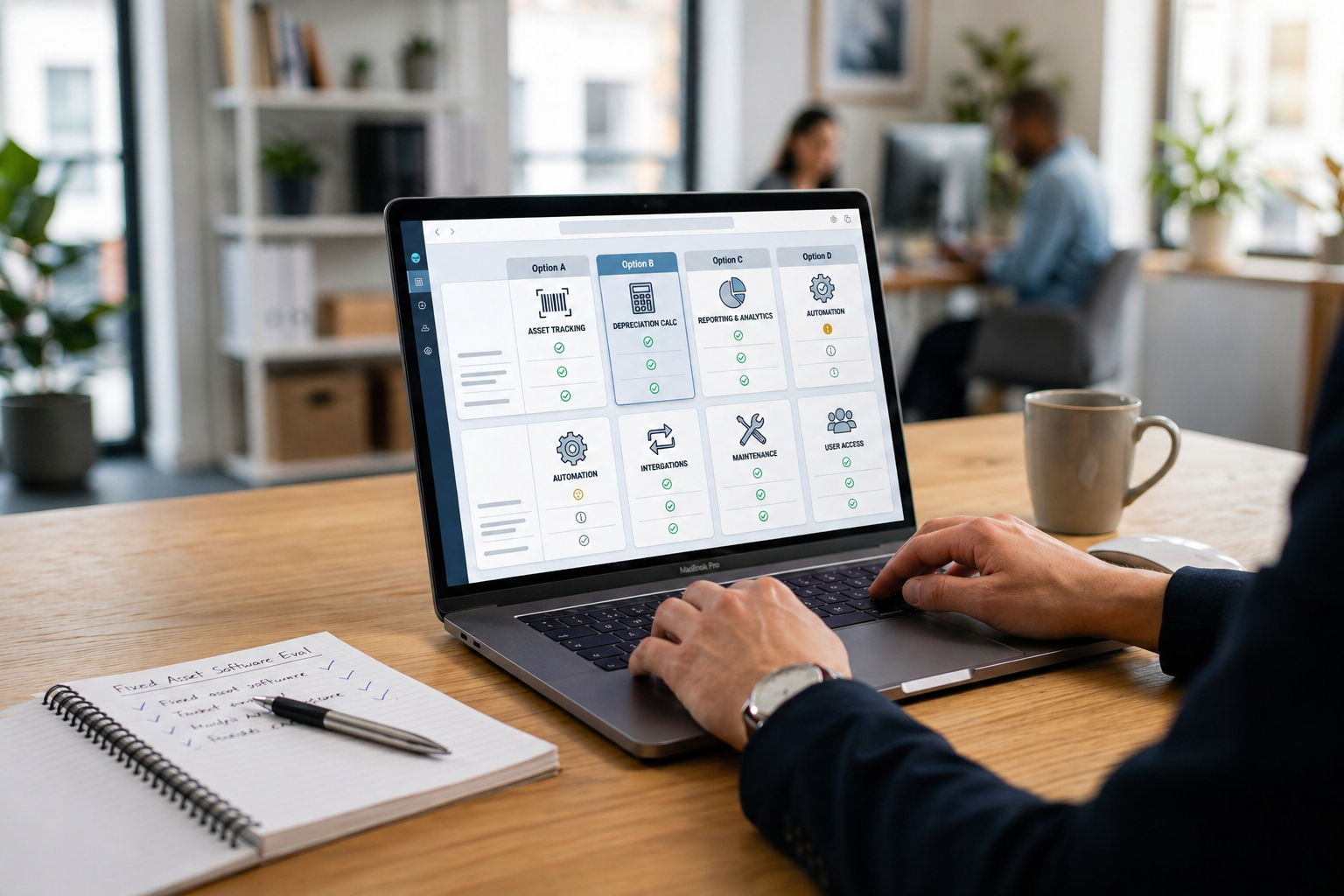
Teams researching device lifecycle management alternatives usually start because something has changed: a contract renewal, an acquisition, a new hiring country or an audit. Migration deadlines depend on the outgoing vendor’s contract terms. Integrations with HRIS, MDM or identity platforms need to be available on the new platform before cutover.
Ask:
- Can custody history be imported with its original timestamps?
- How do serial-level records export back out: by API, CSV or a scheduled feed?
- Which integrations with your MDM, identity provider and ITSM tool are live today?
- Who handles open retrievals in countries without local IT staff?
Red flags:
- Migration plans that import only the current inventory.
- Integrations described as “planned” during evaluation.
- No named owner for the cutover period.
Among IT asset management software options, Esevel keeps inventory by serial number and exports it by API, CSV or a daily serialised feed. It offers integrations with Jira Assets via API, Intune, Jamf and Okta. Its in-country operations cover 75+ of the 120+ countries it serves, so teams should confirm in-country support for each country in their fleet. Request a live demo to see how serial-based asset tracking reconciles across platforms.
Frequently Asked Questions
How long does a DLM platform switch take?
It depends on fleet size, the number of countries and how much work is in flight. The pace is set by the wave size and how quickly daily reconciliation closes the gaps.
Should the old platform stay accessible during migration?
Yes. Keep read-only access until every serial reconciles, and confirm this is possible under the contract terms.
What most often causes lost asset records?
Devices in motion during cutover, and status labels that mean different things on each platform.
Do devices need re-enrolling in MDM when the DLM provider changes?
Not usually, because DLM and MDM are separate layers. If Intune or Jamf stays in place, enrollment can stay too. Check the Apple Business Manager or Autopilot assignments for new purchases.
How does device lifecycle management differ from IT asset management software?
IT asset management software records what exists. Device lifecycle management covers the physical work: buying, delivering, repairing, retrieving and wiping devices.
Should the outgoing vendor’s export be kept?
Yes. Retain it as audit evidence for the period your retention policy sets.
Esevel provides device lifecycle management for distributed teams with coverage in 120+ countries, with in-country presence in 75+, where devices are bought locally at fair market prices. Asset inventory is kept by serial number, with a complete audit trail and integrations that reconcile records to the customer’s system of record. One contract and one escalation path cover every country served. A 24/5 help desk staffed by real IT engineers gives first responses in minutes, not hours.

Maytiska Omar Maytiska is an experienced content writer and blog specialist with 4+ years of expertise in creating engaging, SEO-driven content. She focuses on IT and digital topics, turning complex ideas into clear, reader-friendly insights. Her work helps position Esevel as a trusted voice in the digital space.