Employee onboarding often looks smooth on paper. HR sends documents, assigns training, and sets up introductions. But the real problems show up on Day One.
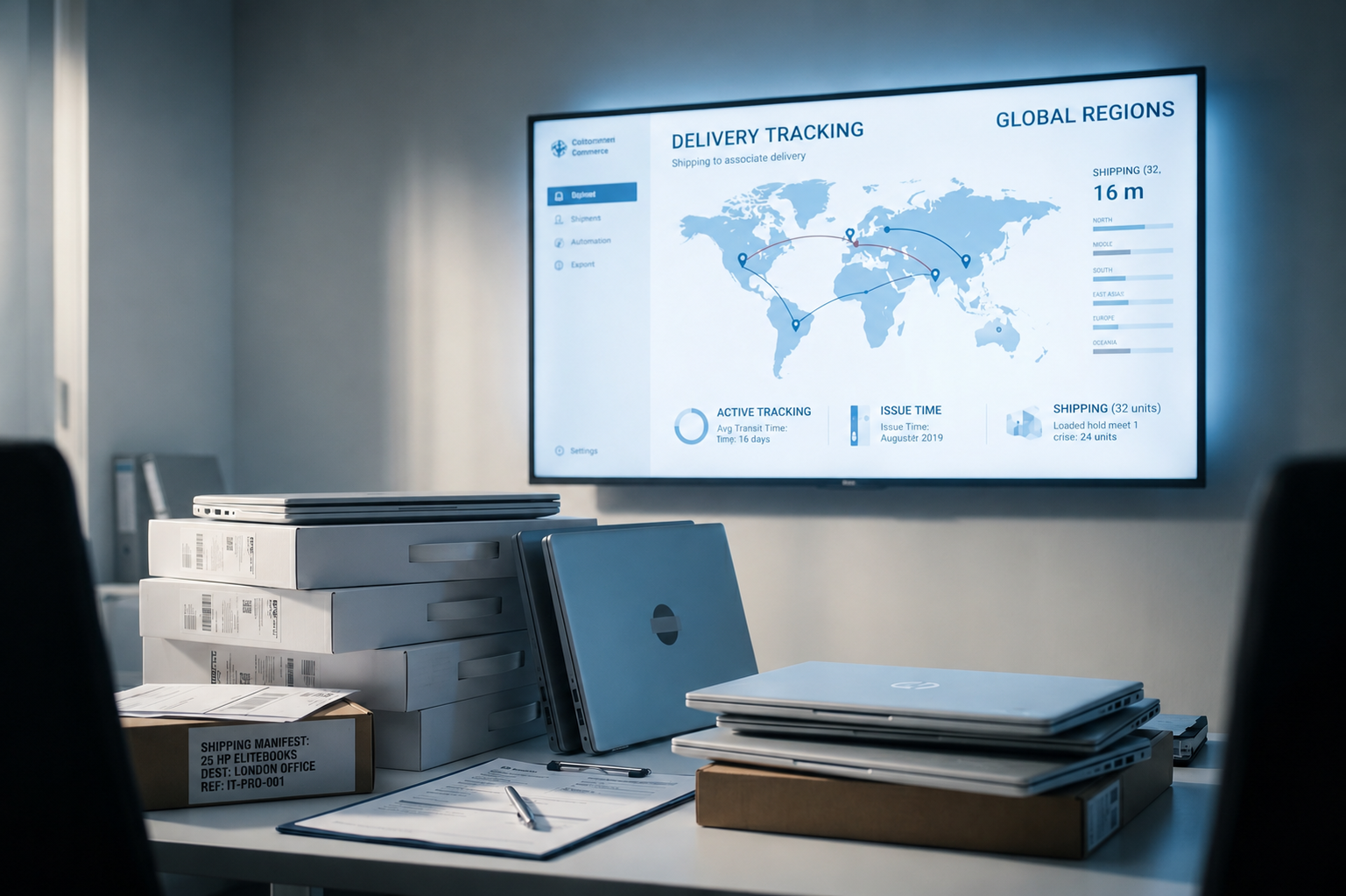
The laptop has not arrived. The device is stuck in customs. Accounts are not ready. HR has no clear update. The new hire is blocked before they even start.
This is where most employee onboarding solutions fall short. They focus on workflows and experience, but ignore the infrastructure behind it. In reality, onboarding is not just an HR process. It is an IT operation that depends on devices, access, and coordination across regions.
If these systems are not connected, onboarding breaks. This guide explains why employee onboarding solutions need an IT layer, and what modern teams must do to fix it.
The real problem behind employee onboarding
Employee onboarding breaks before it even begins. The issue is not culture or engagement. It is execution.
On Day One, new hires expect to start work. Instead, they wait. Devices are delayed. Accounts are not ready. No one has a clear update. HR follows up with vendors. IT tries to track shipments. The employee sits idle.
This is not an HR problem. It is an operational gap.
In distributed teams, the problem gets worse. Devices must move across countries. Vendors vary by region. Shipping timelines are uncertain. Without a system, onboarding becomes guesswork.
What actually breaks on Day One
The most common failures are simple, but costly:
- Devices do not arrive before the start date
- Accounts and access are not fully set up
- IT and HR rely on manual coordination
- No one has real-time visibility into status
Each issue delays productivity and prevents new hires from starting work on time. When these delays repeat across multiple hires, they begin to slow down the entire company and affect overall operations.
What most employee onboarding solutions get wrong
Most employee onboarding solutions focus on experience. They help HR manage checklists, documents, and training. These tools are useful, but incomplete.
How onboarding is usually defined
Typical onboarding solutions include:
- HRIS platforms to manage employee records
- Documentation tools for policies and forms
- Training systems for onboarding programs
These tools improve organization and communication. But they do not solve the core problem.
The gap no one talks about
None of these systems handle actual IT readiness, which is where onboarding often breaks down. They focus on workflows, but do not manage the operational side of getting employees ready to work.
Most onboarding tools do not cover:
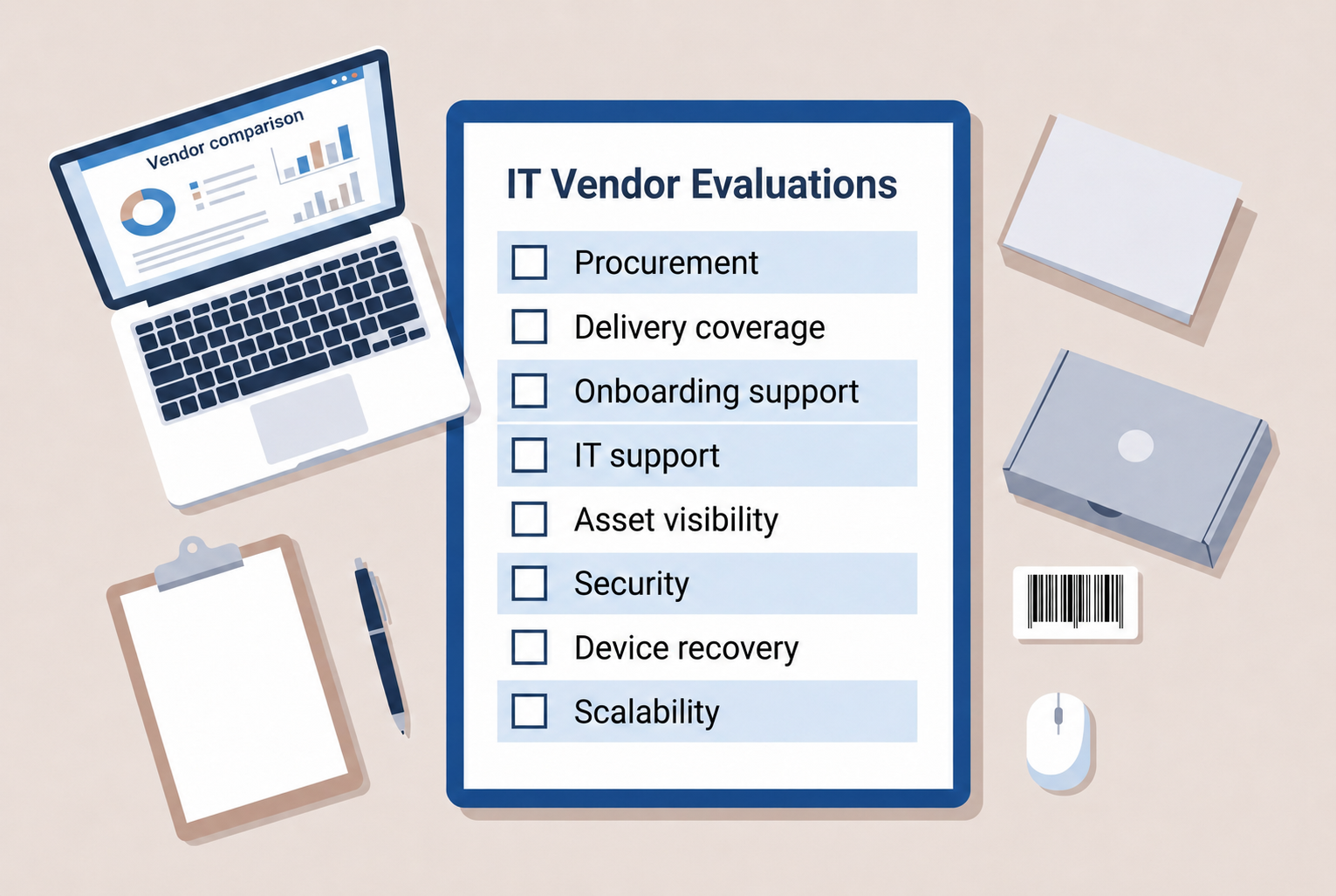
- Device procurement
- Global shipping
- Provisioning and setup
- Asset tracking
- Device recovery
This is why onboarding still fails even when HR systems are in place. The workflow may exist, but the infrastructure required to support it is missing.
What employee onboarding solutions should include
Employee onboarding solutions need to go beyond checklists and training. To work effectively, they must combine process, systems, and infrastructure. Without this, onboarding remains incomplete.
A clear onboarding workflow across teams
Onboarding involves HR, IT, and sometimes finance. Each team plays a role, but without alignment, tasks become fragmented.
A strong onboarding solution should connect these teams into one workflow. This ensures that hiring, device setup, and access provisioning happen in sync, not in isolation.
Solutions for employee software onboarding
Most companies already handle software onboarding well. Accounts are created, tools are assigned, and permissions are defined before the employee starts.
This part of onboarding focuses on systems such as email, collaboration tools, and internal platforms. It is structured and often automated.
However, this is only one part of the process.
Hardware readiness and device provisioning
The biggest gap in onboarding is hardware. Employees cannot work without a properly configured device.
This includes sourcing the right device, installing required software, and applying security policies before delivery. Without this step, onboarding is delayed even if everything else is ready.
Global delivery and logistics coordination
For distributed teams, device delivery becomes more complex. Shipping across countries introduces delays, customs issues, and vendor dependencies.
A complete onboarding solution must handle global logistics. It should ensure devices arrive on time, regardless of location, without relying on manual coordination.
Asset tracking and lifecycle visibility
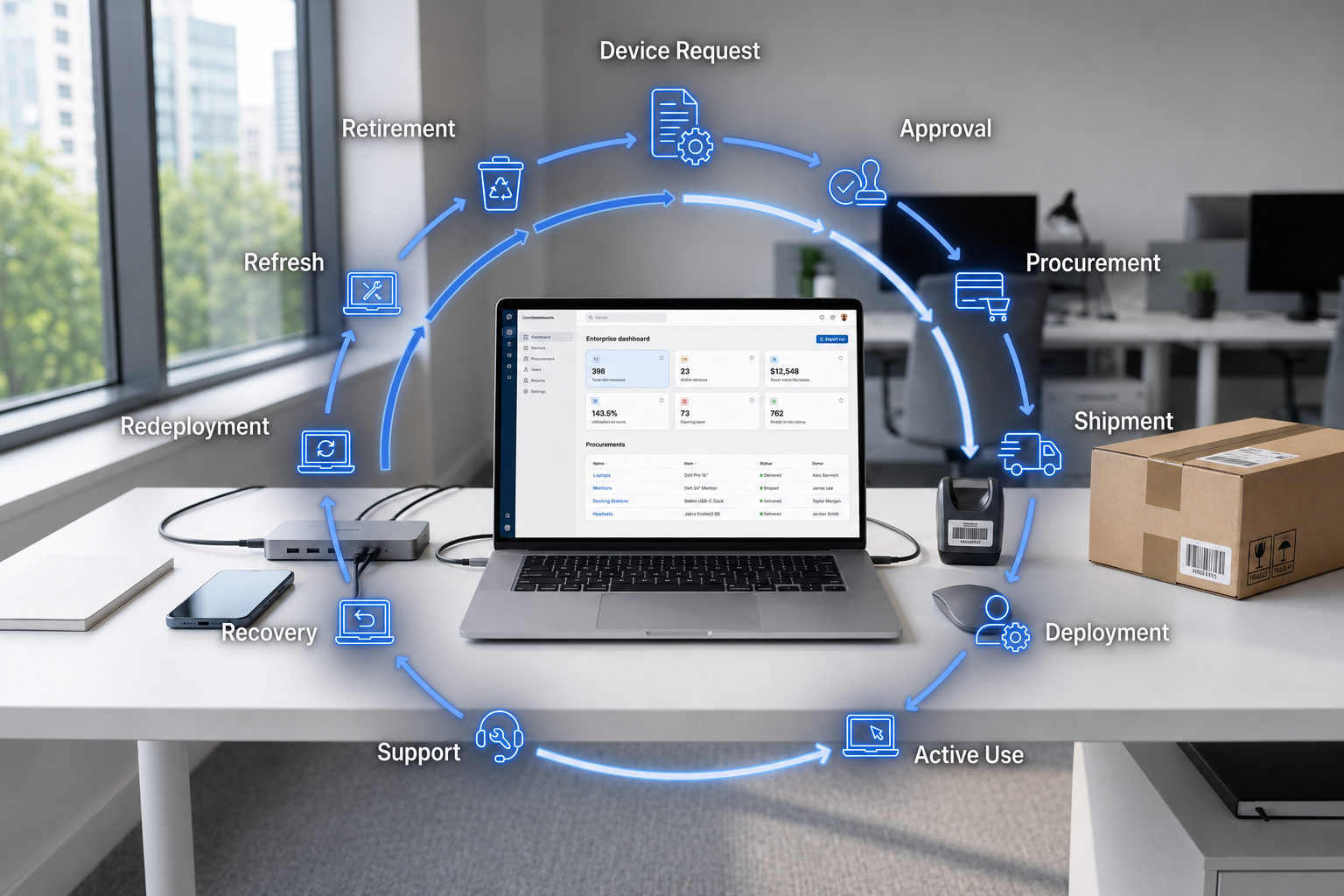
Onboarding does not end when the device is delivered. Companies need to track where devices are, how they are used, and when they need support or recovery.
Without asset tracking, teams lose visibility quickly. This affects both operations and security.
A strong onboarding solution includes lifecycle tracking from Day One, ensuring every device is accounted for throughout its use.
The missing layer: IT onboarding infrastructure
The missing piece in most onboarding strategies is IT infrastructure. This is the layer that connects procurement, setup, and support into one system.
What is IT onboarding infrastructure
IT onboarding infrastructure is the operational system behind onboarding. It ensures that devices, access, and support are ready before the employee logs in for the first time.
Instead of treating each task separately, it connects them into a single workflow. This reduces delays and removes the need for constant follow up between teams.
What employee onboarding technology solutions should cover
A complete onboarding system must go beyond software tools. It needs to include the physical and operational layers that enable employees to work.
This includes:
- Device procurement and delivery across regions
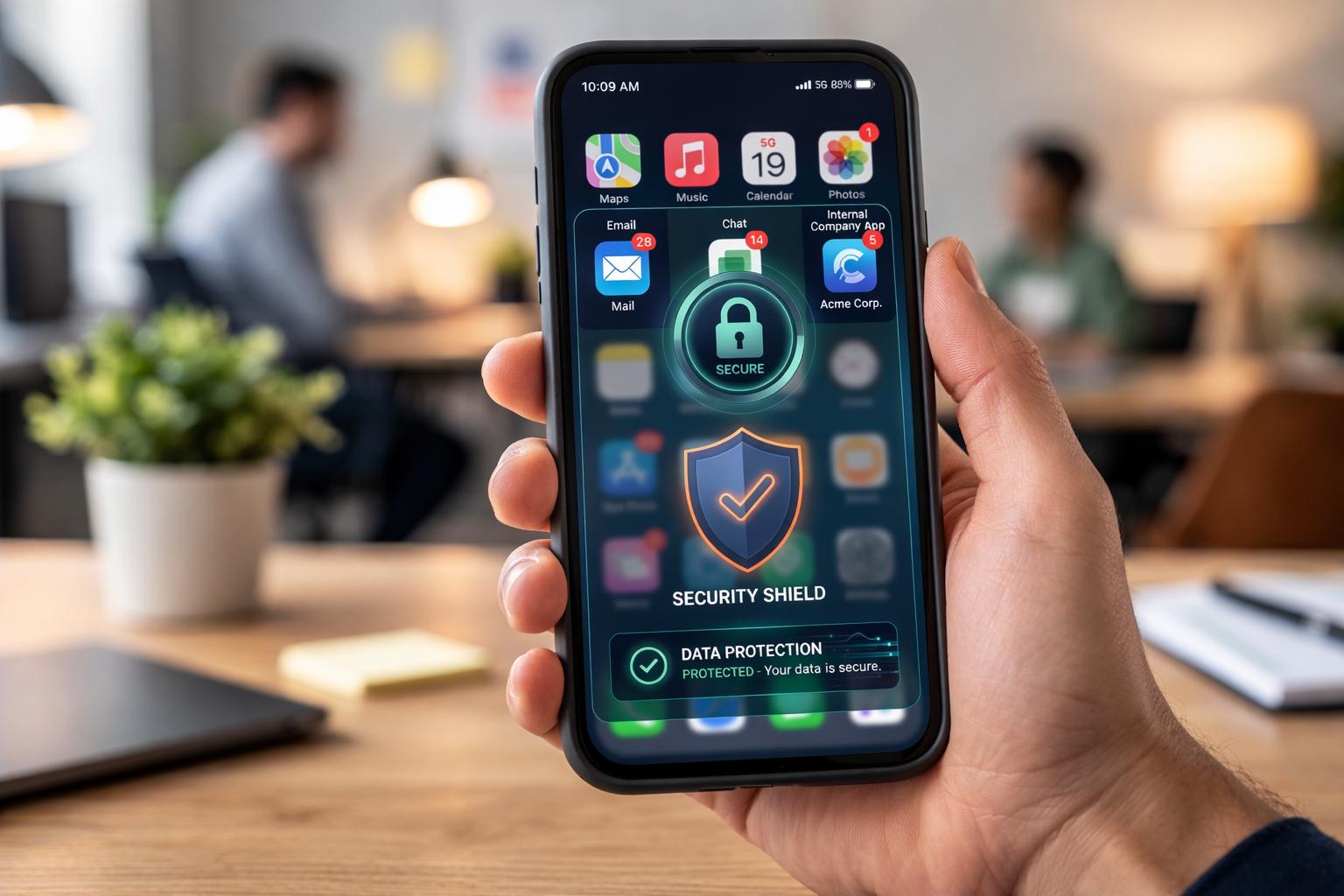
- Pre-configured laptops with required tools and security policies
- Identity and access setup before the first login
- Device tracking from Day One through its lifecycle
When these elements are connected, onboarding becomes predictable. Employees receive everything they need on time, and teams gain full visibility into the process.
This is what turns onboarding from a manual task into a reliable system.
Traditional onboarding vs lifecycle-driven onboarding
As companies grow, the difference between approaches becomes clear. Traditional onboarding struggles to scale. Lifecycle-driven onboarding creates structure.
Why traditional onboarding breaks at scale
Traditional onboarding relies on manual coordination. Teams work across emails, spreadsheets, and multiple vendors. There is no single source of truth.
This leads to delays, missed steps, and inconsistent experiences.
What lifecycle-driven onboarding looks like
A lifecycle approach connects every stage into one system.
| Traditional onboarding | Lifecycle-driven onboarding |
| Manual coordination | Centralized system |
| Multiple vendors | Unified platform |
| No tracking | Real-time visibility |
| Reactive support | Structured workflows |
This model aligns onboarding with how modern companies operate across regions.
The operational impact of poor onboarding
Onboarding delays are not small issues. They affect productivity, security, and team performance.
What delays actually cost
In distributed environments, onboarding delays can take 10 to 21 days when devices must pass through customs and regional checks. During this time, employees cannot fully contribute.
HR teams often act as intermediaries between vendors and IT. This creates additional workload and slows communication.
Some employees start work using personal devices. This introduces security risks and reduces control over company data.
Why this becomes a scaling problem
These issues multiply as companies grow. More hires mean more coordination. More regions mean more complexity.
Without structure, onboarding becomes a bottleneck.
How modern employee onboarding management solutions are evolving

Employee onboarding is shifting from isolated tools to connected systems. As teams grow across regions, companies can no longer rely on separate platforms for HR, IT, and operations. The gaps between these tools create delays and make coordination harder.
From disconnected tools to integrated systems
Traditional onboarding tools focus on specific tasks. HR systems manage employee data, while other tools handle training or documentation. Each system works on its own, which means teams must coordinate manually.
Modern employee onboarding management solutions are moving toward integration. Instead of switching between tools, companies are building systems where onboarding steps are connected. This allows teams to manage hiring, device setup, and access in one flow, with better visibility across all stages.
The role of employee onboarding automation solutions
Automation is becoming a key part of onboarding. As hiring increases, manual processes slow teams down and introduce errors.
Employee onboarding automation solutions help trigger actions at the right time. When a new hire is confirmed, the system can initiate device procurement, start configuration, and prepare account access. This reduces delays and removes the need for constant follow up.
From task management to operational readiness
The biggest shift is how companies define onboarding success. It is no longer about completing tasks or checklists. It is about ensuring employees are ready to work from the first day.
Modern employee onboarding technology solutions focus on operational readiness. They connect workflows with infrastructure so that devices, access, and support are aligned.
This shift moves onboarding from a simple process into a coordinated system that supports real work from day one.
How IT operations define onboarding success
Onboarding success depends on how well IT operations are managed. Without strong systems, even the best processes fail.
What strong onboarding infrastructure looks like
A reliable setup ensures:
- Devices are delivered before Day One
- Access is ready at first login
- Support is available when needed
When these elements are in place, onboarding becomes predictable.
Why visibility matters
Visibility allows teams to track devices, users, and status across regions. It reduces uncertainty and improves coordination.
Without visibility, teams rely on updates from multiple sources. This slows down decision making and increases risk.
Rethinking employee onboarding solutions for global teams
For global companies, onboarding requires more than local coordination. It needs a system that works across regions.
Companies must manage procurement, delivery, and support in different countries. They also need consistent standards and real-time visibility.
This is where a lifecycle approach becomes essential. Instead of handling onboarding as a one-time task, companies manage it as part of a continuous system.
Esevel fits into this model by combining device procurement, global delivery, tracking, and support into one platform. It helps companies ensure employees are ready from Day One without relying on fragmented processes.
FAQs
What is an employee onboarding solution
An employee onboarding solution is a system that helps companies manage the process of preparing new hires. It includes tasks such as documentation, training, and access setup, but should also cover device readiness and IT coordination.
What are employee onboarding training solutions
Employee onboarding training solutions focus on helping new hires learn company processes, tools, and policies. They are part of onboarding but do not address device or infrastructure readiness.
What are employee onboarding automation solutions
Employee onboarding automation solutions use workflows to reduce manual tasks. They can automate account setup, device provisioning, and tracking to improve efficiency.
What are employee onboarding management solutions
Employee onboarding management solutions help coordinate onboarding activities across teams. They provide visibility into progress but may not include IT infrastructure by default.
What are employee onboarding technology solutions
Employee onboarding technology solutions include tools and systems used to manage onboarding. Modern approaches combine HR systems with IT infrastructure to ensure employees can start work immediately.
Build onboarding that works from Day One
Employee onboarding solutions need to go beyond HR workflows. They must address the infrastructure that enables employees to work.
As companies scale across regions, manual coordination is no longer enough. Devices, access, and support must be connected into one system.
By treating onboarding as an IT operation, companies can reduce delays, improve visibility, and create a consistent experience for every new hire.
Esevel supports this approach by managing the full lifecycle, from device procurement and delivery to tracking and support. It helps global enterprises equip and support employees across Europe, the US, APAC, and other regions without operational friction.If you want onboarding to work from Day One, start by fixing the infrastructure behind it.