Many IT teams struggle to manage device procurement across offices and remote employees. Purchase requests, supplier coordination, and approval workflows often rely on spreadsheets or email. This makes it difficult to track procurement activity and maintain visibility into equipment orders.
The challenge grows as companies hire more employees and expand their infrastructure. IT managers must approve purchase requests, manage suppliers, and track purchase orders at the same time. Without a structured procurement platform, procurement processes become harder to control and spending visibility decreases.
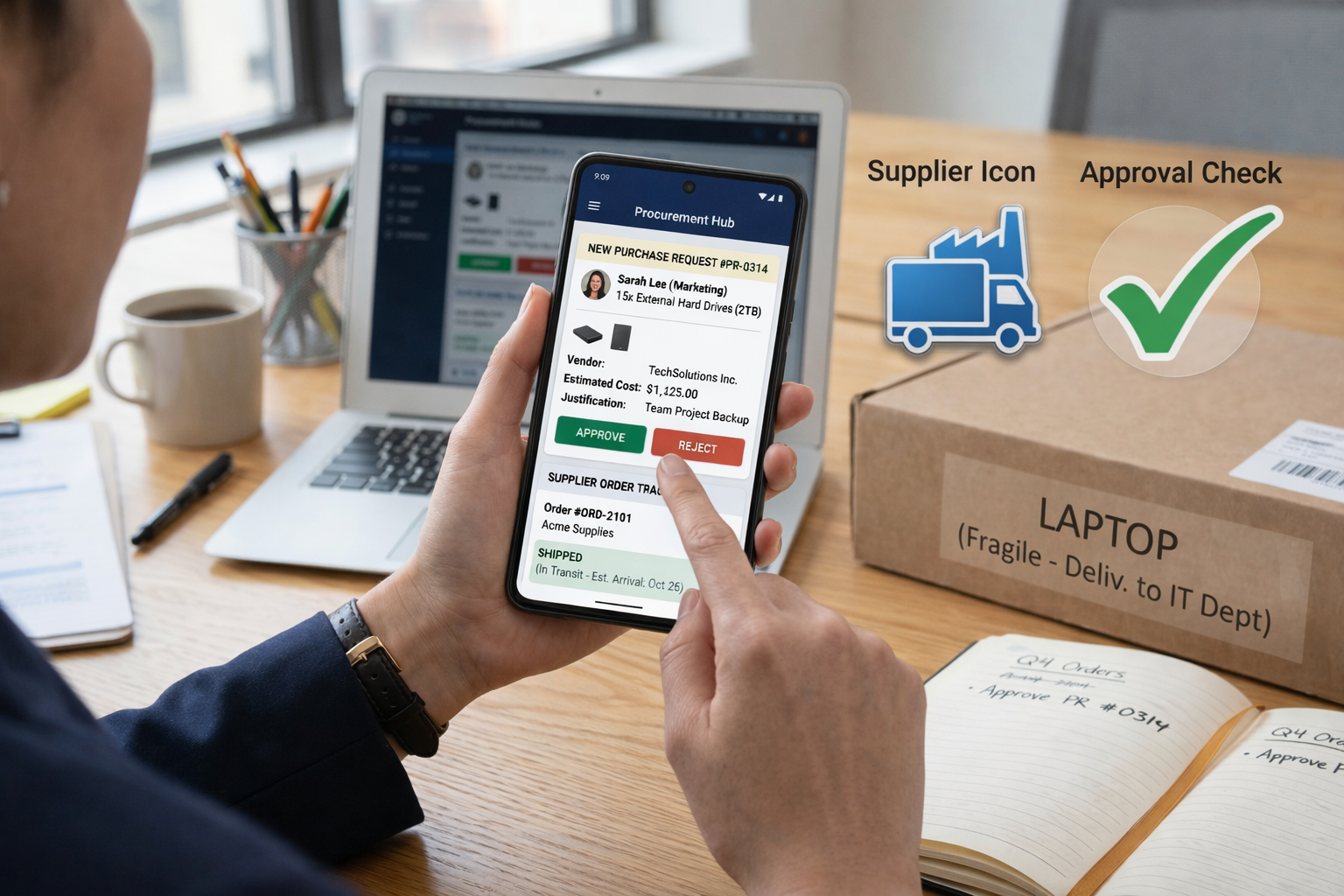
A mobile procurement platform organizes these workflows in one system. With mobile procurement tools, IT teams can submit purchase requests, approve purchase orders, and monitor procurement processes through cloud based software and mobile apps.
What is a mobile procurement platform
A mobile procurement platform is procurement software that allows teams to manage purchasing activity through a cloud based system that can be accessed from mobile devices. IT managers can submit purchase requests, approve purchase orders, and track procurement activity without relying on manual processes.
Mobile procurement platforms organize these activities in one platform. By combining procurement tools, supplier management, and approval workflows, organizations can manage procurement processes more consistently.
Mobile procurement platform definition
A mobile procurement platform is a procurement platform that allows teams to manage purchasing tasks through a mobile app or cloud based interface. The platform connects purchase requests, approval workflows, supplier management, and spend tracking in one system.
Mobile procurement platforms typically help organizations:
- Submit purchase requests from mobile devices
- Approve purchase orders without logging into desktop systems
- Manage supplier relationships and contract information
- Track procurement activity in real time
These features help teams maintain visibility into procurement processes while reducing reliance on manual tracking.
How mobile procurement tools support procurement processes
Mobile procurement tools support procurement processes by connecting purchasing activity with structured workflows. When employees submit purchase requests, the system records the request and sends it through an approval process. Once approved, procurement teams convert the request into a purchase order that can be sent to suppliers.
Because mobile procurement software operates through cloud based systems, IT managers and department leaders can approve purchases through a mobile app or browser. This helps organizations manage procurement processes even when decision makers are working remotely or across different locations.
Over time, these procurement tools also help organizations track supplier activity and monitor purchasing patterns. By maintaining clear records of purchase requests and purchase orders, procurement platforms help teams manage procurement processes with greater visibility.
Procurement challenges for growing IT teams
As organizations grow, procurement becomes more complex. IT teams must manage device purchases, coordinate suppliers, and track approvals across departments. When procurement processes rely on manual steps or disconnected tools, visibility decreases and delays appear.
Mobile procurement platforms help address these challenges by organizing procurement activity through structured workflows.
Device procurement for new employees
IT teams often manage device procurement for employee onboarding. Each new employee requires a laptop, accessories, and sometimes additional equipment. When hiring accelerates, procurement teams must coordinate multiple purchase requests at the same time.
Without a structured procurement platform, IT teams may struggle to track which devices have been ordered, which requests are approved, and when equipment will arrive. This lack of visibility can delay employee onboarding and create additional work for support teams.
Supplier coordination across hardware vendors
Many organizations work with several hardware suppliers. IT teams may purchase laptops from one vendor, accessories from another, and replacement parts from additional suppliers.
Managing these supplier relationships becomes difficult when procurement records exist in separate systems. IT teams need clear visibility into supplier contracts, purchase orders, and delivery timelines. A procurement platform helps maintain this visibility and supports more consistent supplier management.
Purchase request approvals and internal workflows
Procurement processes often require multiple approval steps. Employees submit purchase requests, managers review those requests, and procurement teams convert approved requests into purchase orders.
When approvals occur through email or manual tracking, delays can appear in the workflow. Teams may lose track of which requests are approved and which still require review. A mobile procurement platform helps organize these approval processes so teams can approve purchase orders and track procurement activity more easily.
Procurement visibility across distributed teams
Modern organizations often support employees across several locations. IT teams may manage procurement for headquarters offices, remote employees, and international teams at the same time.
This distributed environment makes procurement visibility more important. Teams must track equipment requests, supplier activity, and purchase orders across locations. Procurement platforms help centralize these records so IT teams can manage procurement processes consistently.
Procurement coordination with IT infrastructure planning
Device procurement also connects closely with infrastructure planning. IT managers must ensure that equipment purchased today aligns with company device standards and endpoint management policies.
Without clear procurement coordination, organizations may purchase devices that require additional configuration or do not match existing hardware standards. Procurement platforms help teams align purchase requests with IT infrastructure planning and maintain consistent device environments.
Key capabilities of mobile procurement platforms
Mobile procurement platforms organize procurement processes in one system. Instead of managing purchase requests, supplier records, and approvals across different tools, organizations can handle these activities through a single procurement platform.
For IT teams managing hardware procurement, this visibility helps ensure that device purchases, supplier coordination, and approval workflows remain organized.
Purchase requests and purchase order approvals
Purchase requests are often the starting point of procurement processes. Employees submit requests for equipment, and managers review those requests before approving the purchase. When teams manage these steps manually, approval workflows can become difficult to track.
Mobile procurement software helps structure this process. Employees can submit purchase requests directly through the procurement platform, and managers can review and approve those requests through a mobile app or browser.
Once a request is approved, procurement teams convert it into a purchase order that can be sent to suppliers. The system records each step of this process, which helps teams track procurement activity and maintain clear purchasing records.
Supplier management and contract management
Procurement platforms also support supplier management. Organizations often work with multiple hardware suppliers and service vendors, which makes supplier coordination an important part of procurement operations.
Mobile procurement platforms allow teams to store supplier information, track contracts, and maintain records of supplier activity. Procurement teams can monitor which suppliers provide specific equipment and track the purchase orders associated with those vendors.
This visibility helps organizations manage supplier relationships while maintaining clearer oversight of supply chain activity.
Spend management and spend analytics
Spend management helps organizations monitor procurement spending across departments. Mobile procurement platforms track purchase orders, supplier spending, and procurement activity in one system.
Spend analytics tools allow teams to review historical purchasing data and identify procurement patterns. This visibility helps organizations maintain better control over procurement budgets.
Cloud based mobile procurement software
Cloud based mobile procurement software allows organizations to manage procurement processes without relying on local systems. Teams can access procurement tools from different locations through a browser or mobile app.
For IT managers and HR teams, this accessibility helps maintain procurement visibility across offices and remote employees. Purchase requests, approvals, and procurement records remain centralized in one procurement platform.
User friendly procurement tools for teams
User friendly procurement tools allow employees to interact with procurement systems without complex training. When procurement software is difficult to use, employees often return to manual processes such as email approvals.
Mobile procurement platforms provide simple interfaces for submitting purchase requests and tracking approvals. Managers can review procurement activity and approve purchase orders directly from the platform.
Real time procurement visibility
Real time visibility helps procurement teams track purchasing activity across the organization. When procurement systems update records automatically, teams can monitor purchase requests, approvals, and purchase orders without manual updates.
Mobile procurement software provides real time access to procurement activity, which helps teams maintain clearer oversight of procurement processes and supplier management.
Mobile procurement platforms for IT hardware procurement
IT teams often manage hardware procurement while supporting employees across multiple locations. Laptops and other equipment must be purchased, approved, and delivered before employees begin work. When teams rely on manual procurement processes, it becomes harder to track purchase requests and supplier deliveries.
Mobile procurement platforms organize these workflows in one system. IT managers can submit purchase requests, approve equipment orders, and monitor procurement activity through the same procurement platform. This visibility helps organizations maintain consistent device standards while coordinating hardware procurement across distributed teams.
Managing device procurement for distributed teams
Device procurement becomes more complex when employees work across offices and remote environments. IT managers must ensure that employees receive the correct equipment while maintaining consistent device configurations.
Mobile procurement tools allow IT teams to submit purchase requests for laptops and other hardware through structured procurement workflows. Managers can review these requests, approve purchases, and convert them into purchase orders for suppliers.
By tracking procurement activity in one system, organizations gain clearer visibility into device procurement across teams.
Supporting global hardware supply chains
Hardware procurement also involves coordinating with multiple suppliers and managing equipment delivery timelines. Organizations often work with different vendors for laptops, accessories, and replacement equipment.
Mobile procurement platforms help maintain supplier records and track purchase orders across vendors. This visibility allows IT teams to monitor procurement activity and coordinate supply chain activity more effectively.
When procurement platforms connect supplier management with purchase orders and procurement records, organizations can maintain clearer oversight of hardware procurement across their infrastructure.
Common questions about mobile procurement platforms
What is a mobile procurement platform
A mobile procurement platform is procurement software that allows teams to manage purchasing activity through mobile devices or cloud based systems. Employees can submit purchase requests, managers can approve purchase orders, and procurement teams can track supplier activity from one platform.
These systems help organizations manage procurement processes without relying on manual approvals or disconnected tools.
How do mobile procurement tools work
Mobile procurement tools connect purchase requests, approval workflows, and supplier management in one system. Employees submit purchase requests through the procurement platform, and managers review those requests before approving the purchase.
Once approved, procurement teams convert the request into a purchase order and send it to the supplier. The platform records each step so teams can track procurement activity and maintain purchasing records.
What is the difference between procurement software and ERP systems
Procurement software focuses on managing purchasing activity such as purchase requests, supplier records, and procurement workflows. ERP systems manage broader business operations such as finance, accounting, and supply chain management.
Many organizations integrate procurement platforms with ERP systems so procurement data can connect with financial records and procurement reporting.
How do procurement platforms support supplier management
Procurement platforms store supplier information and track purchasing activity across vendors. Teams can maintain supplier records, monitor purchase orders, and review supplier performance within the platform.
This visibility helps organizations manage supplier relationships while maintaining consistent procurement processes.
Why do companies use mobile procurement software
Companies use mobile procurement software to manage procurement processes across distributed teams. Mobile access allows managers to review purchase requests, approve purchases, and track procurement activity without needing to access office systems.
This helps organizations maintain procurement visibility while supporting teams working across different locations.
Simplify procurement for modern IT teams
IT teams must manage device procurement while supporting employees across multiple locations. Mobile procurement platforms help teams track purchase requests, manage suppliers, and approve equipment orders in one system.
For distributed teams, procurement must work closely with hardware logistics and device lifecycle visibility. Esevel helps organizations manage device procurement and track equipment across global locations including Europe, the US, and APAC.