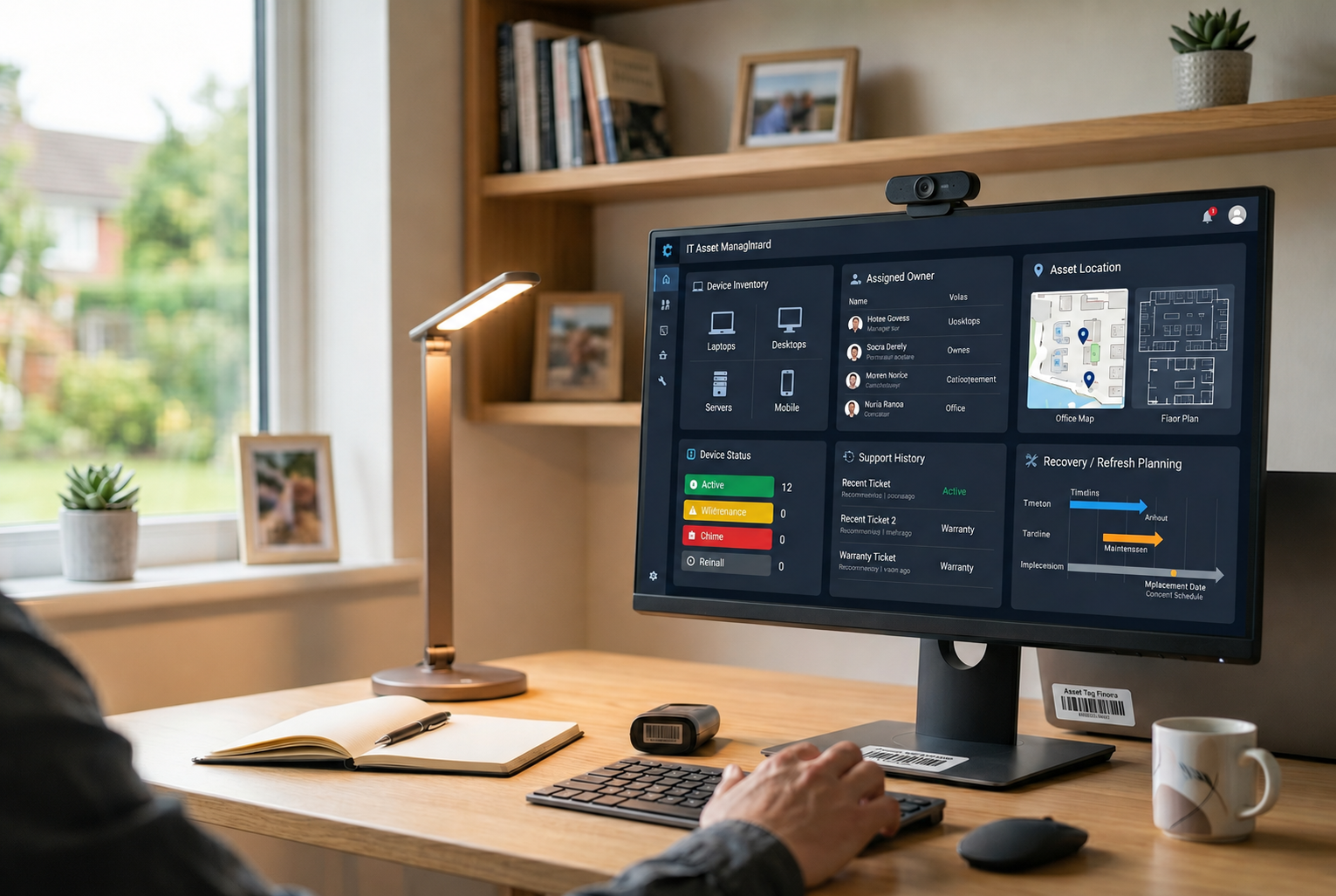
IT supplier management is the process of selecting, onboarding, monitoring, evaluating, and improving technology suppliers throughout the supplier relationship. The goal is to make sure each supplier meets the company’s needs for cost, service, risk, procurement, delivery, and IT lifecycle support.
IT suppliers can include hardware vendors, SaaS providers, cloud vendors, procurement partners, logistics firms, IT support providers, and device lifecycle partners. As this network grows, teams have more contracts, contacts, SLAs, renewals, risks, and handoffs to manage. Deloitte found that 64 percent of procurement leaders prioritized better supply chain visibility, while 61 percent focused on stronger supplier information sharing and collaboration.
A good IT supplier management approach gives teams clear supplier visibility, ownership, performance data, risk control, and better links between procurement and daily IT operations.
Before you begin managing IT suppliers
Before changing suppliers or renegotiating contracts, build a clear view of the current supplier network. This prevents teams from making decisions without knowing which systems, employees, and workflows depend on each provider.
Gather your current supplier information
Record the supplier name, category, products or services, internal owner, contract dates, spend, SLA, contacts, geographic coverage, escalation path, known risks, and current performance issues.
[INSERT: sample supplier inventory fields or screenshot]
Identify supplier dependencies and affected workflows
Map each supplier to the workflows it supports, such as procurement, device delivery, software access, employee onboarding, IT support, repairs, asset tracking, device recovery, and retirement.
For example, Luno’s IT team previously managed separate supplier coordination across Malaysia, Singapore, Indonesia, and Australia. With Esevel, one supplier relationship now supports several connected workflows, including device sourcing, cross-border delivery, pre-configuration, onboarding, and procurement planning. Luno cut onboarding time from two weeks to three days and saved more than 20 hours of procurement work per month.
What are the four key elements of supplier management?
SAP groups supplier management into four core areas: supplier information, supplier performance, supplier risk, and supplier collaboration and development. These areas give IT teams a useful framework for managing technology providers.
Supplier information
Keep one reliable record for each supplier. It should include contracts, contacts, spend, services, locations, SLAs, renewal dates, and internal ownership.
For IT suppliers, also record which systems, devices, employees, or workflows depend on that supplier.
Supplier performance
Measure whether each supplier delivers the agreed service. IT teams may track product availability, order accuracy, delivery time, support response, issue resolution, hardware quality, and replacement speed.
Performance data should help teams decide whether to improve, renew, reduce, or replace a supplier relationship.
Supplier risk
Review the commercial, operational, security, and supply chain risks linked to each supplier. Risk checks should start before approval and continue throughout the relationship.
IT teams should pay close attention to data access, cybersecurity practices, service continuity, supplier dependency, and product provenance.
Supplier collaboration and development
Good supplier management should improve the relationship over time. Review recurring problems, agree on actions, share future demand, and work with important suppliers to improve service.
The goal is not only to measure suppliers. It is to help strong suppliers perform better.
What should an IT supplier management policy include?
An IT supplier management policy defines how the company selects, approves, manages, reviews, and exits technology suppliers. It gives IT, procurement, finance, security, and operations one shared set of rules.
The policy should cover:
• Supplier selection and approval criteria
• Security and risk checks
• Contract and SLA requirements
• Internal supplier ownership
• Review frequency
• Escalation rules
• Procurement and spend controls
• Data and system access
• Renewal and termination rules
• Business continuity and exit requirements
The policy should also reflect supplier risk. A cloud platform, security provider, or employee device supplier may need more control than a low impact software vendor.
For hardware providers, the IT supplier management policy should also define expectations for stock, delivery, warranty, repairs, replacements, and other lifecycle support.
What does the IT supplier management process involve?
The IT supplier management process covers the full supplier relationship. It starts before approval and continues through onboarding, performance reviews, renewal, and exit.
First, teams need supplier visibility. They should know which suppliers exist, what they provide, how much they cost, and which business processes depend on them.
Next comes selection and onboarding. Teams define commercial, operational, security, and service requirements. They then document contracts, SLAs, contacts, ordering rules, support paths, and internal ownership.
During the relationship, teams monitor cost, delivery, service quality, SLAs, and risk. Those results should guide supplier reviews, improvement plans, renewals, procurement choices, and consolidation decisions.
For IT suppliers, the process should also connect with technology operations. A device vendor may still affect the business long after the original purchase.
Set clear criteria for IT suppliers
Set selection criteria before comparing suppliers. Review commercial factors such as pricing, payment terms, contract flexibility, and total cost.
Then review operational needs. These may include stock, order accuracy, delivery speed, geographic reach, support hours, replacement processes, and escalation support.
Technology suppliers also need stronger risk checks. NIST’s SP 1326, finalized in July 2026, recommends ICT supplier due diligence around areas such as provenance, resilience, foundational cyber practices, ownership concerns, and supply chain tiers.
Global teams should also review local stock, delivery reach, warranty support, and service coverage before signing a contract.
Standardize IT supplier onboarding
Supplier onboarding should turn the contract into a clear operating process.
Document pricing, billing, purchasing rules, renewal terms, supplier contacts, SLAs, reporting needs, support channels, approvals, and escalation paths.
Also record security duties, data access, compliance evidence, incident rules, continuity plans, and exit needs.
Use one supplier onboarding template across the company. This reduces missing information and makes supplier reviews easier later.
The supplier and internal teams should know how the relationship will work before the first major order or support request arrives.
Assign ownership for supplier relationships
Every important supplier needs one accountable internal owner.
That person should manage supplier communication, performance reviews, escalations, renewals, contract changes, risk discussions, and improvement plans.
Other teams still have supporting roles. Procurement can own commercial terms. IT can review technical performance and security. Finance can track payments and spend. People Ops can support employee delivery needs.
Clear ownership prevents a common problem: many people contact the supplier, but no one owns the result.
Track supplier performance and SLAs
Contracts show what a supplier promised. Performance reviews show what the business actually receives, so teams should track cost, delivery, service quality, and SLA results together.
An IT supplier scorecard can measure:
• Pricing and invoice accuracy
• Product availability and order accuracy
• Delivery time and delivery exceptions
• Response and resolution times
• Replacement speed
• Product defects and repeat issues
• Security or compliance incidents
Do not judge suppliers on unit price alone. A cheaper supplier may create higher costs through late delivery, poor support, frequent replacements, or more internal coordination.
Review critical suppliers more often and use the results to guide improvement plans, renewals, escalations, and future purchasing decisions.
Review cost, delivery, and service quality together
The cheapest supplier is not always the best supplier.
Review cost, delivery, and service as one picture. Cost may include buying price, shipping, support, replacements and internal admin work. Delivery covers stock, lead times, accuracy and delays. Support includes service quality, response, resolution, and escalation.
A cheaper laptop vendor may cost more if devices arrive late or replacements take too long. Those problems can create more work for IT and more downtime for employees.
Supplier reviews should measure total operational value, not just unit price.
Manage IT supplier risk and compliance
IT suppliers can create cybersecurity, operational, commercial, and supply chain risks.
Security reviews should include supplier access, data handling, cyber controls, incident response, software supply chains, and product provenance. During operational reviews, consideration must be given to supplier dependency, business continuity, regional availability, subcontractors and alternative sources.
Contract reviews should also cover audit evidence, notifications, data requirements, and exit rights.
NIST treats ICT supply chain risk as a lifecycle issue. Its guidance covers supplier risk around acquisition and continued use of technology suppliers.
Risk reviews should continue after supplier approval because supplier conditions can change.
Consolidate IT suppliers where it improves control
Too many suppliers can create duplicate services, inconsistent pricing, more renewals, and fragmented procurement data.
Supplier consolidation can help when several providers offer similar services or one provider can support more regions and workflows.
However, consolidation should not become a goal by itself. Specialist providers may offer skills that a large supplier cannot match. Multiple suppliers can also reduce dependency or provide regional backup.
The right supplier count is the number that gives the company enough control, capability, and resilience without unnecessary complexity.
For example, Milieu Insights previously managed device purchasing across six Southeast Asian countries, with different retailers, laptop models, and local processes. After centralizing procurement, the company cut IT procurement time by 50% and standardized device purchasing across its regions.
Connect supplier management to procurement and device lifecycle management
Supplier performance should influence future purchasing decisions. Teams should use delivery history, product availability, SLA results, support quality, risk, and regional coverage when choosing which supplier receives the next order.
For device suppliers, that responsibility continues after purchase. Suppliers may also affect onboarding, warranty support, repairs, replacements, recovery, redeployment, refresh, and secure retirement.
Connecting supplier data with procurement and lifecycle records gives IT a clearer view of which suppliers deliver value across the full device lifecycle, not just at the point of purchase.
IT supplier management checklist
Use this checklist to review whether your current supplier management setup covers the key controls.
| Area | What to check | Done |
| Supplier visibility | Every active IT supplier is recorded with its service, contract, spend, and owner | ☐ |
| Ownership | Each critical supplier has one accountable internal owner | ☐ |
| Selection | Commercial, operational, security, and risk criteria are reviewed before approval | ☐ |
| Governance | Contracts, SLAs, contacts, and escalation paths are documented | ☐ |
| Performance | Delivery, service quality, SLA results, and recurring issues are reviewed | ☐ |
| Risk | Supplier security, continuity, dependency, and compliance risks are monitored | ☐ |
| Procurement | Supplier performance influences future purchasing decisions | ☐ |
| Lifecycle | Repair, replacement, recovery, reuse, and refresh responsibilities are clear | ☐ |
If several areas are incomplete, start with the suppliers that have the highest operational impact or risk.
What IT supplier management mistakes should teams avoid?
Common supplier management mistakes include:
• Choosing suppliers only on price
• Failing to assign one clear owner
• Signing an SLA but not tracking it
• Reviewing suppliers only before renewal
• Keeping too many overlapping suppliers
• Separating supplier data from procurement decisions
• Ignoring service after the original purchase
Each mistake creates the same core problem: the company has a supplier contract but lacks real control over the supplier relationship.
Frequently asked questions
Who should own IT supplier relationships?
Each critical IT supplier should have one accountable internal owner. Procurement, IT, finance, security, and People Ops can support the relationship, but one person should coordinate performance reviews, escalations, renewals, risks, and improvement actions.
How often should IT suppliers be reviewed?
Review frequency should depend on supplier risk, volume, and business impact. Critical or high volume suppliers may need monthly reviews, while strategic suppliers can use quarterly reviews and lower impact suppliers can be reviewed less often.
What should an IT supplier scorecard include?
An IT supplier scorecard should measure cost, product availability, delivery performance, SLA results, service quality, support response, replacement performance, recurring issues, and supplier risk. The metrics should reflect the services each supplier actually provides.
Build stronger control across your IT supplier network
Good IT supplier management creates better supplier visibility, clearer ownership, stronger performance management, and more informed procurement decisions.
This matters even more for distributed teams. Device sourcing, delivery, support, repairs, and recovery may involve several suppliers across many regions.
Esevel helps connect global device procurement, delivery, tracking, support, recovery, and lifecycle management. Start by reviewing where your current supplier relationships remain fragmented and which ones create the most risk or manual work.

Maytiska Omar Maytiska is an experienced content writer and blog specialist with 4+ years of expertise in creating engaging, SEO-driven content. She focuses on IT and digital topics, turning complex ideas into clear, reader-friendly insights. Her work helps position Esevel as a trusted voice in the digital space.