
Purchasing goods or services without a clear plan can quickly lead to delays, budget overruns, and inconsistent supplier decisions. As organizations grow, procurement activities become more complex and harder to manage without a structured approach.
A procurement plan is a document that outlines what goods or services an organization will purchase, when the purchases will occur, and how suppliers will be selected. It helps businesses organize purchasing activities, manage budgets, and align procurement decisions with operational goals.
This guide explains what a procurement plan is, why it matters, and how organizations can create one effectively.
What is a procurement plan?
A procurement plan is a structured strategy for acquiring products or services essential for business operations. It outlines what needs to be purchased when it is needed, how it will be sourced, and the budget allocated for procurement.
Why is a procurement plan important?
Without a procurement plan, companies risk delays, cost overruns, and supply chain disruptions. Businesses, especially those managing IT hardware procurement, rely on careful planning to ensure devices, software, and other IT resources are delivered on time, within budget, and sourced from reliable vendors.
A strong procurement plan also plays a key role in risk management, helping businesses anticipate potential challenges such as vendor delays, price fluctuations, or compliance issues.
Who needs a procurement plan?
A procurement plan benefits businesses of all sizes, but it is particularly crucial for:
- Project managers: Ensuring materials, tools, or services are available when needed to prevent project delays.
- Procurement teams: Managing vendor selection, negotiating contracts, and overseeing the procurement process.
- IT departments: Handling IT procurement processes for hardware, software, and security services.
With a solid procurement strategy in place, businesses can optimize costs, streamline processes, and mitigate risks.
Next, let’s explore the key components of a procurement plan.
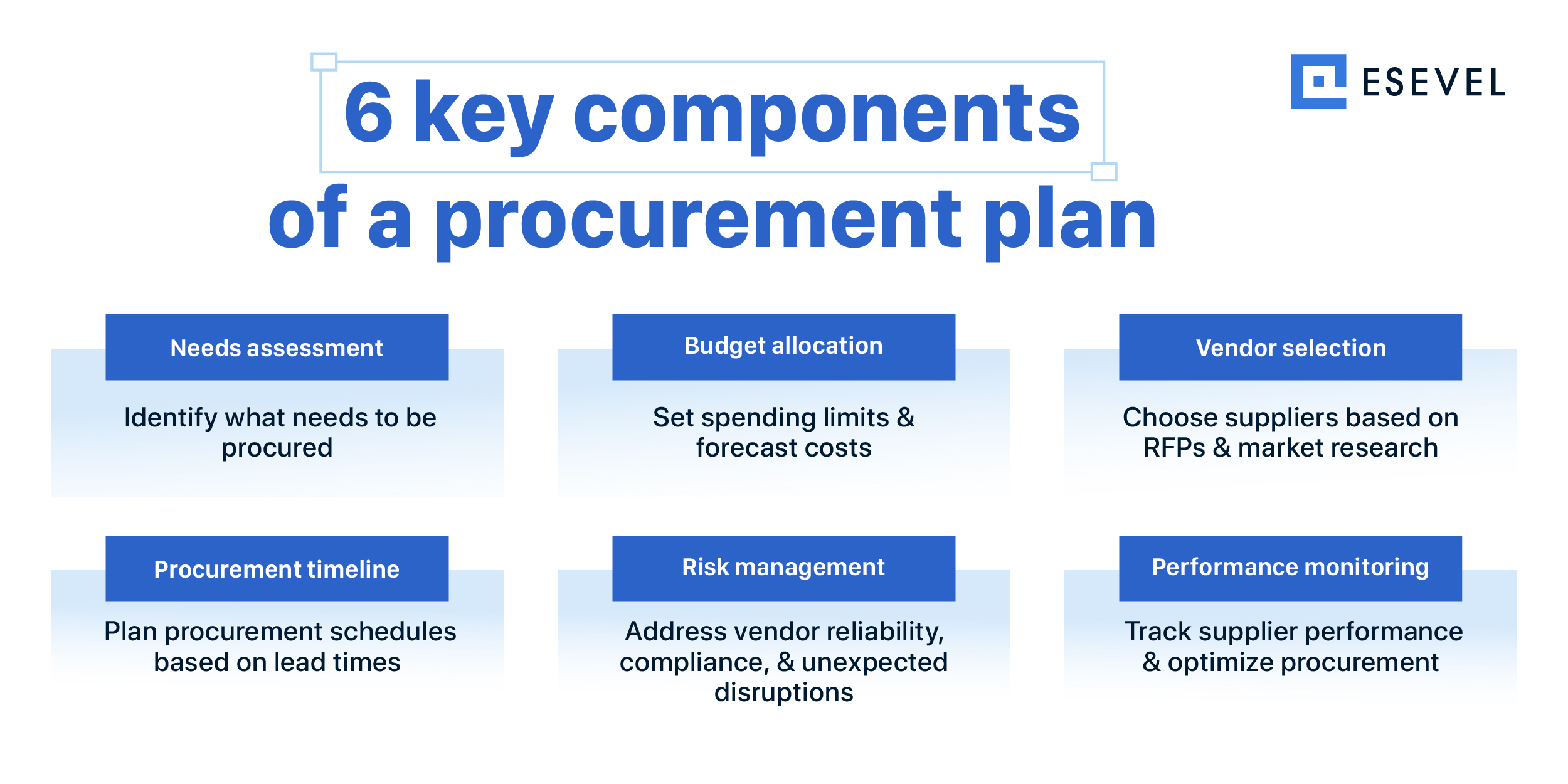
6 key components of a procurement plan
A well-structured procurement plan consists of several critical components that ensure smooth purchasing, cost savings, and risk mitigation. Whether you are handling IT hardware procurement or general business purchases, these elements help project teams and procurement teams make informed decisions.
Needs assessment: identifying what to procure
The first step in procurement planning is identifying the specific products or services needed. A detailed needs assessment helps businesses:
- Determine the exact requirements for a project or department
- Avoid unnecessary purchases and optimize resource allocation
- Align procurement activities with business goals
For example, in IT procurement, a company might assess whether employees need laptops, software licenses, or cybersecurity solutions based on their roles and responsibilities.
Budget allocation: planning for cost efficiency
Once needs are identified, businesses must allocate budgets effectively. A well-planned budget ensures:
- Cost savings by negotiating better deals with vendors
- Avoiding overspending by aligning procurement costs with financial plans
- Maintaining flexibility for unexpected expenses
A strong procurement strategy includes forecasting expenses and reviewing past spending patterns to create a realistic budget.
Vendor selection strategy: choosing the right suppliers
Selecting the right vendor is crucial for quality assurance and reliability. A vendor selection strategy includes:
- Conducting market research to compare vendors
- Evaluating suppliers based on price, quality, and reliability
- Sending a request for proposal (RFP) to shortlisted vendors
For IT procurement processes, vendor selection is particularly important as companies need suppliers that offer secure, compliant, and scalable solutions.
Procurement timeline and scheduling
Timely procurement prevents delays in operations or projects. Businesses need to account for:
- Lead times required for sourcing and shipping
- Coordinating orders with business milestones
- Seasonal factors that may affect supply chain efficiency
For example, if a company is launching a new remote work policy, their procurement plan should ensure that IT hardware and software are available before the rollout date.
Risk management and compliance
A procurement management plan must address potential risks that could disrupt the supply chain. Key areas to focus on include:
- Vendor reliability: having backup suppliers to mitigate risks
- Regulatory compliance: ensuring adherence to data security, environmental, and financial laws
- Market volatility: preparing for price fluctuations or supply shortages
Procurement software can help monitor compliance and track risks in real time.
Performance monitoring and review
A procurement plan should not end once purchases are made. Businesses must track performance to ensure:
- Vendors meet quality and delivery expectations
- Costs align with the initial budget
- The procurement process continuously improves
Regular evaluations allow businesses to refine their procurement planning process, improve efficiency, and enhance cost savings.
How to create an effective IT procurement plan
An IT procurement plan is a document that outlines how an organization will purchase technology assets such as hardware, software, and IT services. It defines procurement objectives, vendor selection criteria, budgets, and timelines to ensure technology purchases support business operations.
The following steps outline how organizations can create an effective IT procurement plan.
Step 1: Define IT procurement objectives
The first step in an IT procurement plan is defining procurement objectives that align with business and IT priorities. These objectives often include improving cost efficiency, ensuring devices are delivered on time, and maintaining security and compliance standards.
Step 2: Conduct technology and vendor research
Research helps procurement teams understand available vendors, pricing models, and technology trends before making purchasing decisions. For example, companies procuring IT hardware may evaluate suppliers based on device quality, warranty coverage, and logistics capabilities.
Step 3: Define IT procurement requirements
A strong IT procurement plan clearly outlines the technical and operational requirements for the equipment or services being purchased. This includes product specifications, quantity, security standards, and delivery timelines.
Step 4: Select IT vendors strategically
Vendor selection is an important part of an IT procurement plan. Procurement teams typically compare suppliers based on pricing, reliability, service capabilities, and their ability to provide long term IT support.
Step 5: Allocate the IT procurement budget
Budget planning ensures technology purchases remain financially sustainable. Organizations should estimate procurement costs, allocate funds based on priorities, and plan for future technology upgrades.
Step 6: Develop a procurement timeline
A procurement timeline helps coordinate purchasing activities with operational needs. For example, when companies hire new employees, the IT procurement plan must ensure laptops and software licenses are ready before onboarding begins.
Step 7: Implement IT procurement risk management
Procurement planning should also address risks such as supplier delays, price fluctuations, or compliance issues. Businesses can reduce these risks by maintaining backup suppliers and ensuring purchases meet security requirements.
Step 8: Monitor IT procurement performance
An effective IT procurement plan includes ongoing monitoring and evaluation. Organizations should track supplier performance, review spending, and refine procurement strategies when necessary.
A well structured IT procurement plan helps businesses streamline technology purchasing, manage suppliers effectively, and support long term operational goals.
Examples of an IT procurement plan
A well-structured IT procurement plan covers both hardware and software to ensure businesses have the necessary tools to operate efficiently.
Example 1: IT procurement plan for hardware
Scenario: A company with a hybrid workforce needs to procure laptops, accessories, and network equipment for new employees while managing costs and ensuring timely delivery.
The table below illustrates how an IT procurement plan for hardware may be structured when purchasing devices for a hybrid workforce.
| Procurement stage | Description | Example implementation |
|---|---|---|
| Needs assessment | Identify the hardware required for different employee roles | Developers receive high performance laptops, while business teams receive standard laptops |
| Budget allocation | Set a budget per device while balancing performance and cost | Procurement team defines a per device budget for laptops, accessories, and network equipment |
| Vendor selection | Evaluate suppliers based on pricing, warranty coverage, and delivery reliability | The company sends a request for proposal (RFP) to multiple hardware vendors and compares offers |
| Procurement timeline | Schedule purchases based on operational needs and onboarding plans | Devices are ordered in batches to align with new employee onboarding cycles |
| Risk management | Prepare contingency plans to reduce supply chain disruptions | A backup hardware vendor is identified in case the primary supplier cannot deliver on time |
| Performance monitoring | Track supplier reliability and device performance after deployment | Procurement software is used to monitor vendor performance and optimize future purchases |
Example 2: IT procurement plan for software
Scenario: A growing SaaS company needs to procure collaboration tools, cybersecurity software, and cloud storage solutions for its remote teams while ensuring compliance and security.
Procurement approach:
- Needs assessment: The IT and procurement teams identify software required for different departments, including project management tools, CRM software, and cybersecurity solutions.
- Budget allocation: The company decides between subscription-based pricing (SaaS) or one-time licensing fees based on cost-effectiveness.
- Vendor selection: The company conducts market research to compare different software providers, prioritizing security, scalability, and integrations.
- Procurement timeline: Software licenses are activated and assigned before new employees start, ensuring seamless access to required tools.
- Risk management: The procurement team ensures software compliance with data protection laws, implements multi-factor authentication, and sets up contingency plans for contract renegotiations.
- Performance monitoring: The IT department tracks software usage, ensuring licenses are not wasted and evaluating renewal costs for budget optimization.
Frequently asked questions about procurement plans
What is a procurement plan?
A procurement plan is a document that outlines how an organization will purchase goods or services. It typically includes procurement objectives, required items, budgets, supplier selection criteria, and timelines. The plan helps businesses coordinate purchasing activities and ensure that procurement decisions support operational needs.
What should an IT procurement plan include?
An IT procurement plan typically includes technology requirements, hardware or software specifications, budget allocation, vendor evaluation criteria, and procurement timelines. It may also address cybersecurity requirements, device lifecycle management, and supplier reliability to ensure that technology purchases align with business operations.
Why is a procurement plan important?
A procurement plan helps organizations control purchasing costs, improve supplier coordination, and ensure that materials or services are delivered on time. By planning procurement activities in advance, businesses can reduce supply chain risks and maintain more predictable operational workflows.
Who creates an IT procurement plan?
An IT procurement plan is usually developed through collaboration between procurement teams, IT managers, and finance departments. IT teams define the technical requirements, while procurement specialists evaluate vendors and manage supplier contracts to ensure technology purchases meet organizational needs.
What is the difference between procurement planning and purchasing?
Procurement planning focuses on identifying purchasing needs, evaluating suppliers, and defining budgets and timelines. Purchasing is the execution phase where organizations place orders and acquire the goods or services defined in the procurement plan.
How often should a procurement plan be updated?
Procurement plans should be reviewed regularly to reflect changes in business needs, budgets, or supplier conditions. Many organizations update procurement plans annually or quarterly to ensure purchasing strategies remain aligned with operational priorities.
How Esevel simplifies IT procurement and management
A well-structured IT procurement plan is essential for cost savings, operational efficiency, and risk reduction. Whether sourcing hardware, software, or IT services, businesses need a clear procurement strategy to support growth and prevent disruptions.
Esevel simplifies the procurement planning process by offering an all-in-one IT platform that helps businesses:
- Procure and deploy IT hardware across 88+ countries
- Manage software licenses and user access to reduce costs and security risks
- Track and secure IT assets with a centralized dashboard
- Automate onboarding and offboarding for seamless IT transitions
- Get 24/5 IT support to troubleshoot issues and minimize downtime